
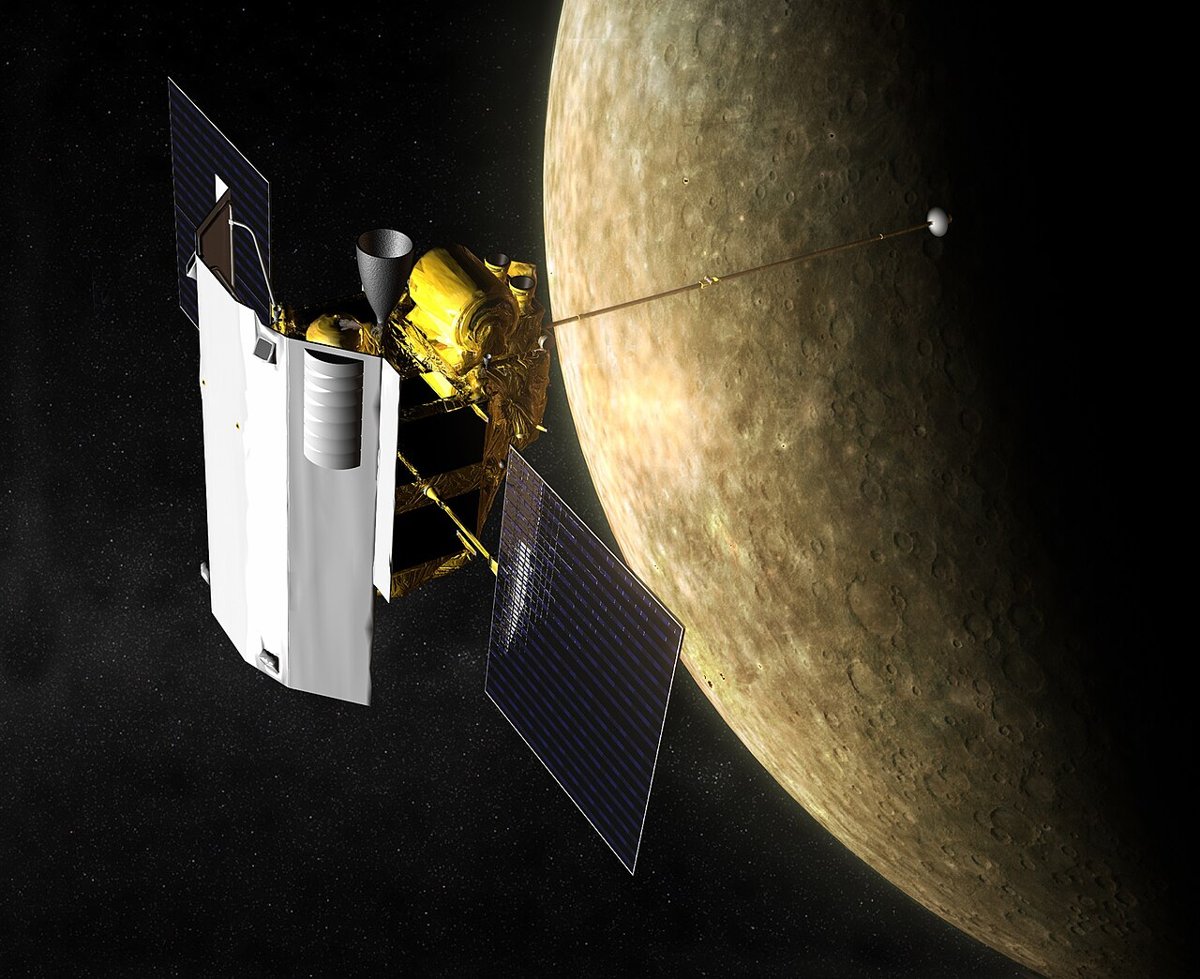
For stargazers willing to brave the post-sunset glare, June 15, 2026 marks a celestial alignment worth the effort. On this date, Mercury reaches its greatest eastern elongation—the point of maximum angular separation from the Sun as seen from Earth. At this moment, the innermost planet reaches 25 degrees from the solar disk and achieves a magnitude of 0.5, rendering it visible against the twilight sky in a way that occurs only a handful of times each year. This represents the evening elongation viewing opportunity for Mercury in 2026.
The elongation event reaches its precise moment at 20 UTC on June 15, though the practical viewing window extends beyond this singular instant. The challenge inherent in observing Mercury stems from its proximity to the Sun—the planet that dominates our daytime sky and obscures fainter celestial objects in a halo of scattered light. Greatest elongations represent rare windows when Mercury has drifted far enough from the solar position to become accessible to ground-based observers with modest optical equipment or even naked-eye observation under favorable conditions.
The timing of this event falls during the northern summer, when the evening sky remains illuminated well past sunset. This presents both opportunity and constraint: the extended twilight extends the usable viewing window, yet the persistent brightness in the western sky demands precise technique and clear atmospheric conditions. Observers will find Mercury positioned low on the western horizon immediately following sunset, making the specific geography of your observing site a critical variable. An unobstructed view toward the west becomes non-negotiable; any local terrain or structures blocking the low-angle sight line effectively eliminates the viewing opportunity.
The Three-Planet Configuration
What elevates this particular elongation event beyond a solitary achievement is the simultaneous presence of Venus and Jupiter in the same region of the evening sky. These three planets form what observers have termed a "mini planet parade"—a clustering of bright points of light that draws the eye and provides context for locating the dimmer Mercury. Venus and Jupiter, as the two brightest planets typically visible from Earth, serve as reliable signposts for positioning your gaze toward Mercury's location.
This configuration transforms the observing experience from a technical challenge into a visually compelling event. Rather than hunting for an isolated magnitude 0.5 object in the twilight, observers can locate the obvious bright planets first, then use them as reference points to narrow their search toward Mercury's position. The planetary parade adds aesthetic dimension to what is fundamentally an exercise in defeating the Sun's optical dominance.
The magnitude of 0.5 places Mercury at a brightness level that rewards dedicated observation. While brighter than many stars visible from urban locations, it remains fainter than Venus or Jupiter and requires slightly more careful attention to locate. The standard observing protocol involves waiting for deeper twilight—when the sky has transitioned from bright sunset orange to deeper blue—which reduces the glare gradient against which Mercury must be distinguished.
Preparation and Technique
Practical preparation for viewing Mercury during greatest elongation differs markedly from observing most other celestial phenomena. The primary requirement is a clear, unobstructed western horizon. This eliminates observatory domes and many suburban locations where trees, buildings, or terrain block the critical low-angle view. Coastal positions with open western exposure prove ideal, as do observations from elevated sites where the horizon extends unimpeded.
The timing of observation demands precision. Rather than observing at a fixed moment, experienced observers approach Mercury viewing as a window-based activity. Conditions improve progressively as twilight deepens, reaching optimal clarity typically 20 to 40 minutes after sunset, depending on atmospheric transparency and latitude. Observers at higher northern latitudes experience extended twilight that creates a longer usable window, though it also means the Sun remains higher above the horizon for longer periods.
Optical aid amplifies the advantage during this event. While binoculars are not strictly necessary—Mercury should be accessible to naked eye at magnitude 0.5 with clear skies and dark adaptation—they significantly improve confidence in acquisition and allow closer inspection. A simple pair of 7x50 binoculars provides adequate aperture and magnification for this task without requiring the setup complexity of a telescope. The wide field of view ensures Mercury remains visible even during the brief scanning period before solar glare reasserts dominance.
The positioning of Venus and Jupiter as reference objects deserves emphasis in preparation. These planets will be far brighter—Venus at a magnitude that typically peaks near -4, and Jupiter in the -2 range—making them unmistakable to anyone who glances toward the western evening sky. Once you have visually confirmed their positions, Mercury lies nearby, generally appearing as a distinctly fainter point. The cognitive challenge shifts from blind searching to systematic examination of a defined region.
Why It Matters
Greatest elongation events serve a practical function in the observational astronomer's calendar. Mercury's proximity to the Sun makes extended viewing windows rare; the planet spends most of its year lost in solar glare. The 25-degree separation achieved on June 15 represents a maximal departure, a geometric limit beyond which Mercury cannot move relative to the Sun before its orbital mechanics reverse the angular relationship. This maximum marks the deadline for the year's best evening viewing opportunity.
Beyond the individual achievement of sighting Mercury, this event anchors a deeper engagement with planetary mechanics. Observing Mercury's position relative to the Sun and other planets reinforces visceral understanding of orbital geometry and the three-dimensional structure of the inner solar system. The planet's apparent brightness, its position in the sky, and the timing of its visibility all stem directly from its orbit and our vantage point within the solar system. Evening elongation events demonstrate these principles with immediate, observable consequences.
The clustering with Venus and Jupiter adds dimension to this learning. Each planet follows its own orbital path at different distances from the Sun and at different orbital speeds. Their temporary alignment in the evening sky is a consequence of these independent motions, a reminder that planetary positions are dynamic rather than fixed. Observers who track Mercury across multiple nights leading into and out of greatest elongation witness firsthand how quickly planetary positions shift relative to the stellar background.
Additionally, this event reinforces the distinction between our training-data knowledge of the solar system and direct sensory observation. While we possess detailed mathematical models of planetary orbits, the experience of locating an actual planet in the real night sky—distinguishing its faint glow from background twilight and confirming its position against brighter references—creates a connection to observational astronomy that passive knowledge cannot replicate.
A Narrowing Window
Observers should note that the viewing window for Mercury during this elongation is inherently temporary. As days pass beyond June 15, Mercury continues its orbit and begins its return journey toward the Sun. The angular separation shrinks progressively, the magnitude dims, and the planet sinks lower on the horizon as twilight deepens. Within days, Mercury becomes inaccessible to casual observation, disappearing into the solar glare that defines Mercury's perpetual challenge as an observational target.
This urgency adds practical motivation to the observing project. Unlike many celestial events that offer viewing windows spanning weeks, Mercury at greatest elongation demands attention within a narrow temporal band. The 2026 evening elongation represents a specific, time-limited opportunity that will not recur in identical form until Mercury again reaches this configuration—a cycle governed by the planet's orbital period and Earth's intervening motion.
For those equipped with clear skies, unobstructed horizons, and evening availability in mid-June, the reward is direct observation of planetary mechanics in action and the satisfaction of locating a historically difficult target. The three-planet parade provides both practical guidance and aesthetic appeal, transforming a technical observing challenge into a compelling evening activity.
