
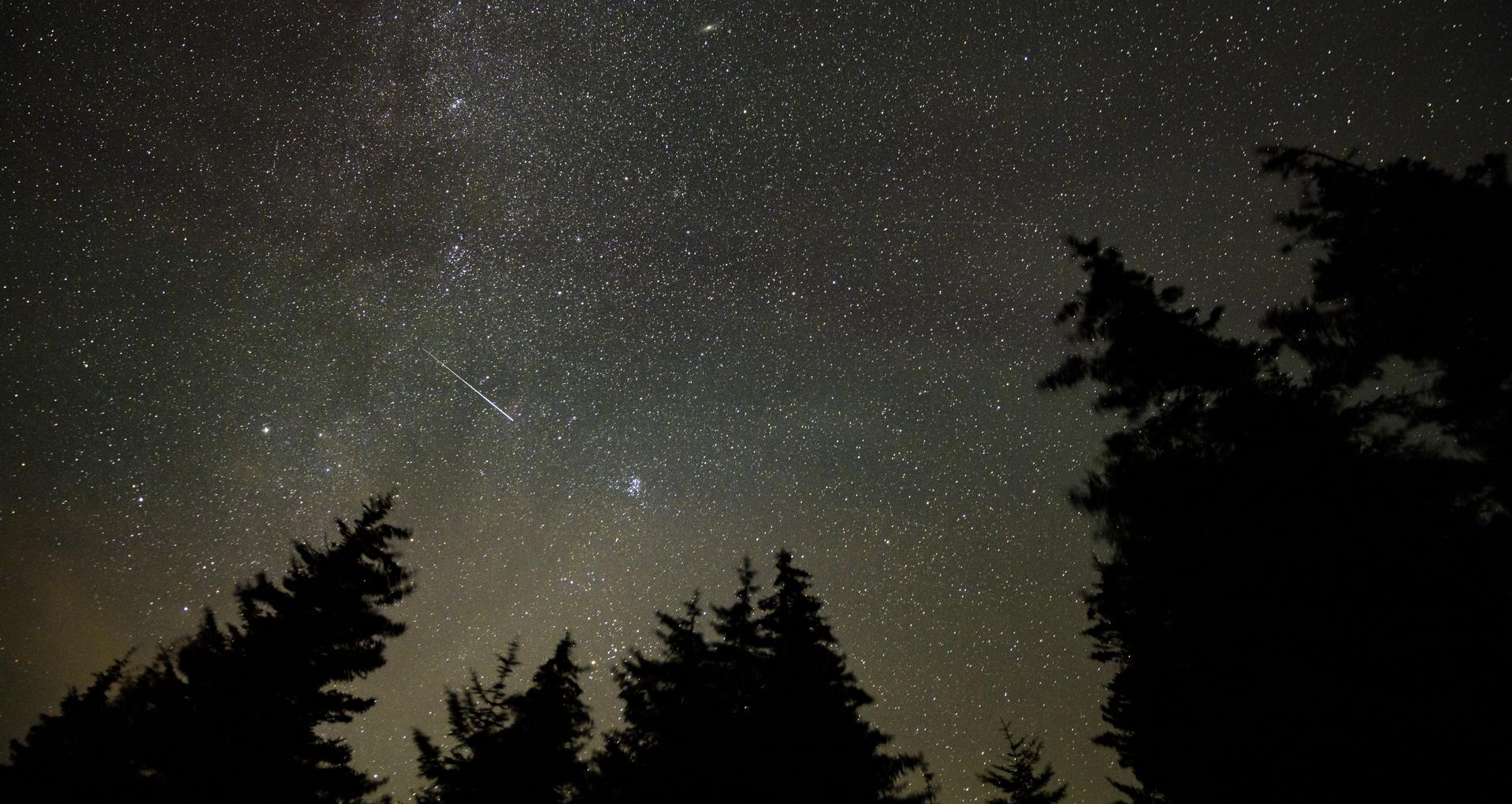
Every October, Earth passes through a stream of dust left behind by Halley's Comet. The result is the Orionid meteor shower. This year it peaks on the night of Oct. 21 into the morning of Oct. 22, according to NASA's October skywatching guide. The catch is a bright waxing gibbous Moon that will be up for much of the night. If you want to see the shower at its best, you'll need to time your viewing carefully.
Here is what to expect, when to look, and why a modest shower is still worth losing some sleep over.
What exactly are the Orionids?
The Orionids are made of debris from Halley's Comet, NASA notes. As the comet orbits the Sun, it sheds small grains of dust and rock. When Earth's orbit carries it through that debris, the particles hit the upper atmosphere and burn up, producing the streaks we call meteors.
The Orionids are fast. NASA puts their entry speed at about 41 miles (66 kilometers) per second. That speed produces two effects observers look for. Fast Orionids can leave glowing trains, bits of incandescent debris in the meteor's wake that NASA says last for several seconds to minutes. Some also become fireballs, meteors much brighter than usual.
The shower lasts a long time. NASA lists it as active from Oct. 2 through Nov. 7, 2026, so a stray Orionid could show up on any clear night in that window. The highest rates come around the peak.
When is the peak, exactly?
NASA gives the peak as the night of Oct. 21-22. EarthSky cites a predicted peak of 18 UTC on Oct. 21, from the RASC Observer's Handbook. The practical difference is small, because EarthSky also describes the Orionid maximum as broad and plateau-like, lasting several nights. Several mornings around Oct. 21 could show you some meteors, so you don't need to catch one particular hour.
That matters more than usual this year. If clouds cover the night of the 21st, the nights just before and after could still give you some meteors.
The Moon problem
The main obstacle in 2026 is the Moon. It will be a bright waxing gibbous during the peak, and the full Moon falls at 4:12 UTC on Oct. 26, per EarthSky. NASA warns that its glare will wash out some of the fainter meteors.
The timing does offer a way around it. On the peak mornings, EarthSky says, the Moon sets several hours before dawn. That leaves a dark gap between moonset and morning twilight, and NASA recommends using it: the best chance to see Orionids is in the few hours before dawn, after the Moon has set.
In practice, set an alarm instead of staying up late. EarthSky notes the hours between midnight and dawn are best for the Orionids, and evening viewing under a bright Moon is likely to disappoint. The predawn hours should be much better.
How many meteors will you see?
Expect a modest number. Both NASA and EarthSky put the rate at about 10 to 20 meteors per hour under dark skies. EarthSky also cites the American Meteor Society, which describes recent Orionid displays as low to average and notes that in exceptional years, such as 2006-2009, peak rates were comparable to the Perseids, at 50-75 per hour. EarthSky adds that the Orionids are not the year's strongest shower, and this year's Moon makes conditions harder.
That rate applies to a dark sky with no Moon. From a suburb or a city, or with the Moon still up, you should expect to see fewer. EarthSky's advice for 2026 is to expect about 10 to 20 per hour and be delighted if you get more.
A quick viewing plan
- Pick your nights: Oct. 21-22 is the official peak, and the nights on either side are good backups because the maximum is broad.
- Pick your hours: Go out after moonset and before dawn twilight starts.
- Pick your site: NASA advises finding a dark location. With the Moon already limiting the shower, light pollution costs you even more.
- Watch for trains: When a bright one appears, keep looking at the spot for a moment afterward. The fast Orionids can leave glowing trains that last seconds to minutes.
Also on the October sky calendar
The Orionids aren't the only event this month. Saturn reached opposition on Oct. 4, NASA notes, so the ringed planet rises around sunset and stays visible for much of the night. NASA's guide also mentions that observations from the Hubble Space Telescope revealed a ten-sided atmospheric wave encircling Saturn's south pole, a feature that appears to be strengthening. Later in the month, on Oct. 27-28, the Moon passes near the Pleiades star cluster, also known as the Seven Sisters.
Why It Matters
Each Orionid is a small piece of Halley's Comet, one of the best-known comets in history. The comet itself spends most of its long orbit far from Earth, but its debris reaches us every year. A meteor hitting the atmosphere at 41 miles per second is a reminder that comets shed material along their orbits, and that Earth crosses those trails each October.
This year's conditions also teach a useful skill: how to plan around the Moon. A shower's listed peak date is only part of the picture. Moonrise, moonset and the start of twilight often decide whether a night is worthwhile. In 2026 the Orionids reward people who check the sky's timing and get up early. The shower will be modest and the Moon will interfere, but the hours before dawn on Oct. 22 should still show some Halley debris to anyone who looks.
