
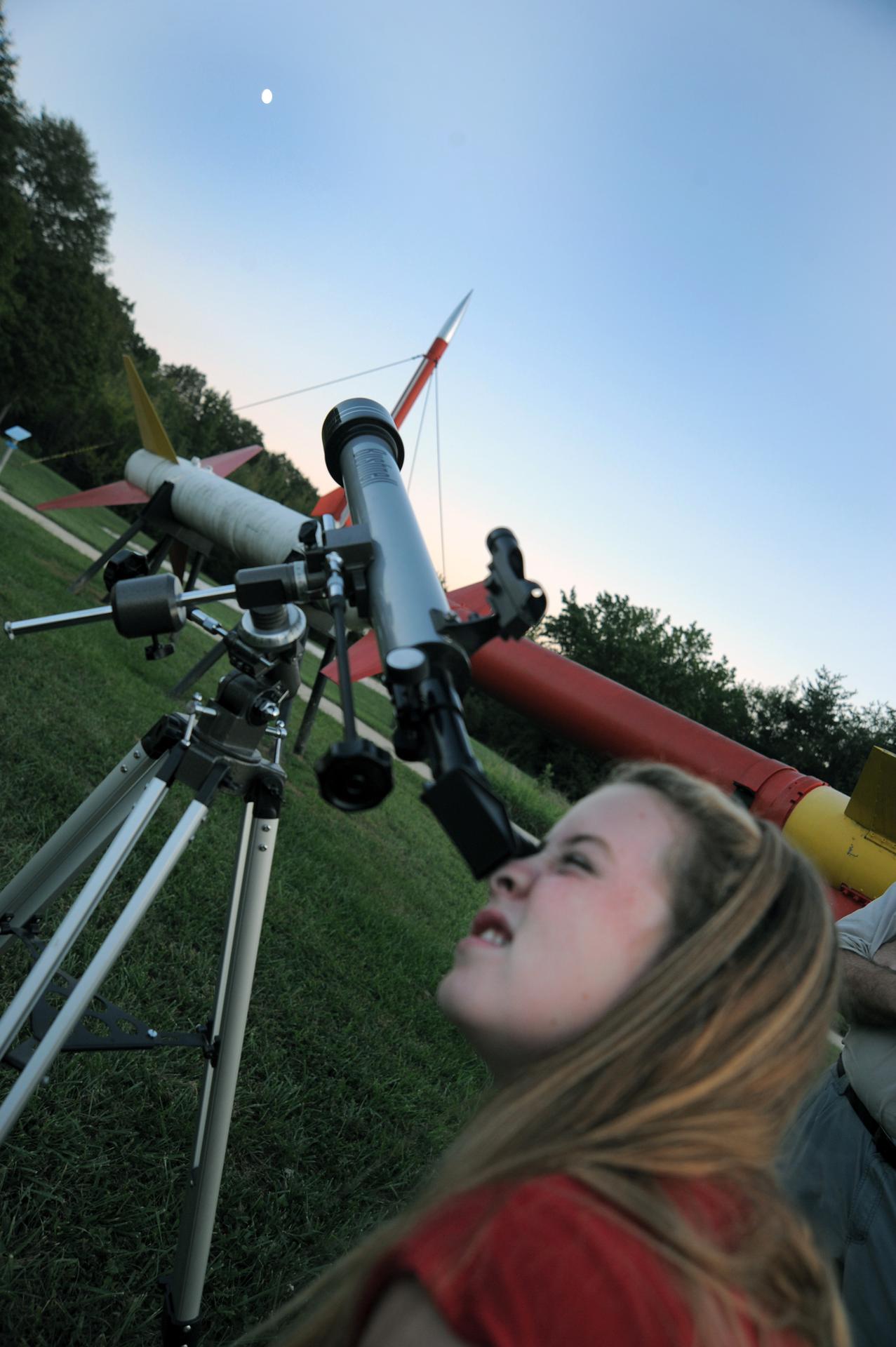
Once a year, NASA asks the planet to do something it mostly forgets to do: look up at the Moon on purpose. International Observe the Moon Night returns this Saturday, September 19, 2026, and the timing is better than usual — the Moon will have just tipped past first quarter into a waxing gibbous phase, putting the terminator, that knife-edge line between lunar day and lunar night, right where amateur observers want it.
The event itself is loosely organized by design. There's no single ticketed gathering; instead it's a worldwide, come-as-you-are observance that NASA coordinates and local hosts execute. According to NASA's official event page, the night is an annual celebration of lunar observation, science, and exploration, bringing together direct telescope and naked-eye observation, hands-on activities, and educational programming — offered both in person at registered locations around the world and virtually for anyone who'd rather watch from a couch, including online programs, lunar data visualizations, and virtual Moon tours.
What You'll Actually See
If you've never pointed anything more sophisticated than your eyeballs at the Moon, September 19 is a forgiving night to start. Per EarthSky's night-sky guide published September 17, the Moon reached first-quarter phase — roughly 51 percent illuminated — at 20:44 UTC on September 18, then continues filling out into a waxing gibbous through the 19th, when it floats among the stars of Sagittarius's Teapot asterism. For Northern Hemisphere observers, EarthSky notes the first-quarter Moon sits high in the sky at sundown, which means no waiting until 2 a.m. and no fighting a low horizon full of trees and rooftops.
The real payoff is the terminator. When the Moon is full, sunlight hits the surface almost straight on and the whole disk looks flat and washed out — craters lose their shadows and the mountains disappear into the glare. At first quarter and just after, sunlight rakes across the surface at a low angle, throwing long shadows off crater rims and mountain ranges. That's the same geometry NASA's event page points to when it highlights the Moon's dark, smooth "seas" of cooled ancient lava — plains such as Mare Tranquillitatis and Mare Imbrium, named by early telescopic observers and later visited by Apollo missions. Under quarter-phase lighting, the boundary between those flat seas and the rugged, crater-pocked highlands is unmistakable even through modest binoculars.
A Genuinely Global Turnout
What makes Observe the Moon Night interesting from a distance is how decentralized it is. NASA supplies the date, the branding, and some educational material; astronomy clubs and science centers supply the telescopes and the local knowledge of where the sky is actually dark enough to bother. That pattern holds well outside the United States. In Alcalá de Henares, Spain, the Agrupación Astronómica Complutense is hosting a free open-air session at the Recinto Ferial fairground starting at 9 p.m. local time on September 19, offering public telescope viewing alongside hands-on workshops and talks on the Moon's role in planetary research, the history of lunar exploration, and NASA's current projects. The event is explicitly framed, per local coverage, as part of the International Observe the Moon Night — a global event led by NASA and held annually in September or October, timed to the first-quarter Moon when viewing conditions are best. Organizers note the session requires no special preparation and is aimed at families and newcomers as much as experienced observers.
The event notes the same first-quarter lighting advantage that EarthSky flags for U.S. skywatchers: good terminator contrast for craters and mountain ranges, regardless of which hemisphere you're standing in. That's the pattern repeating in astronomy clubs across the globe this weekend — small, independently organized telescope nights riding on one shared date and one shared reason to set up a scope in a parking lot or a fairground.
Why It Matters
International Observe the Moon Night isn't a mission milestone or a discovery — it's outreach, and it's worth taking seriously as outreach. The Moon is the one object in the solar system that essentially every person on the dayside-turned-nightside of Earth can see with nothing but their own eyes, and events like this one exist specifically to convert "there's a Moon up there" into "here's what's actually happening on its surface." NASA's own framing leans on that accessibility: the event page's list of at-home viewing methods and virtual programs is built for people with no telescope and no astronomy club nearby, not just for those who show up to a public star party. For local hosts — a volunteer astronomy club in a Spanish fairground, a science center anywhere else — the event is also a rare shared date that guarantees a receptive audience already looking up, at exactly the point in the lunar cycle when there's the most to see.
How to Participate
You don't need a telescope, a registered event, or even a clear plan. Binoculars will resolve major craters and the mare boundaries; a backyard telescope will do considerably better. NASA's event page lists virtual participation options — including an event locator, online programs, and virtual Moon tours — for anyone without access to a local gathering, and it's worth checking whether a nearby astronomy club, science museum, or university observatory is running its own session — as the Alcalá de Henares event shows, the actual viewing opportunities are organized locally, not centrally. The one non-negotiable requirement is timing: go out the evening of September 19, while the Moon is still in that first-quarter-to-waxing-gibbous window, for the sharpest shadows the lunar surface will offer all month.
