
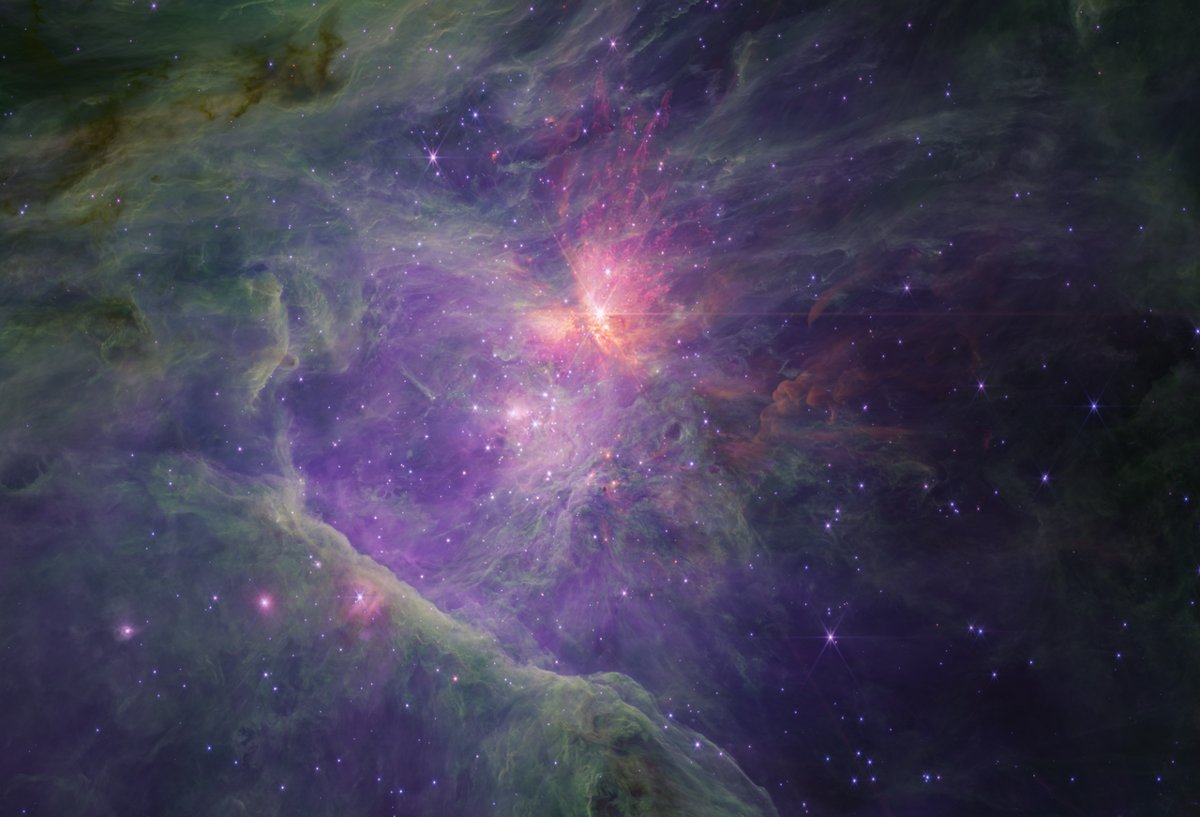
Every astrophotographer runs into the same wall. You capture the Moon's terminator or a smudge of nebulosity, pull the image up later, and it looks softer than what your eye remembered at the eyepiece. Atmospheric turbulence, optical limits, and the simple physics of light conspire to blur fine detail. On the desktop, the fix is a well-known toolkit — deconvolution, wavelet sharpening, unsharp masking — but those tools have historically meant hauling images onto a computer and learning software like RegiStax or PixInsight.
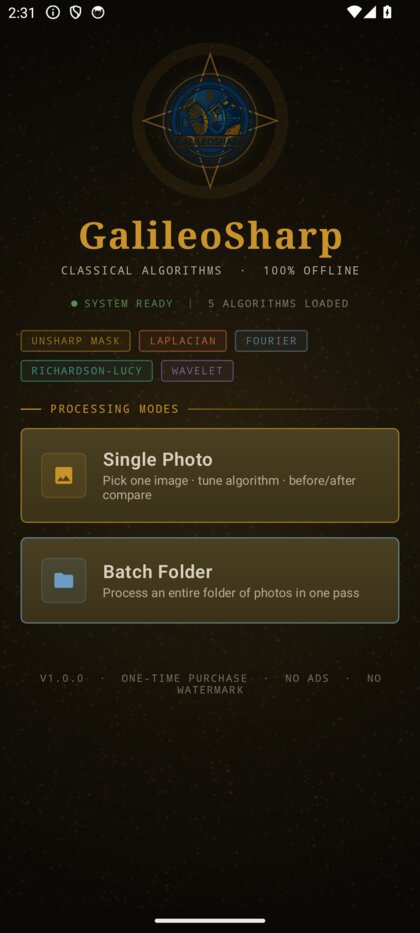
GalileoSharp brings that toolkit to Android, and it does it entirely on your phone. It's a free app from FolgerTech that takes the core sharpening algorithms astrophotographers actually use and wraps them in a clean, dark-themed interface built for working in the field — no account, no upload, no desktop required.
Real algorithms, not a slider toy
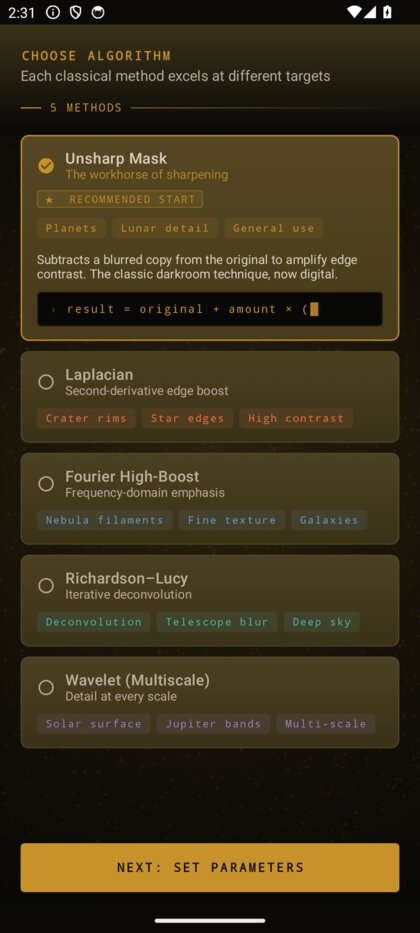
What separates GalileoSharp from the generic "sharpen" filter baked into every photo app is that it implements the methods that genuinely matter for astronomical images:
- Richardson-Lucy deconvolution — the iterative technique used to recover detail lost to blur, the same family of math behind a lot of serious planetary processing.
- Wavelet sharpening — separates the image into scales so you can boost fine surface detail without amplifying noise across the whole frame.
- Unsharp mask and Laplacian sharpening — fast, controllable classics for pulling out edges and contrast.
Each algorithm exposes the parameters that actually change the result — radius, strength, iterations — rather than hiding everything behind a single "intensity" slider.
Live preview, then batch the rest
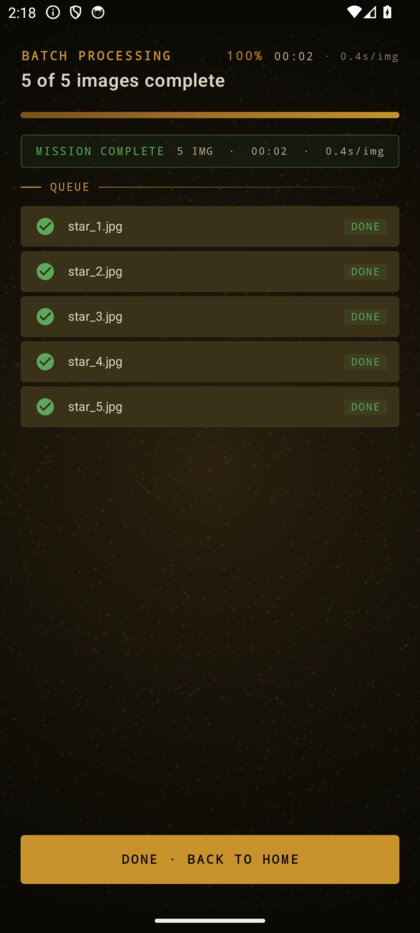
You dial in a look on one frame with a live preview, then hand GalileoSharp a whole folder. The batch processor applies your chosen algorithm and settings across an entire imaging session and reports progress as it goes — useful whether you're stacking lunar mosaics or cleaning up a night's worth of planetary captures.
It never touches the cloud
GalileoSharp processes every image locally on your device. There are no servers, no uploads, and no analytics — your photos never leave your phone. The app is free, supported by a single banner ad, with no subscription or account required.
Why It Matters
Phone cameras and small smart telescopes have pulled a new wave of people into astrophotography, but the processing step — where a flat, soft capture becomes a crisp image — has stayed stuck on the desktop. GalileoSharp closes that gap, putting genuinely capable sharpening one tap away on the device most people already shoot and review with. It won't replace a full desktop pipeline for the most demanding work, but for getting a sharp, shareable result out of a night under the stars, having Richardson-Lucy and wavelets in your pocket is a real step.
Get GalileoSharp free on Google Play →
