
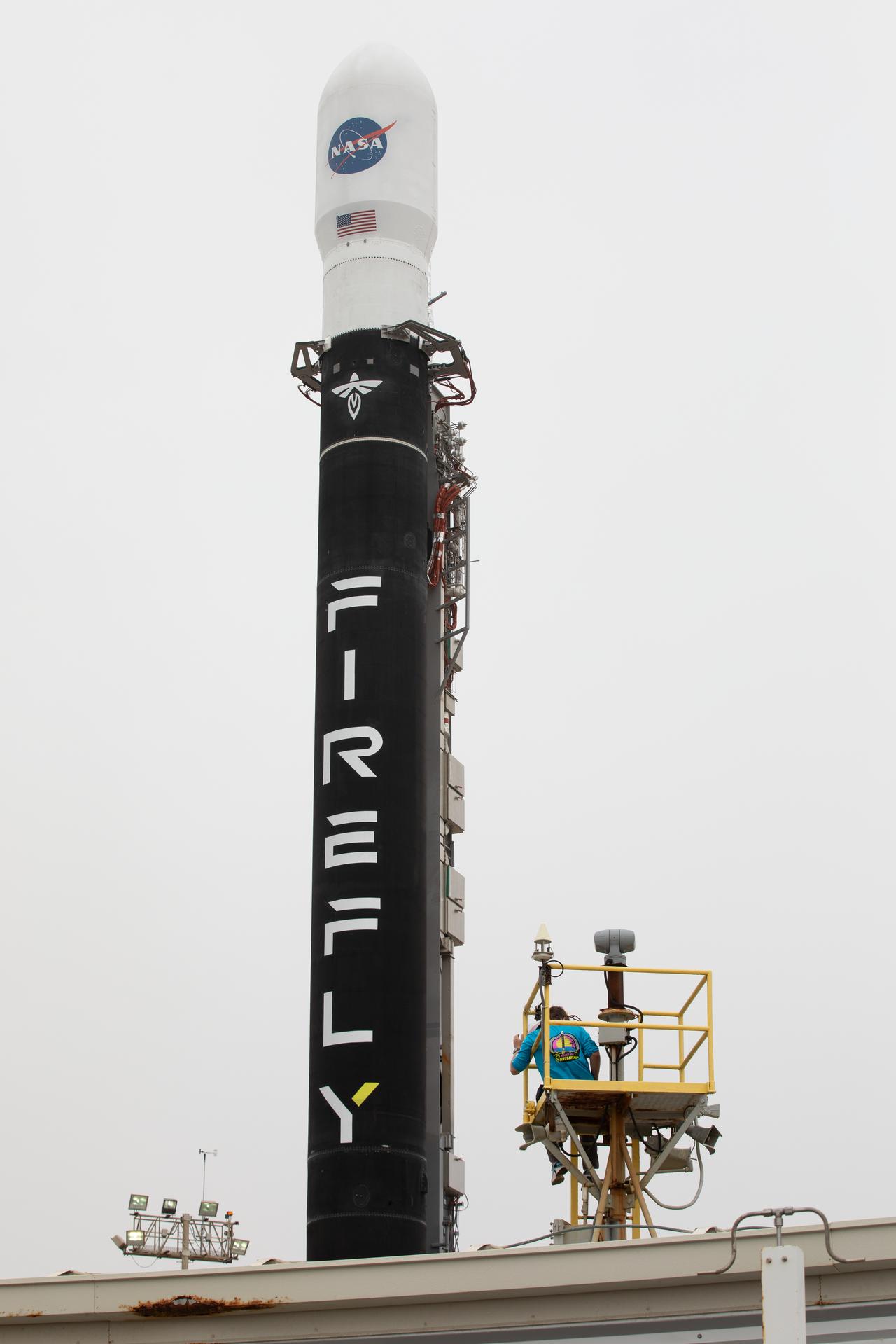
Firefly Aerospace's next-generation Alpha rocket won't fly this summer as once hoped. In its second-quarter 2026 financial disclosures — a 10-Q filed with the Securities and Exchange Commission on August 11, 2026, followed by an investor call the same afternoon — the Cedar Park, Texas-based launch company confirmed that the debut of its redesigned Alpha Block 2 vehicle has slipped to the fourth quarter of 2026. The mission, designated Flight 8 (FLTA008), was originally expected to follow closely on the heels of Flight 7, which launched on March 11, 2026.
The delay isn't a scheduling footnote. It traces back through two separate hardware failures that forced Firefly to rethink core elements of its rocket's structure.
Two Failures, One Redesign
The first came in flight. On April 29, 2025, an Alpha booster suffered an in-flight rupture shortly after stage separation on what Firefly and industry trackers refer to as Flight 6. The second came on the ground: in September 2025, a booster exploded during acceptance testing at Firefly's own Briggs, Texas facility, according to reporting from Spaceflight Now. Taken together, the two incidents pushed Firefly toward a substantial reworking of Alpha's booster rather than a narrow fix. The resulting Block 2 configuration is, in several respects, a different rocket:
- A seven-foot elongation of the vehicle to accommodate larger liquid oxygen tanks
- In-house-developed batteries and avionics, replacing externally sourced components
- Stronger carbon composite structures throughout the airframe
- A distinctive white exterior finish intended to improve thermal management
CEO Jason Kim has said the vehicle still has to clear acceptance testing, be shipped to Vandenberg Space Force Base in California, complete a static-fire test, and go through payload integration before it's ready to fly — a sequence of milestones that, taken together, explains why Firefly is now targeting the final three months of 2026 rather than a summer launch.
The Money Behind the Redesign
The financial cost of the rework shows up plainly in Firefly's books. The company's 10-Q attributes a year-over-year increase in research and development spending of $25.8 million — up 56% to $71.5 million for the quarter — primarily to increased costs from ramping up Alpha Block 2 production, alongside stock-based compensation, depreciation on newly acquired assets, and other R&D initiatives.
Yet the broader balance sheet doesn't look like a company in crisis. Firefly reported second-quarter revenue of $117.7 million, alongside a net loss of $92.3 million. The company holds $459.8 million in cash and has $563.7 million in remaining performance obligations — contracted future work not yet recognized as revenue — on its books. Firefly also used the disclosure window to note that it has extended its multi-launch agreement with Lockheed Martin, which the company said gives it added visibility into its future launch manifest — a signal that at least one major customer is willing to wait out the Block 2 transition rather than walk away from it.
The timing of Firefly's disclosures placed it in good company. Per SpacePolicyOnline's tracking of the industry's reporting calendar, Firefly's Q2 call landed at 5:00 p.m. ET on August 11, sandwiched between Rocket Lab's earnings call on August 10 and Virgin Galactic's on August 12 — a reminder that mid-August has become a de facto checkpoint for the small-launch sector to show investors how their vehicles, and their balance sheets, are holding up.
Why It Matters
Alpha's stumbles matter beyond Firefly's own bottom line. The small-to-medium launch market has spent the past several years consolidating around a handful of vehicles — Rocket Lab's Electron and Neutron, Relativity's Terran R, and Firefly's Alpha among them — that are supposed to give the Pentagon, commercial satellite operators, and NASA alternatives to SpaceX's dominant Falcon 9. Every quarter Alpha spends grounded for hardware fixes is a quarter that alternative shrinks, and a quarter Firefly has to keep burning R&D dollars without a matching launch cadence to show for it.
A booster that ruptures in flight and then explodes again on a test stand five months later is also the kind of pattern regulators and customers watch closely. That the redesign response was structural — a longer airframe, new composites, homegrown avionics — rather than a single patched component suggests Firefly concluded the original Block 1 architecture had margin problems that a quick fix wouldn't solve. Whether that bet pays off will be tested in the fourth quarter, when Flight 8 is scheduled to carry the redesigned booster off the pad at Vandenberg for the first time. Until then, the extended Lockheed Martin contract and the company's cash position are the clearest signals that Firefly's customers and financiers are still willing to give Block 2 the runway to prove itself.
