
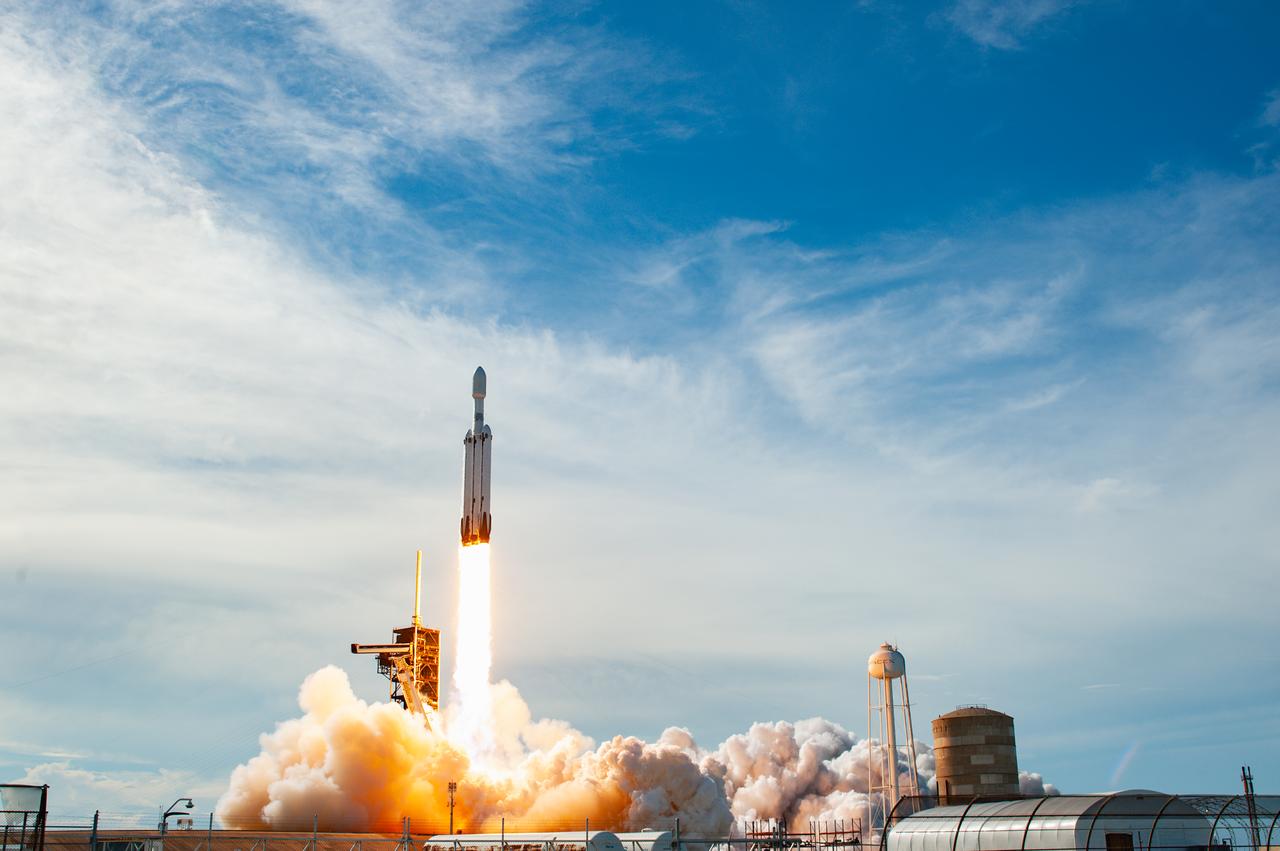
The Federal Communications Commission is set to vote on Wednesday, Sept. 30, on an order that would formally declare space-based operations, including launch, deployment and the operation of space stations, to be outside the reach of the National Environmental Policy Act. The item is on the agenda for the commission's September 2026 open meeting. As of this writing the vote has not happened, and nothing described below has been adopted.
What is on the table
The item is a Report and Order and a Further Notice of Proposed Rulemaking (FNPRM) in WT Docket No. 25-217, titled "Modernizing the Commission's NEPA Rules." According to an FCC fact sheet dated Sept. 9, the order would overhaul how the agency handles environmental review across the board. It would streamline the agency's categorical exclusions, environmental assessments and environmental impact statements.
Two provisions matter most for the space sector. First, the fact sheet says the order would determine that actions associated with space-based operations, including launch, deployment and operation of space stations, are not "major Federal actions." That phrase is the trigger for NEPA: if an agency decision is not a major federal action, the statute's environmental review requirements do not apply to it. Second, spectrum authorizations, including those for satellite earth stations, would not be major federal actions where no antenna structure registration is needed.
The fact sheet also cites industry projections that the legacy rules would cost more than $2 billion in permitting costs over the next decade. The accompanying FNPRM is a separate track: it seeks public comment on a framework for the National Historic Preservation Act.
The FCC's reasoning
Satellite licensing is not new ground here. Payload reports that the FCC has categorically excluded satellite licensing from NEPA review since 1986. The draft order, as Payload describes it, would go further and make an affirmative finding rather than rely on an exclusion, and it rests on two arguments.
The first is that the activities are extraterritorial, a point Payload ties to the Outer Space Treaty. The second is about what a license actually gives the agency. A spectrum license, the draft reasons, does not give the FCC control over how an operator builds, flies or disposes of a satellite. If the agency cannot control those choices, the argument goes, its license decision is not the kind of federal action that NEPA is meant to scrutinize.
Payload also reports that, for atmospheric activity, the FCC defers to the FAA. That is where the story connects to a separate proceeding.
The FAA parallel
In July, according to Payload, the FAA proposed waiving NEPA and 12 additional statutes for commercial space licenses and permits. Comments on that proposal closed on Aug. 31, with more than 3,200 received. The FCC item is a different rulemaking at a different agency, but the two are moving in the same direction, and because the FCC defers to the FAA on atmospheric activity, the FAA's outcome is likely to matter for launch.
The backdrop is a change in how NEPA is administered. Payload notes that in January 2025 President Trump issued an executive order revoking a Carter-era order that had granted the Council on Environmental Quality authority to issue government-wide NEPA regulations, leaving agencies to write their own NEPA procedures. The FCC's overhaul is one such rewrite.
One view from the advocacy side
Supporters are making their case in public. In an opinion piece dated Sept. 28, Rebecca L. Grant of the Lexington Institute argues that the FCC should exclude space operations and satellite licensing from NEPA. Her piece notes that NEPA was signed on Jan. 1, 1970, that the Council on Environmental Quality was created by an executive order under President Carter in 1978 and rescinded in January 2025, and that a February 2025 court decision said the NEPA text does not give the council authority to issue binding regulations. This is an advocacy piece, and it should be read as opinion rather than as a neutral account.
Also on the agenda
The NEPA item is not the only space-related entry. According to the FCC's tentative agenda, reproduced by the Benton Institute, Chairman Brendan Carr's Sept. 30 meeting also includes "Unlocking Satellite Spectrum Abundance." That item would include an order to unlock more than 1,000 MHz in the 12.7 GHz and 42 GHz bands, plus an FNPRM on an additional 1,175 MHz in the Ku- and Ka-bands and 138.25 GHz in the D-band.
Why It Matters
For satellite operators, the practical question is whether a spectrum license will ever again come with an environmental review attached. The fact sheet's answer, if the order passes, is no for space-based operations, and the $2 billion figure is the industry's estimate of what the old approach would have cost. That number is a projection cited by the FCC, not an audited total.
For everyone else, the question is who looks at the environmental effects of launching and operating satellites at scale, and where. The draft order's logic is that the FCC's license is the wrong hook: the agency does not control the build, flight or disposal, and atmospheric activity is deferred to the FAA. That shifts weight onto the FAA proceeding, where a proposal to waive NEPA and 12 other statutes has already drawn more than 3,200 comments. Whether that proposal is finalized, and in what form, is not yet known.
It is also worth watching what the vote does not settle. The order's finding covers the FCC's own actions. The NHPA framework sits in the FNPRM, so it remains a question for comment, not a decision. And because the vote is still pending, the final text could differ from the draft and fact sheet described here.
Sources
- FCC Fact Sheet, Modernizing the Commission's NEPA Rules, WT Docket No. 25-217 (FCC, Sept. 9, 2026)
- FCC to Vote on Waiving NEPA Review for Space Ops (Payload)
- FCC Announces Tentative Agenda for September 2026 Open Meeting (Benton Institute)
- Keep Out: Why the FCC Should Exclude Space Operations and Satellite Licensing from NEPA Environmental Reviews (Lexington Institute, opinion)
