
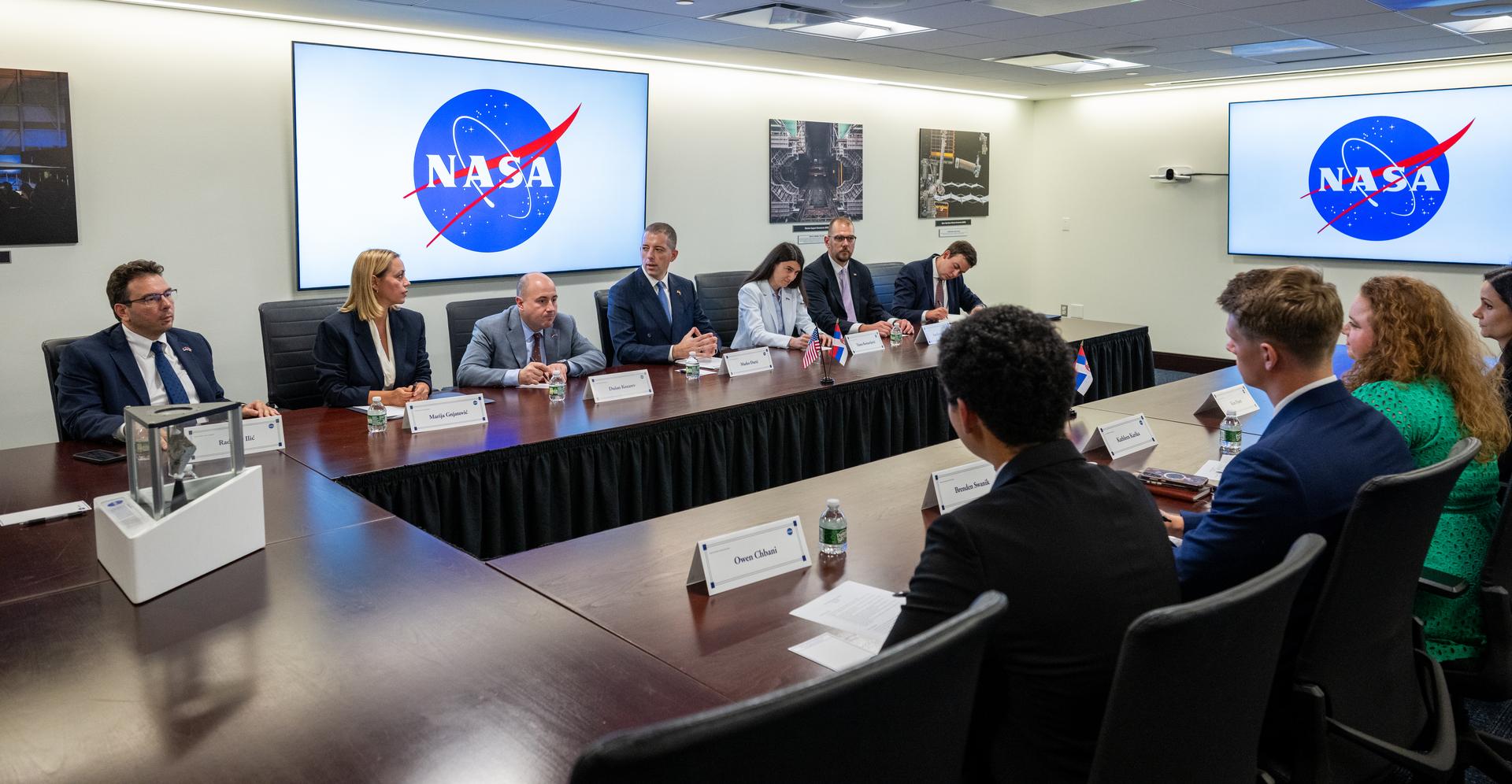
The Artemis Accords added four signatories in the space of five days (Sept. 21 to Sept. 25). On Sept. 28, NASA announced that Albania, Croatia, Cote d'Ivoire and San Marino had brought participation in the framework to 76 countries. The two most recent signings came on back-to-back days: Cote d'Ivoire in Abidjan on Sept. 24, and San Marino in Rimini on Sept. 25.
The full group of signatories is about to meet, and the accessions arrive just ahead of that gathering.
The Count, Signing by Signing
Going by the sequence reported by Nature World News, Turkiye became the 71st signatory on Aug. 31, followed by Djibouti as 72nd. Albania was 73rd, signing on Sept. 21 at NASA Headquarters. Croatia was 74th, signing Sept. 23 in Zagreb. Cote d'Ivoire was 75th and San Marino 76th.
Cote d'Ivoire signed on Thursday, Sept. 24, in Abidjan during Africa Space Expo ASPEX 2026. According to NASA, Minister Adama Diawara signed for the country, and U.S. Charge d'affaires Junaid Munir witnessed the signing. NASA Deputy Administrator Matt Anderson is quoted in the agency's announcement. Nature World News adds some background on the country's space work: Cote d'Ivoire created a national space agency in 2025 and has worked with NASA on Earth observation and geodesy since 2019.
San Marino followed on Sept. 25 in Rimini. Minister Rossano Fabbri signed. NASA Europe representative Gregory Mann and Joseph Tordella, the U.S. Consul General in Florence, attended. Vzglyad.uz independently confirms the Sept. 24 and Sept. 25 signing dates and the signers.
What Signing Actually Commits a Country To
The Accords were established in 2020 by NASA, the State Department and seven founding countries. They are a set of political commitments rather than a treaty. According to NASA, signatories pledge to pursue peaceful and transparent exploration, to render aid, to share scientific data, to avoid interfering with one another's activities, and to preserve historic sites.
NASA frames the current membership in terms of scale. The 76 signatories represent nearly 40 percent of the world's nations, and NASA says nearly two-thirds of the countries that have signed the Outer Space Treaty have now also signed the Accords.
The Antalya Meeting
The next milestone is close. NASA says the Principals' Meeting will take place at the International Astronautical Congress in Antalya, Turkiye, beginning Monday, Oct. 5. It will be co-chaired by Deputy Administrator Matt Anderson and Maj. Gen. Roberto Melgar Sheen of the Peruvian Space Agency, CONIDA.
That meeting is part of a structure the signatories set up for themselves. The Signatories Group Method of Operations was adopted in 2024, and the group meets twice a year. Turkiye, which joined as the 71st signatory in late August, is the country where this year's meeting takes place.
NASA also used the announcement to point at its Moon Base plans. The agency says the NASA Moon Base invites every signatory to contribute payloads or CubeSats. NASA's announcement does not detail how those contributions would be selected or scheduled, so that is best read as an open invitation rather than a defined program.
Why It Matters
The Accords have no enforcement body, and they bind no one legally. Their value lies in accumulating participants. Each new signatory adds to a shared set of expectations about behavior on and around the Moon, and the count is now large enough that those expectations cover a substantial share of the world's countries.
The recent additions are also geographically varied. Albania, Croatia and San Marino in Europe, Cote d'Ivoire in West Africa and Turkiye, which hosts the coming meeting, show the framework drawing in countries with very different space capabilities. Cote d'Ivoire is a useful example: it created its national space agency in 2025, yet it signed at a space expo in Abidjan, its largest city.
What the count cannot tell us is what the commitments will do in practice. The cases the Accords were designed for, such as safe operations near one another's hardware and protection of historic sites, have not yet been tested by 76 parties operating on the lunar surface. The twice-yearly group meetings and the shared operating method adopted in 2024 are where those questions would presumably be worked out. The Antalya session will be a chance to see how a group of this size handles that work.
Sources
- NASA Celebrates as Artemis Accords Surpasses 75 Signatories
- NASA Welcomes Cote d'Ivoire as Newest Artemis Accords Signatory
- San Marino Becomes 76th Artemis Accords Signatory a Day After Cote d'Ivoire Joined (Nature World News)
- San Marino and Cote d'Ivoire become 75th and 76th Artemis Accords signatories (Vzglyad.uz)
Correction, Sept. 29, 2026: An earlier version of this article's headline said four nations joined the Artemis Accords in eight days. Signing dates reported by Nature World News run from Sept. 21 to Sept. 25, so the headline now says five days.
