
Bilateral space agreements rarely make for dramatic reading. They tend to be renewed quietly, signed by officials in suits, and filed away until the next renewal comes due. But the exchange of letters that the European Space Agency and the Indian Space Research Organisation signed in Paris on Sept. 10, 2026, is worth a closer look — not because of what it changed on paper, but because of where the two agencies chose to point their combined effort next.
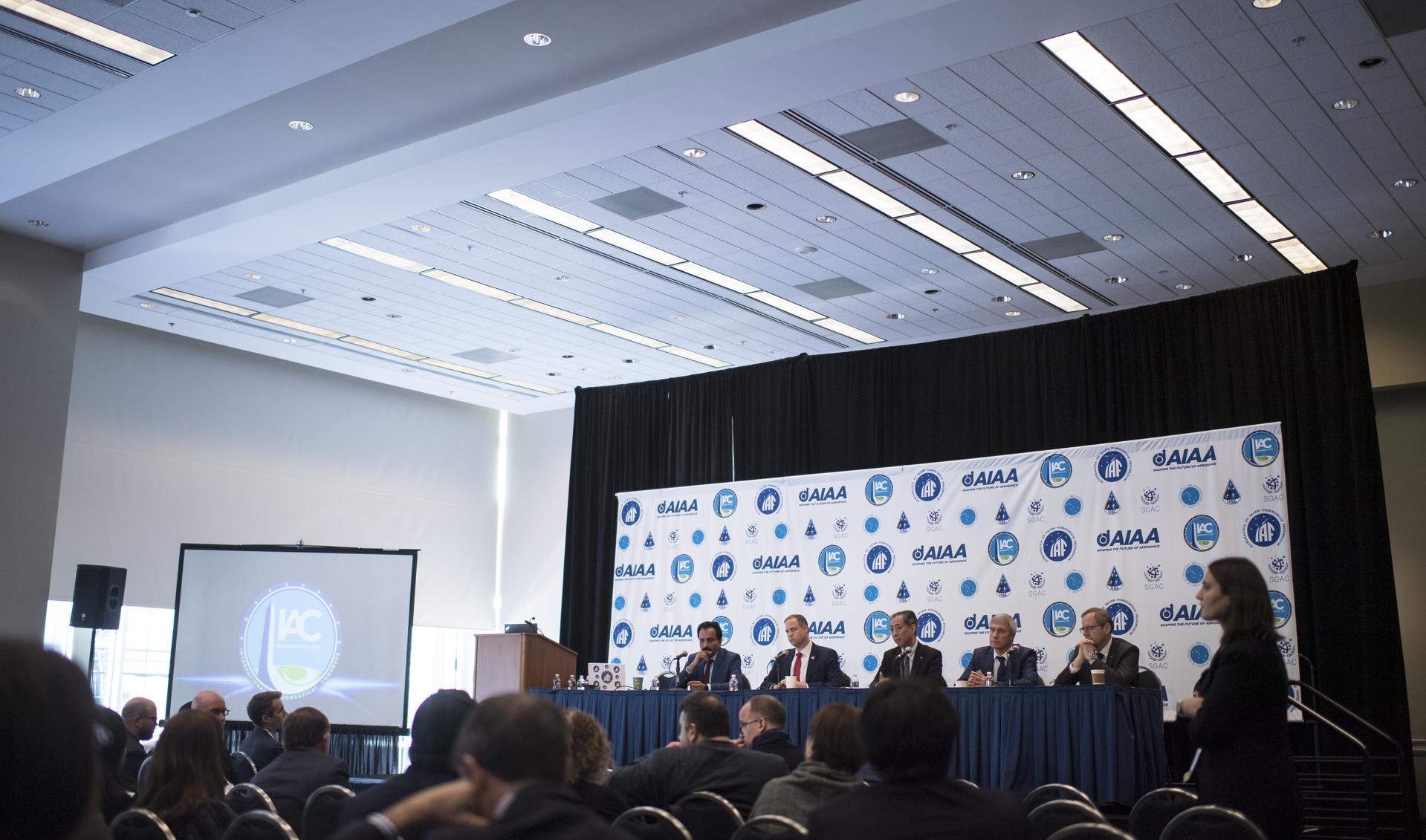
The signing took place on the sidelines of the International Space Summit in Paris, where ESA Director General Josef Aschbacher and ISRO Chairman Dr. V. Narayanan put their names to a five-year extension of the agencies' Cooperative Agreement, pushing its expiration from its original terms out to Jan. 8, 2032. The underlying agreement dates back to January 2002, meaning ESA and India's space program have now been formal partners for close to a quarter century — long enough to have quietly become routine, and long enough that a five-year renewal alone would barely register as news.
What makes this extension notable is the fine print. Alongside the date extension, the two agencies formally broadened the scope of what the agreement covers. The original 2002 pact and its subsequent updates focused on areas like Earth observation, satellite navigation, space science, and mission operations — the nuts-and-bolts work of running space programs that talk to each other. The 2026 renewal adds three new pillars: space weather, human and robotic exploration, and the sustainability of outer-space activities.
What Actually Changed
Space agreements like this one function less like binding contracts and more like scaffolding — they establish the legal and administrative framework under which specific joint missions, data-sharing arrangements, and technical exchanges can later be built. The Cooperative Agreement itself doesn't commit ESA and ISRO to a particular mission; it defines the boundaries within which future missions can be negotiated without starting from scratch each time.
That's why the addition of human and robotic exploration to the agreement's scope is the detail worth watching. It isn't appearing out of nowhere. According to reporting on the signing, the expanded scope builds directly on a 2025 Joint Statement of Intent on human exploration that the two agencies had already signed — essentially a statement of shared ambition that the 2026 agreement now gives a formal legal home. ISRO has its own crewed spaceflight ambitions tied to the Gaganyaan program, while ESA has spent the past several years positioning itself as a contributor to — rather than a solo operator of — crewed missions, through partnerships on the International Space Station and lunar Gateway programs. Folding human exploration into the ESA-ISRO framework gives both agencies a formal channel to coordinate on astronaut training, mission planning, or technology sharing, even if no specific joint crewed mission has yet been announced.
Space weather is a more technical but no less practical addition. As both agencies operate growing constellations of Earth observation and navigation satellites, and as India expands its own space situational awareness capabilities, better coordination on monitoring solar activity and its effects on spacecraft and ground infrastructure has obvious mutual value. The same logic applies to the addition of "sustainability of outer-space activities" — language that in current space-policy circles typically covers orbital debris mitigation and the long-term usability of key orbital regions, an area where both Europe and India have active but historically separate initiatives.
Why It Matters
On its own, a bilateral agency-to-agency agreement extension is a procedural event. Its significance lies in what it signals about how India's space program is being treated by established spacefaring powers. ISRO has spent the last two decades building credibility through low-cost, high-reliability missions — from Mars orbiters to lunar landers — and its rise from a national program focused on domestic launch capability to a partner named explicitly in the same breath as human exploration and space weather cooperation with one of the world's oldest multinational space agencies marks a real, if incremental, status shift.
For ESA, the calculus is different but complementary. The agency has been actively diversifying its international partnerships in recent years, partly as a hedge against dependence on any single partner for programs like crewed exploration and space situational awareness. Deepening ties with ISRO — an agency with independent launch capability, a growing satellite constellation, and its own crewed spaceflight timeline — gives ESA another node in that diversification strategy.
None of this guarantees a specific joint mission will follow. Cooperative frameworks like this one have, in the past, led to everything from shared ground-station support to full co-developed satellites, and the actual output depends entirely on what gets negotiated under the umbrella the agreement provides. But the specific choice to add human exploration and space weather — rather than, say, just renewing the existing scope unchanged — suggests both agencies see near-term value in those areas specifically, and that the 2025 Joint Statement of Intent on human exploration was a deliberate first step rather than a one-off gesture.
What Comes Next
The agreement itself doesn't specify concrete deliverables or timelines for the newly added areas, and neither ESA nor ISRO has announced a specific joint project tied to the expanded scope. What it does is remove the administrative friction that would otherwise slow down any future proposal in those domains — a meaningful, if unglamorous, prerequisite for anything more ambitious. Given both agencies' existing crewed spaceflight programs and the shared interest in orbital debris and space weather monitoring, the areas to watch over the next few years are technical working groups, data-sharing arrangements, and — if the 2025 Joint Statement of Intent is any indication — some form of coordination around human spaceflight training or mission support.
