
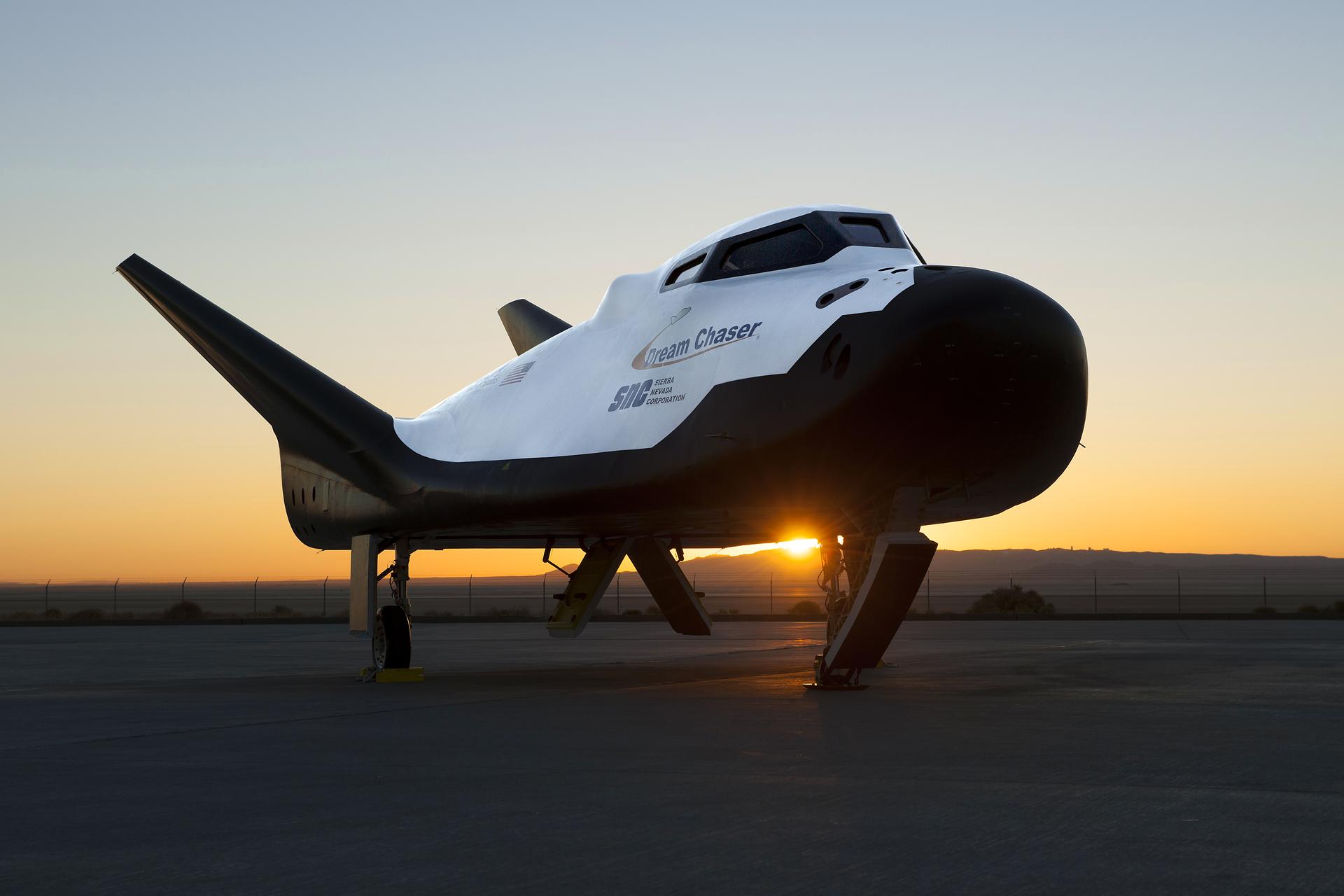
Sierra Space's Dream Chaser has never been to space, but the paperwork for bringing it back is now mostly done. The Federal Aviation Administration has published a Final Environmental Assessment and a Finding of No Significant Impact and Record of Decision (FONSI/ROD) covering Dream Chaser reentry operations at two sites: the Shuttle Landing Facility (SLF) at Kennedy Space Center in Brevard County, Florida, and Vandenberg Space Force Base in Santa Barbara County, California. The FAA's project page was last updated on November 6.
Sierra Space thanked the agency publicly on X on Monday, November 9, according to Space.com. The company is still targeting a spring 2027 debut. That flight has to start on a rocket, though, and the vehicle Dream Chaser is expected to fly on, United Launch Alliance's Vulcan Centaur, is a separate problem.
What the FAA actually decided
The plan the FAA reviewed is simple. Sierra Space plans to reenter Dream Chaser at the SLF. If the vehicle cannot safely land there but could safely land elsewhere, Sierra Space would instead conduct the reentry at Vandenberg as a contingency. The proposed action also covers temporary airspace closures, which the environmental review had to take into account.
The agency found no significant environmental impact. The most noticeable effect on the public would be sonic booms during approach. Space.com quotes the FAA as saying booms at Vandenberg would be temporary, short in duration and limited to 1.1 pounds per square foot or less, which the agency describes as similar to a thunderclap.
The review took a long time. The FAA released a draft Environmental Assessment in December 2021, and a revised draft followed in July and August 2024 after Sierra Space added the Vandenberg contingency proposal. The final version arrived almost five years after the first draft. It shows how much regulatory work comes before a vehicle's first flight.
Environmental review vs. license
A FONSI and a launch or reentry license are different things, and the FAA says so directly. Its project page notes that completing the environmental review does not guarantee a license. Sierra Space still has to meet the agency's safety, risk and financial responsibility (indemnification) requirements.
The company appears to be past that step for Vandenberg. Gadget Review reported on November 12 that the FAA issued Sierra Space a vehicle operator license under Part 450, the agency's consolidated commercial launch and reentry rule, covering reentry and landing at Vandenberg. According to that report, the license runs for five years and allows up to four reentries per year, as long as the vehicle configuration and mission profile stay as approved. It does not authorize a launch.
Those license terms come from a secondary source. We could not find them on the FAA's own project page, which still describes Sierra Space as applying for the license. Treat the five-year, four-reentry figures as reported, not confirmed by the agency.
A spaceplane still waiting for its first flight
Dream Chaser is a winged spaceplane about 30 feet (9 meters) long. It is designed to launch on a rocket and glide back to a runway. It has completed a couple of drop tests from the air, but it has never launched to space.
The program's main customer is NASA. NASA selected Sierra Space in 2016 to conduct at least six uncrewed cargo flights to the International Space Station under the Commercial Resupply Services 2 (CRS-2) contract, and development delays have repeatedly pushed those missions back.
The first mission has changed along the way. Dream Chaser was originally meant to fly on ULA's Atlas V and later switched to Vulcan Centaur. It was supposed to ride on Vulcan's second-ever mission but wasn't ready, so that flight went ahead in October 2024 without it. Space.com describes the spring 2027 mission as a free-flying test in Earth orbit. Gadget Review says other industry outlets have reported a possible simulated ISS berthing during the flight, but that detail is unconfirmed. Sierra Space is also part of the Orbital Reef commercial space station consortium, and Space.com says the company is pursuing contracts for a mix of NASA, military and private missions.
The Vulcan problem
The landing approvals settle where Dream Chaser can come home. They don't settle when it can leave. Launch is expected from Florida on Vulcan Centaur, and Gadget Review notes that Sierra Space and ULA must still finalize mission readiness and launch scheduling, with no firm launch date announced. Because the debut depends on a rocket Sierra Space doesn't control, any change in Vulcan's schedule would go straight into Dream Chaser's timeline.
That leaves an odd situation. The regulatory steps that usually come late, landing site approvals and, by Gadget Review's account, a reentry license, appear to be in place, while the launch date remains the open question.
Why It Matters
The FAA's decision gives Dream Chaser an approved environmental basis for reentry operations at two federal sites, one on each coast. Vandenberg as a backup matters operationally: if a landing at the SLF is not possible, Sierra Space has a second place to bring the vehicle down.
More broadly, the approval shows the FAA's Part 450 process handling a winged vehicle that returns to a runway, which raises questions about sonic booms and airspace closures that the agency has now worked through on the record. Whether that work pays off in 2027 depends on a rocket Sierra Space doesn't control.
