
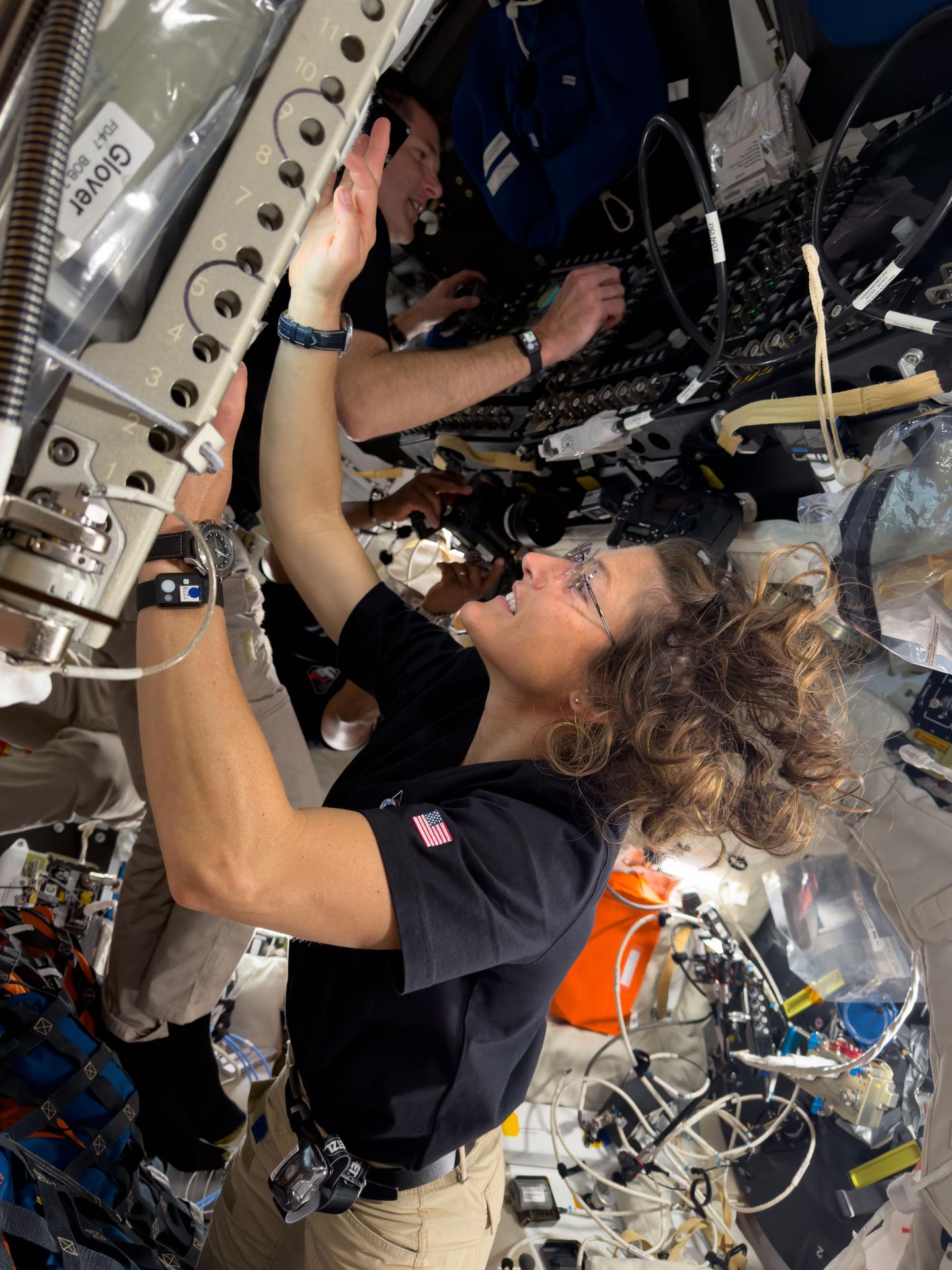
Six months after she flew around the Moon, Christina Koch is moving to an office job. NASA said this week that the Artemis II astronaut will become the agency's acting deputy chief engineer on Sunday, Nov. 1. She takes over from Katherine Van Hooser, who retires Oct. 21 after more than 35 years at the agency.
The new job ends her career as a flyer. Koch moves to management astronaut status, and NASA says she is no longer eligible for spaceflight assignments. With this move, every member of the Artemis II crew has left active flight duty, and it comes just as NASA gets ready to explain how it plans to get astronauts back on the lunar surface.
An engineer goes back to engineering
Koch's background explains the choice. According to NASA, she started her career as an electrical engineer at the agency's Goddard Space Flight Center and was selected as an astronaut in 2013. She later spent 328 consecutive days aboard the International Space Station, the longest single spaceflight ever by a woman. In April she flew on Artemis II, which Central Florida Public Media notes reached 248,655 miles from Earth.
The engineering post she is filling sits right next to NASA's top technical authority. Amit Kshatriya, the agency's Associate Administrator, also serves as Chief Engineer, and both he and Administrator Jared Isaacman are quoted in NASA's announcement. Van Hooser leaves after a long career that NASA says started at Marshall Space Flight Center in 1991.
The job title says "acting," and NASA's release does not say whether Koch will eventually hold the position permanently. What is clear is the direction of the move. NASA says Koch will help lead its engineering community, supporting technical oversight and mission readiness across the agency's programs and projects.
The whole crew has moved on
Koch is the last of the four to change roles. Space.com reports that Reid Wiseman and Victor Glover went to emeritus status last month, and Glover also took a full-time position at Cal Poly. Jeremy Hansen, the Canadian Space Agency member of the crew, became a Royal Canadian Air Force reservist.
That can look like an exodus. Don Platt of Florida Tech's Spaceport Education Center told Central Florida Public Media that it is not uncommon for astronauts to move into new roles after a flight. Training takes time and sacrifice, he said, and once astronauts have flown they are "at the bottom of the cycle again" and must work their way up to another flight opportunity.
The timing still matters. Artemis II was the first crewed flight of NASA's Artemis program. The four people who flew it are now spread across emeritus status, academia, a foreign military reserve and, in Koch's case, NASA engineering management.
Artemis III looks different now
The next mission is a different one from the landing. NASA's media advisory says Artemis III will send four astronauts to low Earth orbit next year to test systems for future landings. Space.com describes it as a docking test, crewed by Bresnik as commander, Douglas, Rubio, and the European Space Agency's Parmitano as pilot.
The landing has moved to a later mission. Space.com reports that Artemis IV is targeted to land near the lunar south pole in 2028. That year matches NASA's own wording: the agency's Oct. 23 briefing is billed as an update on plans to return astronauts to the lunar surface by 2028.
Staying in low Earth orbit does not make Artemis III easy. Platt told Central Florida Public Media that the mission is very ambitious even though it will be in low Earth orbit, with brand new spacecraft and capabilities that haven't been demonstrated previously.
What to watch on Oct. 23
NASA will hold the briefing at 2 p.m. EDT on Friday, Oct. 23, at Kennedy Space Center. The advisory's headline promises a discussion of "Artemis acceleration" and the status of upcoming Moon missions, and the agency says the event will include details on Artemis III. Journalists who wanted to attend in person had until noon on Oct. 16 to apply.
The advisory does not describe what "acceleration" will involve. The questions to bring are the obvious ones. What exactly will the Artemis III crew test in orbit? What has to go right in that test for a 2028 landing to stay on schedule? And how much of the remaining hardware will be ready in time to support either mission?
Why It Matters
Koch's move connects two parts of the Artemis program. On the people side, all four members of the Artemis II crew have now left the flight rotation. Whatever Artemis II taught about living and working beyond low Earth orbit will reach future crews through other routes: Isaacman said of Wiseman and Glover that they will keep sharing what they learned with astronauts, flight controllers and engineers, and Koch will bring her experience to NASA's engineering organization.
On the program side, the path back to the surface now runs through a low-Earth-orbit systems test first, with a south-polar landing aimed at 2028. The Oct. 23 briefing is the agency's chance to show how that schedule is progressing. Starting Nov. 1, NASA's engineering leadership will include an astronaut who has already flown to the Moon and back.
Sources
- NASA Names Astronaut Christina Koch Acting Deputy Chief Engineer (NASA)
- NASA to Discuss Artemis Acceleration, Status of Upcoming Moon Missions (NASA)
- Life after the moon: Artemis II's Christina Koch steps down from active astronaut duty (Space.com)
- NASA astronaut Christina Koch hangs up flight suit for new role (Central Florida Public Media)
