
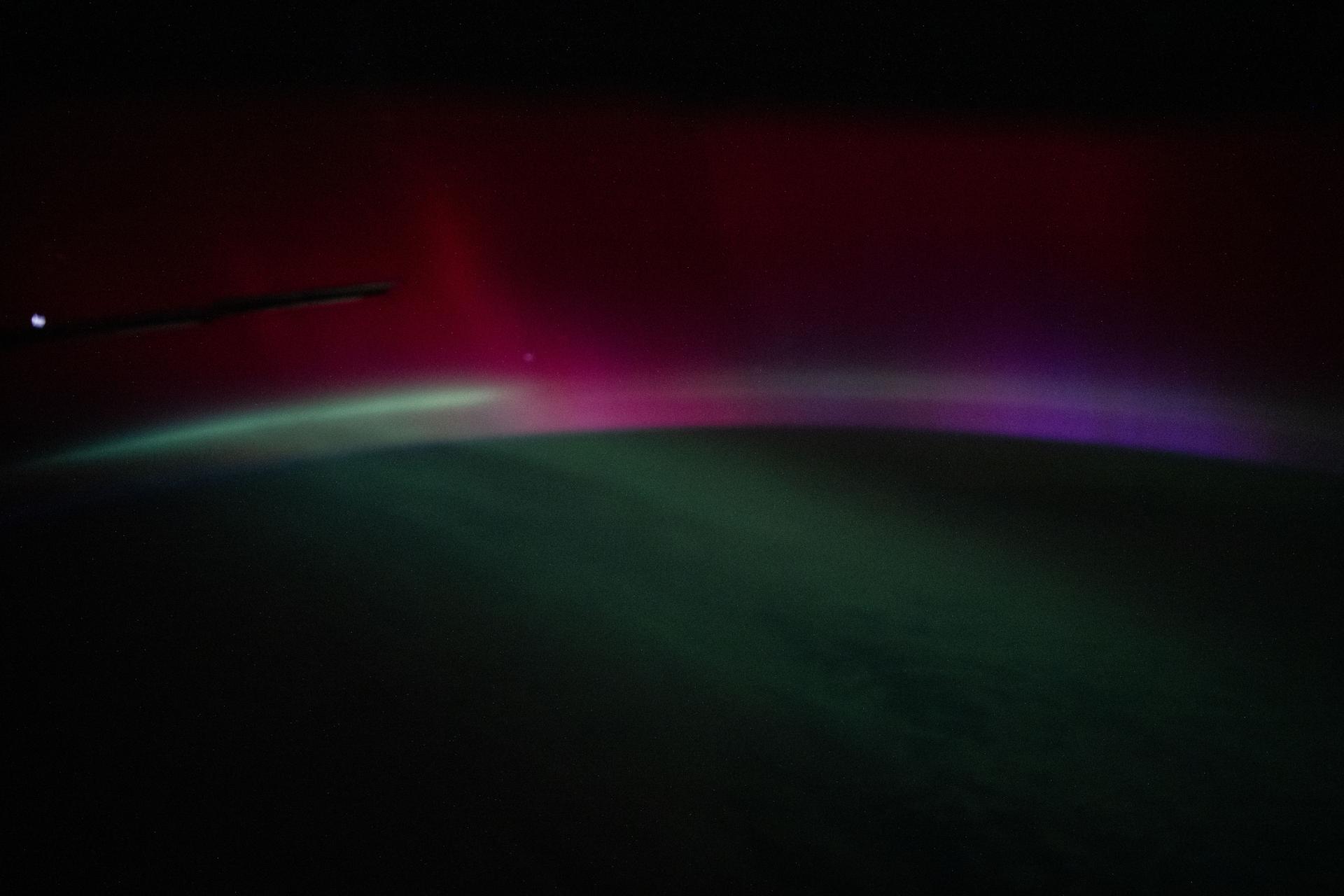
Skywatchers at high latitudes have a reason to set an alarm this week. The National Oceanic and Atmospheric Administration's Space Weather Prediction Center (SWPC) is forecasting a G1, or "minor," geomagnetic storm on Sept. 24, 2026, driven by a stream of fast solar wind pouring out of a coronal hole on the Sun. The timing is what makes this one interesting: it's arriving just two days after the autumnal equinox, a period when Earth's magnetic field is geometrically primed to let more of that solar wind energy in.
According to SWPC's official 3-day forecast, "G1 (Minor) geomagnetic storming is likely on 24 Sep due to positive polarity CH HSS influences" — shorthand for a coronal-hole high-speed stream with a particular magnetic polarity that tends to couple efficiently with Earth's field. The agency's model puts the highest planetary K-index, or Kp, at roughly 4.67 during the 21:00–00:00 UT window on the 24th, just above the threshold where NOAA starts using the word "storm" instead of "unsettled" or "active."
Real-time monitoring backs up the forecast. SpaceWeather.com, which tracks live solar wind data from spacecraft stationed between the Sun and Earth, clocked solar wind speed at 389.1 km/s as of its Sept. 24 front page — elevated but not yet screaming — with the Kp index reading 4.33 at the time of that check. The site describes the source plainly: a solar wind stream is flowing from a "canyon-shaped hole" in the Sun's atmosphere and reaching Earth on the 24th. Solar activity otherwise was quiet, with the most recent flare a weak B6-class event logged at 0705 UT, meaning this storm is a wind event, not a flare-and-CME event.
Why It Matters
Coronal holes are regions where the Sun's magnetic field opens outward into space instead of looping back down, letting solar wind escape in a comparatively unimpeded stream — like a gap in a garden hose nozzle that lets water spray faster and farther. These high-speed streams (HSS) don't carry the raw punch of a coronal mass ejection, but because the Sun rotates roughly every 27 days, a persistent coronal hole can deliver repeat doses of fast wind to Earth on a predictable cadence, and they're a routine driver of minor-to-moderate storms.
What elevates this particular event is timing. Around the equinoxes, Earth's rotational axis is oriented such that the angle between the planet's magnetic field and the incoming interplanetary magnetic field tends to favor stronger magnetic reconnection — a mechanism known as the Russell-McPherron effect. In practical terms, the same solar wind punch tends to produce more geomagnetic disturbance near the equinoxes than it would in the dead of summer or winter. SpaceWeather.com flags exactly this, noting the equinox timing raises the odds of "a nice display of equinox auroras." It's a well-documented seasonal pattern in space weather, not a coincidence specific to this storm — but it's a big part of why a fairly modest wind stream is generating real aurora-watch attention rather than a shrug.
For anyone under the aurora oval, that translates directly to visibility. A G1 storm is the lowest rung on NOAA's five-step geomagnetic storm scale, but "minor" doesn't mean "invisible" — it means the aurora oval expands modestly beyond its usual high-latitude bounds, and areas that don't often get a show have a shot at one.
Where — and How Long
SWPC's forecast doesn't stop at the 24th. Unsettled-to-active geomagnetic conditions are expected to persist through Sept. 25 and 26 as the high-speed stream's effects gradually taper off, meaning the aurora window isn't a single-night event so much as a multi-day opportunity that peaks early and fades.
EarthSky's running sun-and-aurora log, which tracks NOAA's space weather advisories alongside its own solar-activity notes, corroborates the outlook and gets specific about geography: aurora potential is highest across Scotland and southern New Zealand, in addition to the more traditional high-latitude zones of Alaska and most of Canada. That's a useful detail for anyone outside the usual Arctic/sub-Arctic aurora belt — southern New Zealand in particular sits far enough south to catch the aurora australis during exactly this kind of event, while Scotland's latitude puts it on the northern fringe of the aurora borealis oval. For the northern-tier United States — think the northern edges of Michigan, Minnesota, Montana, and similar latitudes — a glimpse is possible but not guaranteed; a G1 storm's oval expansion doesn't reliably reach much further south than that.
EarthSky's log also places this storm in context with the broader solar picture heading into late September: sunspot region AR4534 has been an active flare producer, logging a C3.7-class flare on Sept. 20 and a C2.4-class flare on Sept. 22, and the site notes the Sept. 22 equinox as the seasonal backdrop for the current storm watch. None of those flares are implicated in this particular geomagnetic event — the driver here is coronal-hole wind, not a flare-launched coronal mass ejection — but they're a reminder that the Sun is not idle even outside of major eruptive events.
What To Actually Look For
If you're within the potential viewing zones, the practical advice is standard aurora-watching fare: get away from city lights, give your eyes 15–20 minutes to adjust to the dark, and look toward the pole-facing horizon (north in the Northern Hemisphere, south in the Southern Hemisphere) during the darkest hours of the night. Because the Kp values forecast here — in the 4-to-5 range — sit at the modest end of the storm scale, a faint greenish glow low on the horizon is a more realistic expectation than the dramatic curtains associated with severe storms, and a camera with a long exposure will often pick up color the naked eye misses. Given that SWPC expects unsettled-to-active conditions to linger for two more nights after the initial G1 peak, patience across multiple nights improves the odds more than betting everything on the 24th alone.
