
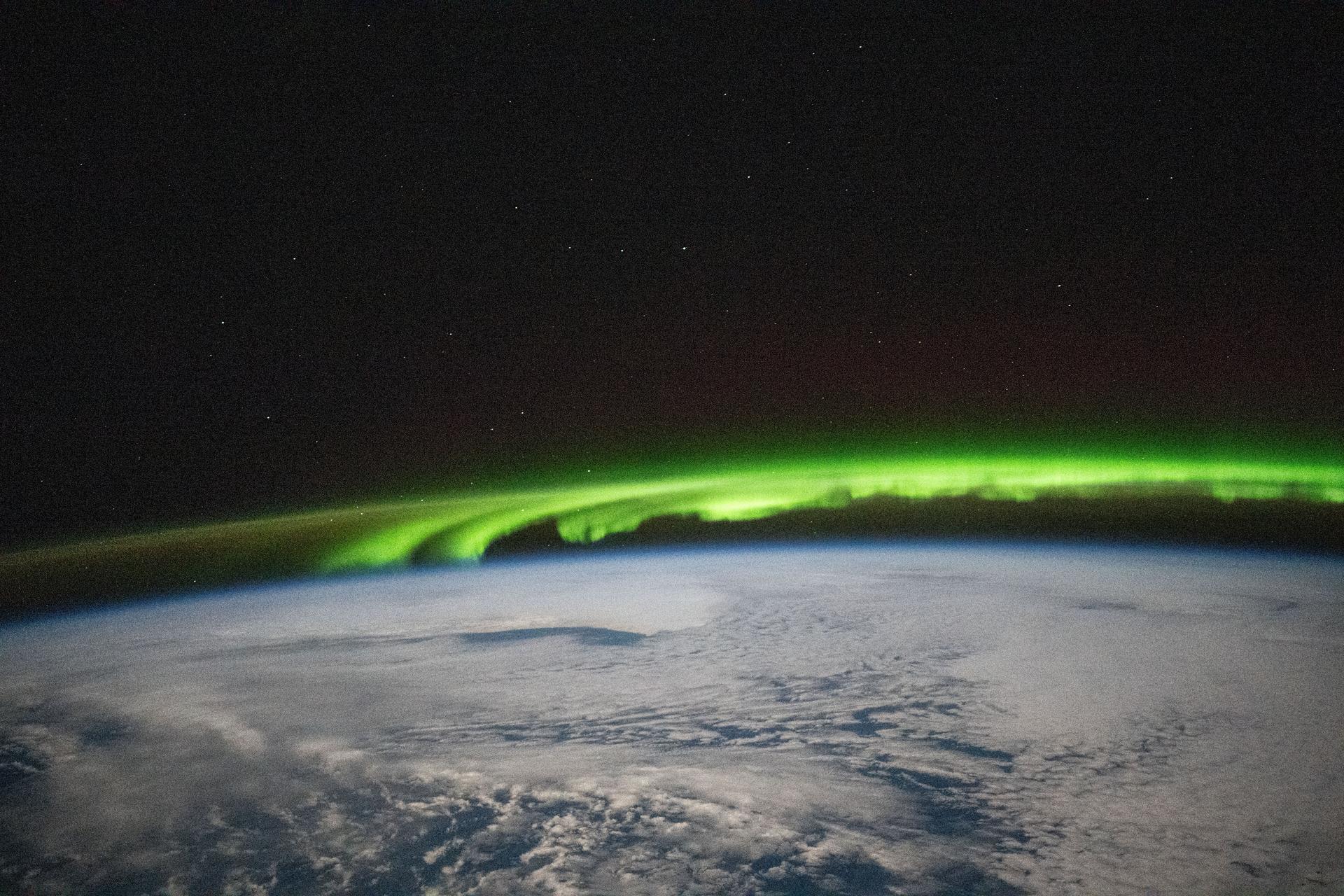
The Sun crossed the celestial equator at 7:05 p.m. CDT on Sept. 22, 2026, marking the autumnal equinox for the Northern Hemisphere and the vernal equinox for the Southern. That alone is a tidy bit of celestial bookkeeping — a day when the planet's day and night are close to equal in length, as NASA's "What's Up" skywatching guide for September 2026 puts it. But this particular equinox arrives with a bonus: a real, if modest, chance of aurora over the next 48 hours, driven by a coincidence of timing that space-weather physicists have long understood and still can't do much to predict more than a few days out.
According to NOAA's Space Weather Prediction Center, a coronal hole on the Sun is expected to send a fast stream of solar wind toward Earth on Sept. 23–24. The agency's 3-day forecast, issued Sept. 22 at 0030 UTC, puts the greatest expected 3-hour Kp index for that window at 5.33 — enough to register as a G1, or "minor," geomagnetic storm on NOAA's five-step scale. The forecast rationale is blunt about the cause: "G1 (Minor) geomagnetic storm conditions are likely on 24 Sep due to CH HSS effects," shorthand for coronal-hole high-speed stream. The same outlook gives a 10% chance of R1-R2 minor radio blackouts through the same period.
A G1 storm is the lowest rung on NOAA's geomagnetic ladder — not the kind of event that threatens power grids or satellites, but exactly the kind that nudges the aurora oval far enough south (or north, in the Southern Hemisphere) to put high-latitude skywatchers in play. EarthSky's solar-activity live blog, updated the same day, frames the outlook similarly: the coronal hole's stream should push activity into Kp4 "active" territory with possible G1 spikes, and flags Scotland and southern New Zealand as plausible viewing latitudes if the storm behaves as forecast.
Why the Equinox Matters Here
The timing isn't decorative. Aurora displays are driven by how efficiently the solar wind's magnetic field connects, or "reconnects," with Earth's own magnetosphere, and that coupling is more efficient when the interplanetary magnetic field points south relative to Earth's field. The geometry of that alignment is seasonal: around the equinoxes, Earth's rotation axis is tilted neither toward nor away from the Sun, which statistically improves the odds of a favorable magnetic handshake. Space physicists call this the Russell-McPherron effect, and EarthSky's update cites it directly as a reason aurora activity tends to cluster near the March and September equinoxes regardless of what the Sun itself is doing that week.
In other words, the equinox doesn't cause a storm — the coronal hole does that — but it does load the dice. A G1-level disturbance that might otherwise produce a marginal, hard-to-see aurora has a somewhat better shot at producing a visible one this week than the same-strength storm would in, say, early July.
What's Actually Happening on the Sun
The Sun's near-term forecast is otherwise unremarkable. EarthSky counts five numbered active regions on the visible disk, including two newly designated sunspot groups, AR4536 and AR4537. The strongest flare of the past few days topped out at C2.0 — a small event on the scale that runs from A through X, and not itself a driver of the coming storm. The geomagnetic activity expected Sept. 23–24 is a solar-wind story, not a flare story: coronal holes are patches of the Sun's outer atmosphere where the magnetic field opens into space rather than looping back down, letting the solar wind escape at higher speed than usual. When one of those streams sweeps past Earth, it can compress and disturb the magnetosphere even without an accompanying flare or coronal mass ejection.
Where and How to Look
A G1 storm is not a guarantee of dazzling curtains of light for mid-latitude observers. Historically, G1-level activity keeps the auroral oval confined to high latitudes — places like Scotland, southern New Zealand, Scandinavia, Alaska, and the northern tier of Canada — rather than pushing it down into the continental United States or central Europe. Observers in those higher-latitude bands should look toward the pole-facing horizon after full dark, away from light pollution, during the local nighttime hours of Sept. 23 and 24. As with any aurora chase, a clear sky and a dark-adapted eye (or a phone camera, which often picks up faint color the eye misses) matter as much as the Kp number itself.
The rest of the sky isn't idle this week either. NASA's September skywatching roundup notes that Venus reached peak brilliance on Sept. 18, and the Harvest Moon will rise near Saturn on Sept. 26 — useful bookends for anyone stepping outside to check on the aurora and staying for the rest of the show.
Why It Matters
G1 storms are common, and on their own they rarely make news. What makes this window worth flagging is the stacking of two independent, well-understood effects: a coronal-hole solar wind stream arriving on a specific, forecastable timeline, and the equinoctial geometry that statistically favors stronger solar wind-magnetosphere coupling. Neither effect is exotic, but together they give forecasters more confidence than usual in naming a specific 24-48 hour window for elevated aurora odds. For skywatchers, that's the practical takeaway: a minor storm during an equinox is a better bet than the same storm at another time of year, and NOAA's own numbers — a 5.33 peak Kp estimate issued roughly two days before the storm's peak window — represent about as much lead time as this kind of forecasting reliably offers. It's also a small, useful reminder of how space weather forecasting actually works day to day: not with the sweeping certainty of a weather-app icon, but with probability ranges, scale ratings, and a rationale line that traces the prediction back to a specific, physical cause on the Sun.
