
Somewhere in a Johns Hopkins Applied Physics Laboratory cleanroom, a rotorcraft the size of a small car is finally getting the parts nobody photographs for the highlight reel. On September 2, the Dragonfly mission announced that its flight system now has a complete wiring harness — nearly 17,315 feet of conductor wire and 374 connectors, weighing in around 100 pounds — threaded through the vehicle that will, if all goes to plan, spend more than three years buzzing around the dunes and craters of Saturn's largest moon.
It's not a glamorous milestone. There's no footage of a rotor spinning up, no wind-tunnel drama, no countdown. But as harness lead Jackie Perry put it in the mission update: "The harness doesn't do anything by itself, but it is necessary for everything else to function." Every instrument, every motor, every sensor on Dragonfly talks to every other subsystem through this network of wire — call it the nervous system of a nuclear-powered drone bound for another ocean world in our solar system.
Building an Actual Flight System
The harness install is the latest step in a broader integration push that began in earnest this spring. According to JHUAPL, which is building Dragonfly, the team started rotorcraft integration and testing in March 2026, a phase that runs through the rest of the year and into early 2027. From there, the vehicle moves to Lockheed Martin for system-level testing in early 2027, back to APL for final testing in late 2027, and then to Kennedy Space Center by spring 2028 to await launch.
Principal Investigator Elizabeth "Zibi" Turtle called the start of integration "the birth of our flight system," and Integration and Test Lead Annette Dolbow described the shift in blunter terms: "We've spent years designing and refining this amazing rotorcraft on computer screens and in laboratories... now we transform Dragonfly into an actual flight system." Aerodynamic testing in NASA Langley's wind tunnels is already done, which means the harness milestone marks the point where Dragonfly stops being a collection of subsystems and starts being one machine.
A Dune Field Gets Its Name
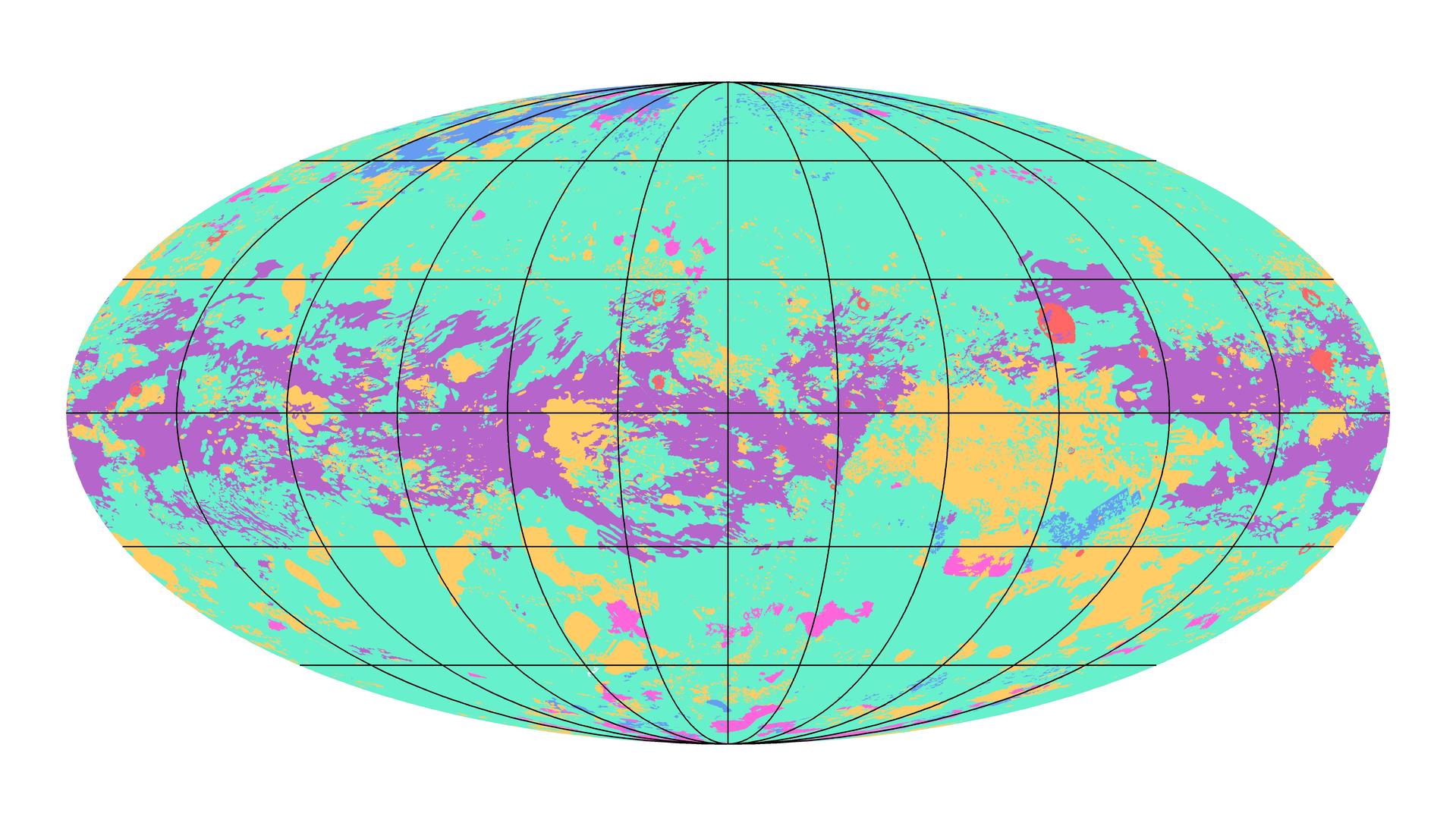
The same September update carried a second piece of news that had nothing to do with wiring: the mission's landing zone on Titan now has an official name. The International Astronomical Union has designated the roughly 500-mile-wide (810-kilometer) dune field near Selk Crater as Ahmakiq Undae, drawing on Mayan tradition — the name translates roughly to "one who locks up the wind." The IAU names dune fields on Titan after wind deities, and Ahmakiq fits the pattern: a fitting namesake for a stretch of terrain sculpted entirely by Titan's winds, on a moon where Dragonfly will spend years hopping from dune to dune and eventually into Selk Crater itself, a site scientists suspect once held liquid water and organic chemistry in contact with each other.
Why the Titan Environment Matters to the Engineering
Every design choice on Dragonfly traces back to the strange physics of the place it's going. Titan's atmosphere is roughly four times denser than Earth's, and its gravity is about a seventh of Earth's — a combination that, according to the Planetary Society, makes flying there some 40 times easier than flying here. That's what makes a ~1,000-kilogram rotorcraft with eight rotors — four coaxial pairs, each blade assembly 1.35 meters across, three blades per rotor — a workable idea instead of a fantasy. The three-blade design is itself a mid-course correction: earlier renderings of Dragonfly showed two-blade rotors, and engineers moved to three blades per rotor to tame vibration encountered in forward flight.
But "easier to fly" doesn't mean "easier to build." Titan's surface sits at roughly -180°C, cold enough that ordinary motors would seize. Lead rotor engineer Felipe Ruiz summed up the design philosophy bluntly: "We have a motor design that is designed and analyzed and built to freeze." Power comes from a Multi-Mission Radioisotope Thermoelectric Generator, which means Dragonfly isn't waiting on sunlight in a place where the sun is a distant smudge.
The flight profile is deliberately modest: hops of up to 30 minutes at a time, hunting new terrain and relocating the lander for its next round of science. Communicating with Earth involves a one-way delay of about 90 minutes, so nothing about a hop can be joysticked from a control room in Maryland. Every flight has to be planned, checked, and largely autonomous by the time the rotors spin up.
Why It Matters
Dragonfly is not a rover creeping across a crater floor — it's a mobile astrobiology lab that can leapfrog hundreds of miles across an alien landscape, something no planetary mission has attempted before. Titan has methane rain, rivers, and lakes in place of water, plus an atmosphere thick enough to fly through and a deep inventory of organic chemistry. Landing near Selk Crater puts the mission within reach of terrain where water ice and organics may once have mixed, which is about as close as this solar system gets to a natural chemistry experiment for the ingredients of life.
None of that happens without unglamorous milestones like a wiring harness passing integration, or a bureaucratic-sounding IAU designation turning an anonymous stretch of dunes into a named place with a mission attached to it. Both are markers of a project moving from paper to hardware, on a timeline that leaves little slack: launch is targeted for summer 2028, with arrival at Titan not expected until late 2034 and a primary mission of 3.3 years once it's there. Every connector seated now is one less thing to worry about a decade from now, on a moon where there's no possibility of a service call.
