
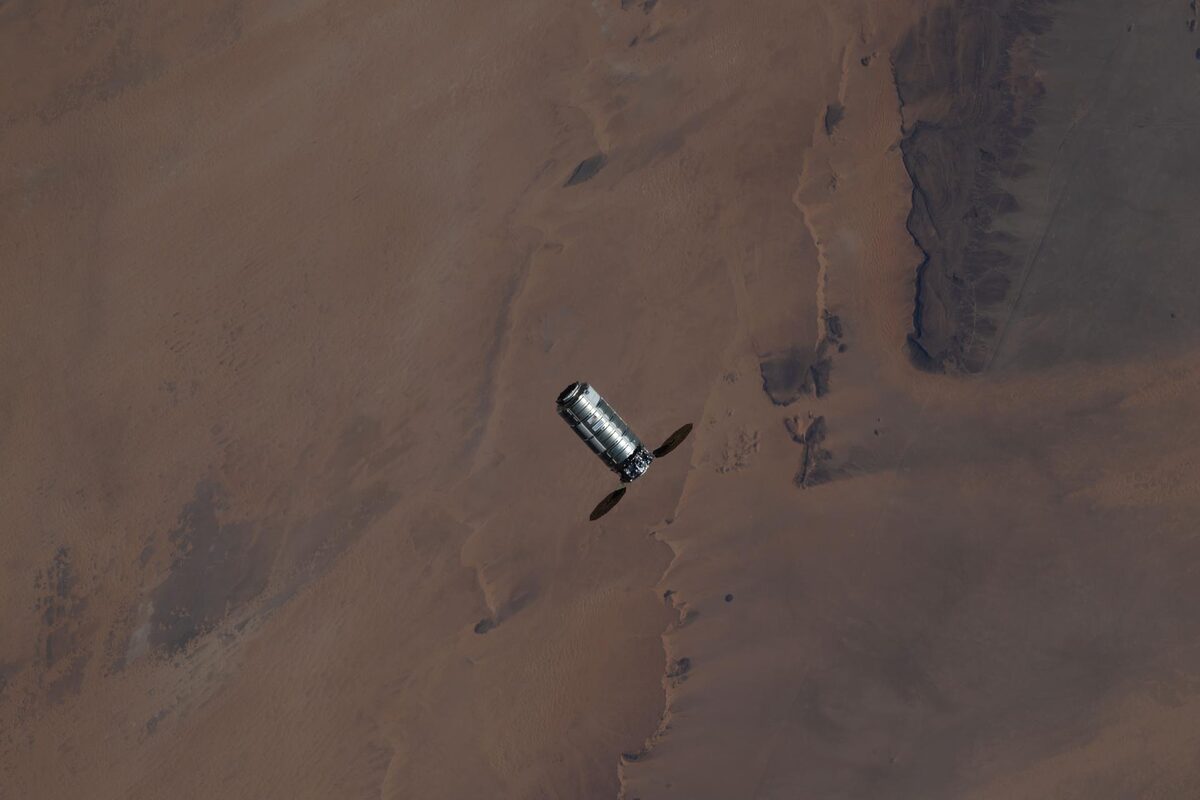
The next cargo ship headed for the International Space Station carries the name of the commander whose crew used their lunar module as a lifeboat. NASA and Northrop Grumman are targeting no earlier than 10:47 a.m. EST on Sunday, Nov. 29, for the launch of Northrop Grumman's 25th commercial resupply mission, known as NG-25 to the company and as CRS-25 in NASA's media advisory. The Cygnus XL spacecraft will lift off on a SpaceX Falcon 9 from Space Launch Complex 40 at Cape Canaveral Space Force Station in Florida with about 11,000 pounds of science investigations and supplies.
Northrop Grumman has named the spacecraft the S.S. James "Jim" A. Lovell. Lovell flew on Gemini VII, Gemini XII, Apollo 8 and Apollo 13. In its mission page, the company notes that Lovell commanded Apollo 13, the flight on which the lunar module served as a lifeboat for the crew.
The Timeline
Cygnus doesn't fly straight to the station. Northrop Grumman says the spacecraft will reach the ISS about two days after launch, and NASA's schedule reflects that: if the vehicle leaves the pad on Nov. 29, NASA astronauts Jessica Watkins and Luke Delaney will use the station's Canadarm2 robotic arm to capture it at 2:35 a.m. on Tuesday, Dec. 1.
Cygnus is a berthed vehicle, so the arm does the last step. The crew captures the spacecraft with Canadarm2, and ground controllers then install it on the Earth-facing port of the Unity module for cargo unloading. NASA expects Cygnus to stay attached until May 2027, which makes it a temporary extension of the station's pressurized volume for about half a year as well as a delivery truck. When it leaves, it will carry several thousand pounds of disposal items and other unneeded cargo and burn up harmlessly during re-entry.
Before launch, NASA plans a prelaunch teleconference at noon on Nov. 23. The listed participants are Gaurang Patel of NASA, Jennifer Buchli of NASA, Dave Schiller of Northrop Grumman and Jared Metter of SpaceX. The lineup mirrors how the mission is split: NASA runs the resupply program, Northrop Grumman builds and flies Cygnus, and SpaceX provides the rocket.
What's Aboard
The roughly 11,000 pounds aboard is a mix of science investigations, supplies and equipment. NASA highlights several investigation areas:
- Drug delivery for cancer and osteoarthritis. Experiments aimed at improving how therapies reach their targets in the body.
- Predicting cancer spread. Research meant to help understand and anticipate how cancers move through the body.
- Muscle loss treatments. Work on advancing treatments for muscle loss.
- Radiation sensing. Technology to improve radiation sensing, which NASA ties to future long-duration missions.
- Food production. Work to advance food production for future long-duration missions.
The list shows how the station is used today. Much of the research is aimed at medical problems that affect people on the ground, and the rest supports keeping crews supplied and healthy on longer missions.
Following NG-24
NG-25 comes about seven and a half months after the previous Cygnus XL mission. According to Space.com, NG-24 launched on April 11, 2026, at 7:41 a.m. EDT, also on a Falcon 9. That spacecraft, named the S.S. Steven R. Nagel, carried more than 5 tons of cargo, about 11,000 pounds, and was scheduled to be grappled by Canadarm2 on April 13. The Falcon 9 first-stage booster landed about eight minutes after liftoff, on its seventh flight.
NG-25 follows almost the same pattern: same rocket, roughly the same cargo mass, and the same two-day trip ending in a robotic-arm capture. Cargo resupply is supposed to be routine, and repeated flights like these are part of how NASA keeps the station supplied.
Why It Matters
Northrop Grumman has been delivering cargo to the station since 2013, and the company says it has delivered more than 169,000 pounds in that time. NG-25's roughly 11,000 pounds would add to that total. Each delivery keeps the crew supplied and keeps the research program running.
The flight also shows a commercial arrangement that has become familiar. A Northrop Grumman spacecraft launches on a SpaceX rocket on a NASA resupply mission, so companies share a single flight, and NASA buys delivery rather than flying its own cargo vehicle.
The science payloads justify the trip. Investigations into drug delivery, cancer spread and muscle loss could help patients on Earth, while the radiation sensing and food production work addresses needs of future long-duration missions.
Then there's the name. Lovell flew four missions spanning Gemini and Apollo, including Apollo 8, which Northrop Grumman says helped pave the way for the first Moon landing, and Apollo 13, which he commanded and whose crew returned safely using the lunar module as a lifeboat. Putting his name on a spacecraft that will stay at the station until May 2027 connects today's routine orbital logistics to some of the most demanding early flights in human spaceflight.
