
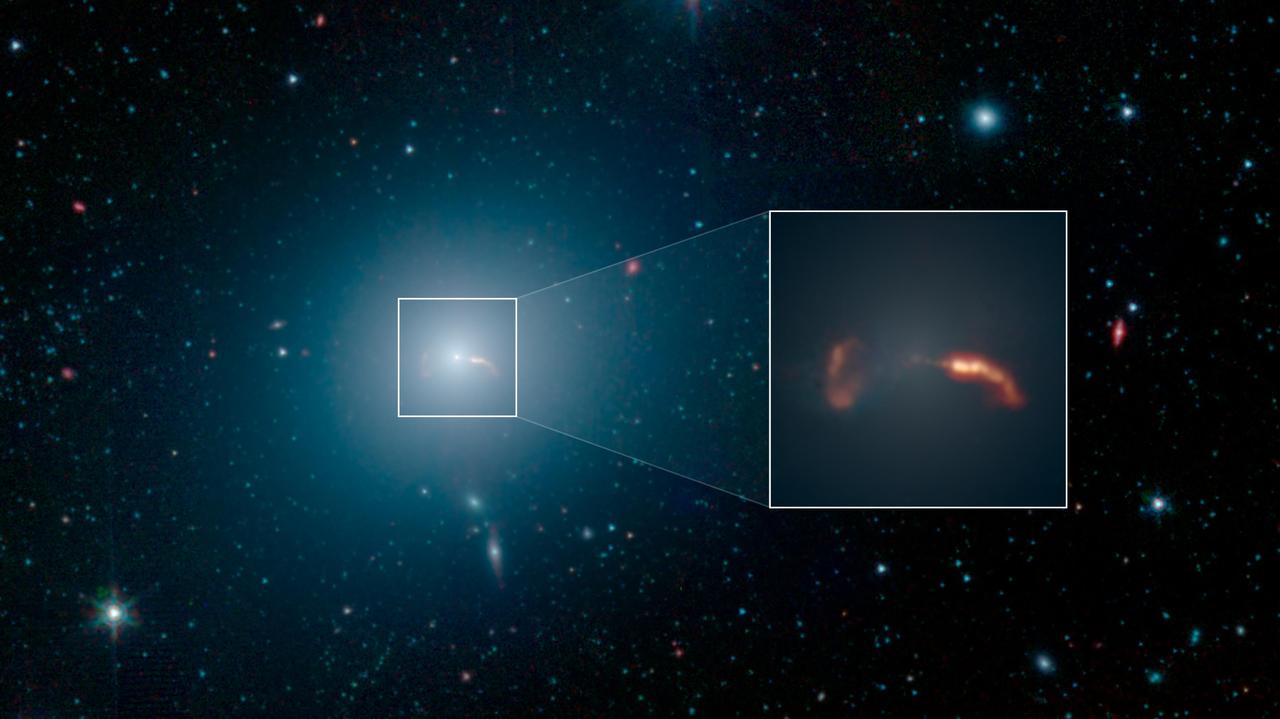
The first image of a black hole, the glowing ring around M87* released by the Event Horizon Telescope (EHT) collaboration in 2019, has drawn one persistent question from skeptics and careful scientists alike: how much of that ring came from the sky, and how much came from the way the data were processed? A small team at CSIRO, Australia's national science agency, now has an answer that does not depend on the original team's choices. Using a new imaging method on the original EHT dataset, they recovered a ring that lead author Samuel Lai describes as "almost identical in size and shape as the historic EHT image."
The work was announced by CSIRO on November 12 and published in Nature. A version titled "Independent interferometric observable confirms black hole shadow in M87*" was posted to arXiv on November 16. The authors are Samuel Lai, Nithyanandan Thyagarajan, O. Ivy Wong and Foivos Diakogiannis.
The problem with photographing a shadow
M87* sits at the heart of the galaxy M87, about 55 million light-years away, and weighs in at roughly 6.5 billion solar masses, according to Space.com. Even so, its apparent size on the sky is minuscule. Lai put the challenge in terms anyone can picture: it is "like standing in your backyard and trying to take a photo of a doughnut on the Moon."
No single dish can resolve something that small, so the EHT links radio telescopes across the globe into a single virtual instrument, a technique called very long baseline interferometry. That approach produces sparse measurements rather than a ready-made picture, and turning them into an image requires two kinds of work that can quietly shape the result. The first is calibration: each telescope contributes its own instrumental errors, which must be corrected. The second is reconstruction: filling in the gaps between sparse measurements, which typically involves assumptions, or "priors," about what the source ought to look like, along with judgment calls by the people running the software.
Neither step is unusual or suspect in itself. But together they leave room for the uncomfortable possibility that a ring-shaped expectation could nudge the output toward a ring. The arXiv abstract notes that various analysis choices have produced divergent representations of M87*'s fine-scale features, with some external analyses even challenging the ring-like morphology.
What the CSIRO team did differently
The new method, called GenDIReCT, attacks both weak points at once. According to the arXiv paper, it is founded on observables immune to instrument calibration errors, meaning the telescope-by-telescope corrections that normally have to be applied are sidestepped rather than estimated. Thyagarajan explained in CSIRO's announcement that the technique combines triplets of telescope data rather than the standard pairs to eliminate those errors, and Lai said the team used machine learning and artificial intelligence techniques to capture the black hole's structure.
Crucially, the algorithm is described as free of prescriptive morphological priors. In other words, it was not told to expect a ring, a disk or any other shape. "Our model had no idea what a black hole looked like when we applied it to the M87 data," Lai said. Space.com notes that GenDIReCT also accounted for biases introduced by combining telescopes to create an Earth-sized interferometer.
Thyagarajan, the project leader, built the technique, drawing on his experience solving similar challenges in synchrotron experiments. CSIRO frames its main virtue as reducing both calibration errors and the subjective image-processing decisions that have challenged astronomers for decades.
The numbers
Applied to the original EHT dataset with no hint about the expected answer, GenDIReCT reproduced a ring-like morphology. The arXiv abstract reports:
- Ring angular diameter: 42.2 ± 1.5 microarcseconds
- Black hole mass: 6.5 ± 0.5 billion solar masses, assuming nominal scaling parameters
- Inclination: about 20 degrees from the approaching jet
The mass figure matches the roughly 6.5 billion solar masses Space.com cites for M87*, and the overall picture lines up closely with the 2019 result. Space.com headlined its coverage "Einstein was right!"
Lai called the result "the first truly independent validation of the EHT image." Laurent Loinard, director of the EHT Collaboration, said GenDIReCT "recovers the ring structure of M87* across several years, in excellent agreement with the EHT Collaboration's published results."
Why It Matters
Independent replication is the backbone of experimental science, but it is hard in black hole imaging. Re-running the same pipelines on the same data would test the code, not the assumptions baked into it.
The CSIRO result is valuable precisely because it changes the assumptions. A method that avoids calibration-sensitive information and carries no built-in expectation of a ring has fewer ways to accidentally manufacture one. If the ring survives that treatment, with a size and an implied mass consistent with the original analysis, it is much harder to argue that it is an artifact of processing. CSIRO says the findings strengthen confidence that the ring is a genuine astrophysical feature rather than an artefact introduced during image reconstruction.
That said, the scope of the claim is worth keeping straight. This is an independent analysis of existing EHT observations, not a new observation of M87*. It strengthens confidence that the original image reflects what is in the data; it does not replace the need for future observations to keep testing the result.
The work also says something about where machine learning can earn its place in astronomy. Generative AI is often criticized for producing plausible-looking output that reflects its training rather than reality. Here, the design goal ran the other way: the model was constrained by measurements that resist calibration error and, in Lai's words, had no idea what a black hole looked like. That is a more defensible use of the technology than letting a network "enhance" a picture toward what it has seen before.
Beyond black holes
The underlying problem, reconstructing an image from incomplete and error-prone measurements, is not unique to radio astronomy. CSIRO and Space.com report that Thyagarajan sees potential for the technique to improve medical imaging and map earthquakes, fields that face their own versions of sparse data and instrument-dependent noise.
For now, the takeaway is simpler. Seven years after the world first saw it, the ring around M87* has been recovered by a small team using a method that did not know what it was looking for. It found the same thing.
