
Four people are scheduled to leave Florida today aboard a SpaceX Crew Dragon, bound for roughly six months on the International Space Station. NASA's Crew-13 mission is set to lift off at 11:10 a.m. EDT on Thursday, Oct. 1, from Space Launch Complex 40 at Cape Canaveral Space Force Station. It arrives about three weeks later than planned, after a leak in the spacecraft's oxidizer system pushed the original date back.
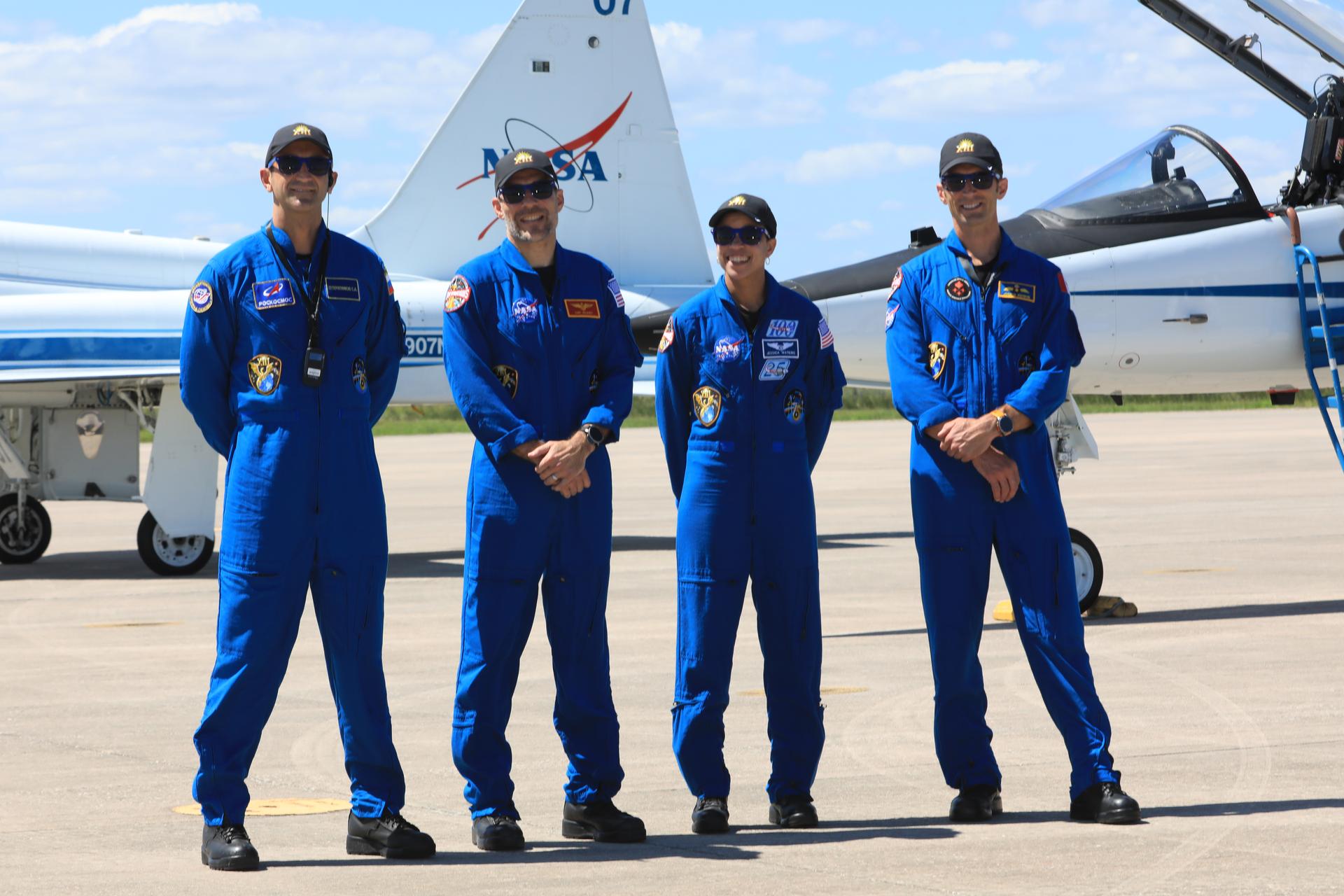
The crew is NASA astronaut Jessica Watkins as commander, NASA astronaut Luke Delaney as pilot, Joshua Kutryk of the Canadian Space Agency, and Roscosmos cosmonaut Sergey Teteryatnikov. According to NASA's media advisory, they are heading to the station for a long-duration science mission, with docking expected at about 7 p.m. the same day.
The Crew and the Timeline
The launch window is instantaneous, meaning the rocket has to leave the pad at 11:10 a.m. EDT or not at all that day. Space.com reported that NASA's Lori Glaze, from the agency's Human Spaceflight Mission Directorate, summed up the status ahead of launch this way: "Right now, everything is go."
Once docked, the four will become part of Expedition 75, staying about six months. Spaceflight Now reported that the crew flew into Kennedy Space Center by T-38 jet on Sept. 26 and that they have trained together for more than a year.
A Rare Repeat Flyer
Watkins is the only veteran of the group. Space.com notes she is poised to become the first NASA astronaut to launch on a Crew Dragon for a second time. Spaceflight Now adds that the other three crew members are making their first spaceflights. That gives the mission an unusual mix: a commander who has already made the trip in this type of spacecraft, and three people for whom everything from the ride uphill to weightlessness is new.
Delaney will serve as pilot. Kutryk flies for Canada, and Teteryatnikov represents Roscosmos, continuing the practice of mixed international crews sharing a ride to the station.
The Delay
Crew-13 was originally slated to fly on Sept. 12. Spaceflight Now reports that an oxidizer leak in the crew's Dragon forced the delay, which was announced on Aug. 29 in a Commercial Crew blog post. According to Spaceflight Now, a Sept. 16 ISS blog post said only that SpaceX had replaced an oxidizer valve in Dragon's propulsion system after a leak was detected, and no further details were provided. We do not speculate beyond that. What is on record is the outcome: the launch moved from mid-September to Oct. 1, and NASA's coverage advisory, issued Sept. 29 and updated Sept. 30, shows the mission proceeding on the new schedule.
Science on Board
Space.com lists in-space food production trials among the work planned for the long-duration stay. The sources we reviewed do not give further detail on the experiment lineup, so we will not guess at it. The broader point is the one NASA frames in its advisory: this is a long-duration science mission, and the six-month length is what makes that kind of research possible.
Why It Matters
Crew rotation is the mechanism that keeps the station staffed and its research running. Each handover depends on a spacecraft that has to be ready on a particular day, and the Crew-13 slip from Sept. 12 shows how a single hardware problem can move that day. It also shows the process working as intended: the leak was found on the ground, the launch was moved, and the crew arrived in Florida on Sept. 26 for a new date.
Watkins's second Dragon flight is also a small milestone for the commercial crew program. A NASA astronaut returning to the same type of vehicle, now as commander, is the kind of experience that a routine transportation system is supposed to build up over time. Pairing her with three first-time flyers puts that experience to immediate use.
Finally, the crew's makeup, with NASA, CSA and Roscosmos members flying together on a U.S. commercial spacecraft, is a reminder that the station's international partnership continues to operate through shared rides and shared work.
