
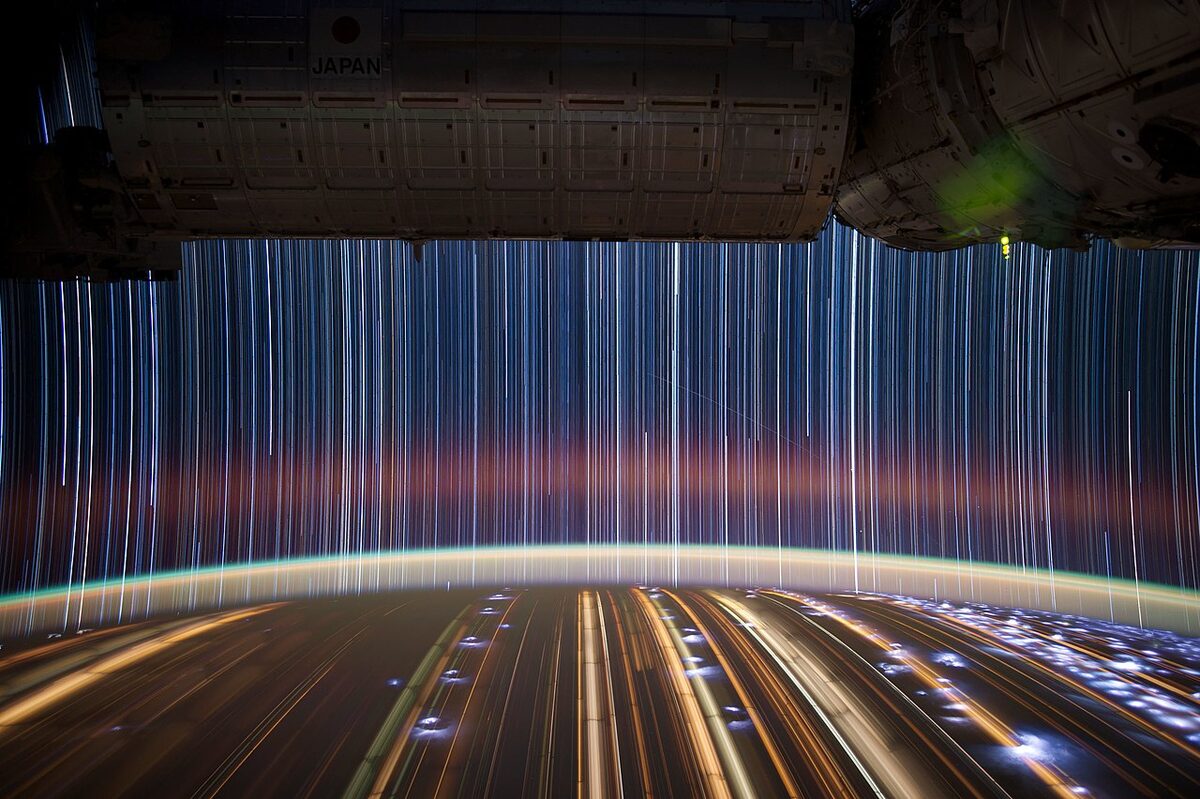
The International Space Station has been continuously occupied for more than two decades, but its tenure is finite. NASA plans to retire the orbiting laboratory around the end of the decade and guide it to a controlled destruction over the Pacific. The agency does not intend to replace it with another government outpost. Instead, it is betting that private companies will build the next generation of space stations — and buy back time aboard them as a customer rather than an owner.
That bet has set off a genuine race, and in 2026 the money behind it reached record levels. Headline fundraising rounds — including a half-billion-dollar raise by the station startup Vast and a comparably large round by Sierra Space — signaled that investors increasingly see commercial outposts in low Earth orbit as a real market rather than a thought experiment.
The contenders
Several rival projects are vying to be first and to win NASA's business. Vast has taken the most aggressive timeline, aiming to launch a compact single-module station called Haven-1 aboard a SpaceX rocket as an early demonstrator, ahead of a larger station it hopes to offer NASA. Other major efforts include Orbital Reef, a partnership led by Blue Origin and Sierra Space; Starlab, a single-launch station backed by Voyager and Airbus; and Axiom Space, which plans to attach modules to the ISS and later detach them to form a free-flying station of its own.
Each takes a different architectural bet — modular versus monolithic, fast and small versus large and capable — but they share a common goal: to be the place where NASA astronauts, other countries' agencies, researchers, and private customers live and work in orbit once the ISS is gone. NASA, for its part, is funding multiple designs in parallel through its commercial destinations program, deliberately avoiding picking a single winner too early.
Why the timing is tight
The schedule is the source of the urgency. If the ISS is deorbited around 2030 and no commercial station is ready, the United States would face a gap in continuous human presence in low Earth orbit — a gap that China, whose Tiangong station is already operational and permanently crewed, would be only too happy to fill. Avoiding that gap has become a quiet but real driver of policy and investment, lending the commercial-station race a strategic edge beyond pure commerce.
The retirement itself is now a funded, concrete plan rather than a vague intention. NASA has contracted SpaceX to build a dedicated U.S. Deorbit Vehicle — a powerful spacecraft whose job is to dock with the aging station near the end of the decade and steer its roughly 400-ton bulk to a controlled reentry over a remote stretch of the South Pacific. That hard deadline is part of what concentrates minds: once the deorbit vehicle does its work, the orbiting laboratory that has hosted a quarter-century of continuous research is simply gone, and anything not already running on a successor station goes with it. Preserving the chain of microgravity science — the long-running biology, materials, and human-health experiments that depend on a permanent foothold in orbit — is a big part of why NASA wants a commercial station flying before the old one comes down.
The challenges are formidable. Building, launching, and operating a crewed space station is among the hardest things any organization can attempt, and doing it on a private budget and a commercial timeline is harder still. Schedules in this business slip routinely, and more than one ambitious station concept has faded. A demonstration module in orbit is a long way from a fully operational outpost hosting rotating crews and paying research.
Still, the direction is set. NASA has decided its future in low Earth orbit runs through commercial hardware, the capital has arrived, and the contenders are racing real designs toward the launch pad. The question is no longer whether the ISS will be replaced by private stations, but which ones will get there first — and whether any will be ready before the old station comes down.
