
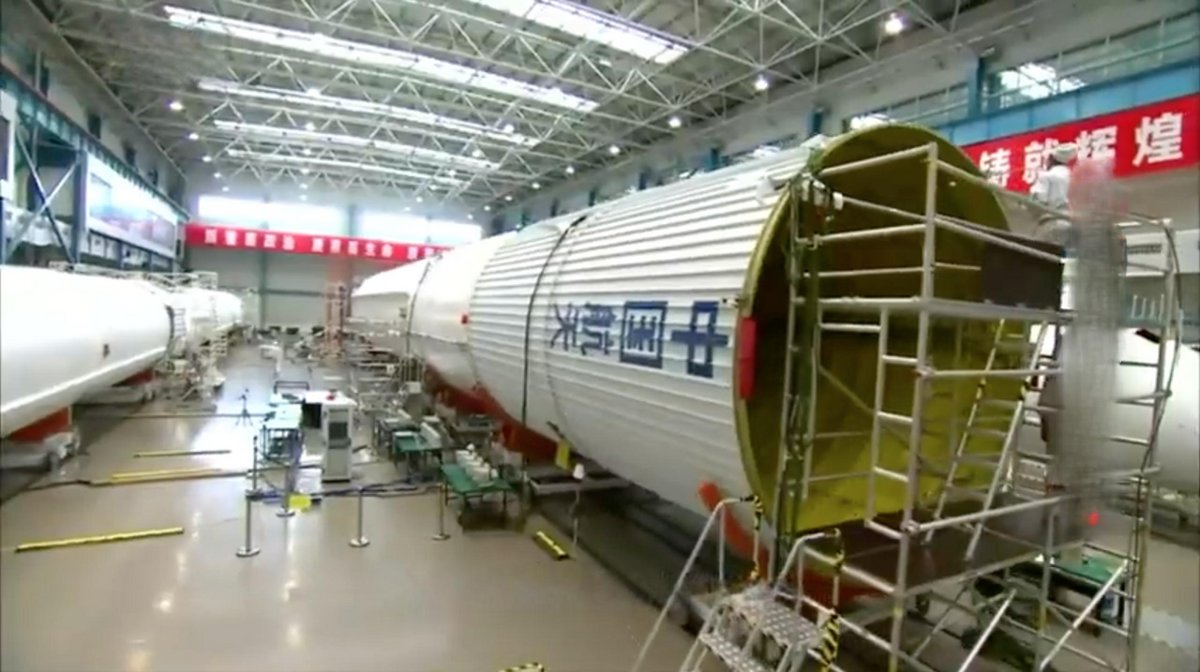
China has scheduled a launch and booster recovery attempt for its Long March 10B rocket — a milestone that represents Beijing's most direct bid yet to develop domestic reusable launch capability, and the clearest signal yet that China intends to compete structurally with SpaceX's Falcon 9.
The announcement positions China's space program at a pivotal moment in its evolution. For years, the pattern in the global launch industry has been unambiguous: SpaceX's mastery of booster recovery and reuse rewrote the economics of getting hardware to orbit, and every major launch authority on earth has been working, with varying degrees of urgency, to answer it. China's Long March 10B test represents Beijing's turn to demonstrate that it can close that gap.
The Recovery Test in Context
Scheduling a booster recovery attempt is not the same as completing one. The history of rocket reusability is littered with near-misses, hard landings, and expensive lessons — each one a data point on the long learning curve between conceiving reuse and executing it reliably at scale. China's announcement of a scheduled attempt is meaningful precisely because it signals the program has reached a stage of engineering readiness to attempt recovery under real mission conditions, not just in simulation or at reduced scale.
A successful attempt would mark a milestone in China's reusable rocket development program — a milestone that, even setting aside what it means operationally, carries enormous weight in the ongoing competition for launch leadership. What the attempt does not yet represent is a reusable launch system in routine operation. The gap between a first recovery and a fleet of routinely reflown boosters is measured in years, engineering iteration, and a body of reliability data that only comes from flying. But demonstration is where it starts, and China appears to have reached it.
Why Reusability Reshapes the Industry
To understand why this test matters, it helps to understand what reusability actually changed about launch economics — and what it is still in the process of changing.
Before SpaceX made booster recovery routine, orbital launch was fundamentally a one-way business. Every rocket that reached orbit was also a rocket that did not come back. The economics of that model imposed a floor on launch costs that was both high and, for most of the industry, accepted as structurally immutable. Building a new first stage for every mission meant that the most expensive piece of hardware in the system was also the most disposable.
Reuse breaks that model. A booster that lands and flies again amortizes its manufacturing cost across multiple missions. As flight rates increase, per-launch costs decline. As refurbishment processes mature, turnaround time compresses. The result is not just cheaper launches in isolation — it is higher cadence, greater schedule flexibility, and a competitive position that non-reusable providers find structurally difficult to match on price alone.
SpaceX has spent years building the operational depth to make that model work at scale. Falcon 9 remains the world's most active reusable launch vehicle, and the pace of its activity speaks for itself: on June 24, 2026, a Falcon 9 lifted off from Vandenberg Space Force Base carrying Starlink 17-45, continuing the steady expansion of SpaceX's satellite network. That mission was not a noteworthy event in itself — it was a data point in a pattern of launch tempo that no other provider currently matches. Missions like Starlink 17-45 are, in a sense, the dividend of years of reusability investment: routine, reliable, and economically sustainable only because boosters come back.
The Competitive Landscape China Is Entering
China's Long March 10B test arrives into a landscape where the rules of the launch market have already been substantially rewritten. That context matters for interpreting what Beijing is attempting and how difficult the path ahead remains.
Building a reusable rocket requires solving a different set of problems than building a reliable expendable one. Return-to-launch-site or downrange recovery demands precision guidance at the edge of hypersonic regimes, thermal systems that can handle re-entry stress, landing technology that works within tight operational margins, and a refurbishment infrastructure capable of processing a vehicle that has taken considerable mechanical stress and returning it to flight-ready condition. These are solvable engineering problems, as SpaceX has demonstrated — but they are not trivial ones, and the learning curve is unforgiving and expensive.
What China's announcement makes clear is that Beijing has committed resources and schedule to making the attempt — a commitment that signals confidence in the underlying engineering readiness, even if the first attempt may not succeed. For the global launch industry, the significance of a mature Chinese reusable rocket capability would extend well beyond market share calculations. A domestically reusable Long March family would give China the means to sustain higher launch cadences in support of its own civil and military space programs, reduce per-mission costs on state-sponsored payloads, and potentially compete more aggressively for commercial contracts in markets where Falcon 9 currently faces limited rivalry.
Lunar Access and What Is at Stake for NASA
The competition over reusable launch capability is not purely commercial in its implications. It intersects directly with NASA's ambitions to return humans to the Moon and establish sustained lunar presence — ambitions that are themselves deeply shaped by the geopolitics of the U.S.-China space rivalry.
NASA's lunar program requires frequent, affordable access to cislunar space. The cadence and cost of launch are not abstractions in that context — they are hard operational constraints on what missions are feasible and what timelines are achievable. Building and sustaining a lunar presence requires regular cargo flights, crew rotations, and pre-positioning of hardware across multiple launches. All of that multiplies demand for launch capacity and, consequently, the importance of launch economics.
The reusable rocket competition between the United States and China directly shapes the terms of that access. A Chinese reusable launch capability that matures alongside NASA's lunar-era programs could alter the cost dynamics that currently advantage American providers in the commercial launch market. It would also feed directly into China's own lunar ambitions, enabling a Chinese program to operate at cadences that would have been cost-prohibitive under expendable launch economics. That is not a hypothetical scenario to be dismissed — it is the logical consequence of the capability China is now attempting to demonstrate.
Why It Matters
China's Long March 10B booster recovery test matters because it is the most concrete step yet toward a reusable Chinese launch vehicle capable of competing structurally — not just technically — with Falcon 9.
The global launch market has spent the better part of a decade adapting to the economics that SpaceX introduced through reuse. Providers that failed to develop recovery capability have watched their market positions erode; those that invested, or acquired reuse-capable assets, have maintained relevance in an industry reshaped by one company's willingness to invest in what everyone else called impossible. China has until now operated largely on the expendable side of that divide.
If the Long March 10B attempt succeeds, it does not immediately change the competitive calculus — a first recovery is too early in the learning curve to translate directly into cost parity or operational flexibility. But it changes what is possible. Every subsequent flight would build the data set, refine the refurbishment process, and compress the gap between China and the current standard. Over years, not months, a mature reusable Long March family could reshape how Chinese civil and commercial payloads reach orbit — and potentially how competing programs price their own services in response.
For the United States, and for NASA specifically, the relevance is both commercial and strategic. American launch providers have competed most effectively in markets where reusability gave them a structural cost advantage. A Chinese provider that closes that gap competes on different terms. And a China capable of sustaining high launch cadences through reuse is a China better positioned to advance its own lunar and deep-space ambitions on a timeline that runs directly parallel to NASA's own.
That is the full weight of what is riding on a landing attempt. Not a single mission outcome, but the first move in a competitive sequence that will play out over years — and that may, in time, determine which country's hardware and economics define the ground rules for the next generation of access to space.
