
Some observing weeks are just a scattering of unrelated events. This one, running July 20 through 24, 2026, reads more like a themed program — and the theme is set on the very first night by a coincidence of orbital arithmetic that is worth pausing over before you even lift a telescope.
A Moon That Remembers 1969
On the evening of July 20, the Moon will be a waxing crescent, 47 percent lit. That figure matters because July 20 is the 57th anniversary of the Apollo 11 landing. What makes the date more than a calendar note is that the Moon overhead will show almost exactly the same phase it presented on July 20, 1969, when Armstrong and Aldrin set down in the Sea of Tranquility.
That is not a poetic liberty; it is the Metonic cycle at work. Nineteen years is very nearly a whole number of lunar months (235 of them), which means the Moon's phase on a given calendar date tends to repeat every 19 years. Three of those cycles have elapsed since 1969 — 57 years — so the phase lines up again. The upshot for observers is a genuinely rare bit of sky-as-time-machine: the same crescent, in roughly the same place in its cycle, hanging over the same landscape the astronauts explored.
And that landscape is well placed this week. A crescent Moon near first quarter throws its terminator — the line dividing lunar day from night — across the region near Mare Tranquillitatis, where low-angle sunlight sharpens relief and shadow. The Apollo 11 site itself is too small to resolve in a modest telescope, but the raking light near the terminator brings the surrounding lunar terrain into sharp relief just now.
First Quarter, and a Moon on the Move
The Moon reaches First Quarter on July 21 at 7:06 a.m. EDT, at which point it is 57 percent illuminated. From there it works eastward along the ecliptic through the week, and on the night of July 24 it stages one of the prettier conjunctions of the month: at 6 p.m. EDT it passes just 0.6 degrees south of Antares, the magnitude 1.0 red supergiant that marks the heart of Scorpius. That is roughly a Moon's-width gap between our closest neighbor and a star so large it would swallow the orbit of Mars — a nice contrast in scale for anyone who cares to think about it while looking.
Saturn Puts On a Show With Its Moons
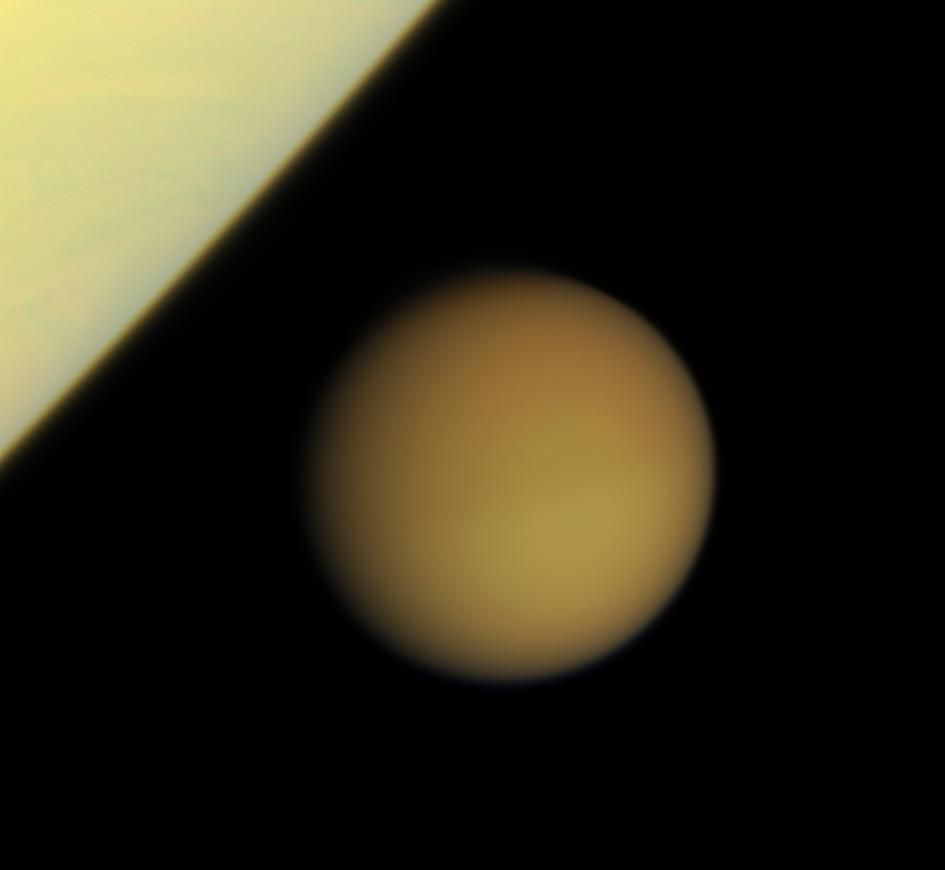
Saturn is the week's best telescopic target, and not only for its rings — which, as NASA notes this month, are tilted at such a shallow angle to our line of sight that they appear unusually thin. The real action is the retinue of moons. On July 21, Titan, at 8th magnitude, sits to the northwest of the planet, bright and easy to pick out in almost any telescope. Titan is the standout, but the smaller moons offer subtler rewards: on July 22, both Dione and Tethys stage shadow-transit events, casting their tiny shadows onto Saturn's cloud tops. These are demanding observations that reward steady seeing and patience, but catching a moon's shadow crawl across another world is one of the quiet pleasures of planetary observing.
Mercury Hits the Brakes
Innermost Mercury spends this week doing something that has puzzled sky-watchers since antiquity: appearing to stop. On July 23 at 1 p.m. EDT, the planet reaches its stationary point in Gemini, ending a stretch of retrograde — apparent east-to-west, backward motion against the stars. Retrograde motion is an illusion of perspective, produced as the faster-orbiting inner planet overtakes our line of sight, but the moment of stalling is real enough to mark on a chart.
Catching Mercury at this point is a challenge worth managing your expectations about. At magnitude 2.2 and only 12 percent illuminated, it is faint and low, a thin sliver best hunted in twilight near the horizon. It is not a showpiece — but knowing you are watching a planet turn around in its apparent path is its own kind of satisfaction.
The Month's Wider Backdrop
NASA's monthly guide, presented by JPL's Raquel Villanueva, fills in the surrounding context. The new Moon on July 14 delivered the darkest nights of the month, ideal for the Milky Way now arching high on summer evenings — and with the Moon still a slim crescent early in this week, the sky stays reasonably dark after twilight before moonlight thickens toward First Quarter. That same mid-July window brought Comet 10P/Tempel 2, a short-period comet, swinging by around the new Moon. Earlier in the month, NASA highlighted a pre-dawn lineup on July 11 and 12 in which the Moon pointed toward Mars with Saturn nearby and faint Uranus lurking for binocular users.
The broader planetary picture, per Space.com, has Venus dominating the western evening sky while Mars, Saturn, Uranus, and Neptune populate the morning. The month closes out with the Buck Moon — July's full Moon — on July 29, so this week's crescent-to-quarter progression is the opening act of the lunar month, not the finale.
Why It Matters
Most weekly sky guides are logistics: what, where, when. This one carries a bit more freight. The Apollo-11 twin Moon is a reminder that the sky runs on cycles long enough to fold human history back on itself — the same phase over the same craters, 57 years and three Metonic cycles later, close enough that you can see it with your own eyes rather than take it on faith from a table. Mercury's stationary point is a live demonstration of the geometry that once forced astronomers to invent epicycles to explain it, now legible in a single glance if you know what you're looking at. And Titan beside Saturn, with Dione and Tethys throwing shadows, is a working orrery overhead — moons in motion, on schedule, exactly where the math says they should be. None of it requires expensive gear or a dark-sky expedition; a modest telescope and a clear evening will do. The value is in connecting the dots between what you see and why it happens, which is what turns a look at the sky into an understanding of it.
