
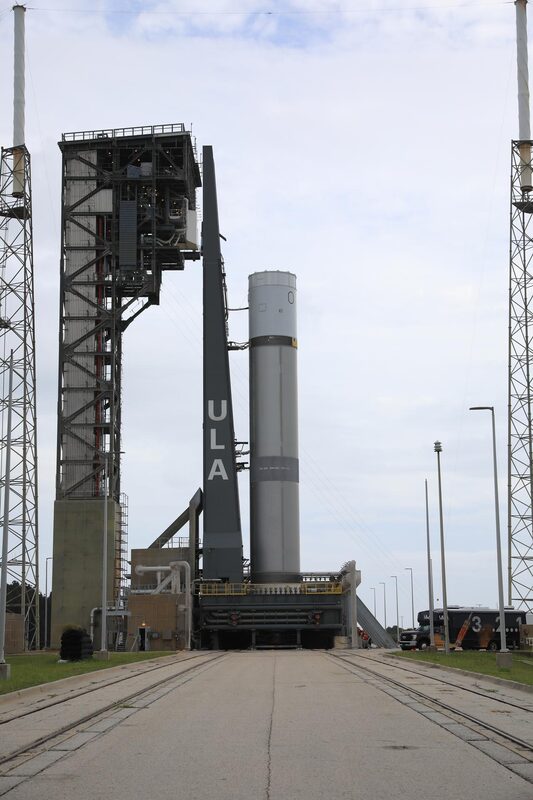
United Launch Alliance has long sold itself on reliability. On Sunday, November 15, 2026, that record broke. The company's Vulcan rocket lifted off from Space Launch Complex 41 at Cape Canaveral carrying 40 Amazon Leo broadband satellites. About ten minutes into flight it suffered an anomaly, and none of the satellites reached orbit.
"Today, we did not meet that standard," ULA said in a statement, according to SpacePolicyOnline. The standard in question is mission success. This was the first total mission failure in the company's history.
A Long Weekend at SLC-41
The mission, designated Amazon Leo 1 (KV-01), had a rough path to the pad. According to SpacePolicyOnline, the launch slipped for three straight days. Friday's attempt was scrubbed when a pump failed at the gaseous nitrogen plant. Saturday's was postponed for a ground-to-vehicle network problem, which FOX 29 described as a network communication issue that pushed the launch back a day. On Sunday, liftoff slipped to the end of the 29-minute window because of oscillations in a liquid hydrogen pressure relief valve.
The rocket finally left the pad near the end of a launch window that ULA's mission page listed as 12:11 to 12:40 p.m. EST. SpacePolicyOnline puts liftoff at 12:40:30 p.m. ET. FOX 29 reported approximately 12:46 p.m., so accounts of the exact moment differ.
The first minutes went as planned. All six solid rocket boosters fired and separated normally, SpacePolicyOnline reported. That detail matters given Vulcan's history, discussed below. FOX 29 also noted that the rocket made it past booster separation and flew several more minutes before the issue arose. Around the ten-minute mark, something went wrong. ULA has not identified a cause.
What Was on Board
This was not a routine flight. According to ULA, Amazon Leo 1 was the first of 38 Vulcan launches booked for Amazon's Leo constellation, which is planned to exceed 3,000 satellites. The rocket flew in the VC6L configuration: six solid boosters, a longer payload fairing, and a Centaur V upper stage optimized for low Earth orbit.
Amazon had a working track record with ULA before this flight. The Vulcan mission followed eight successful Amazon deployment missions on ULA's older Atlas V.
Fifth Flight, Ongoing Questions
Vulcan is still a young rocket, and this was its fifth flight. Its first four did reach their goals, but not cleanly. SpacePolicyOnline notes that solid rocket booster nozzle problems appeared on flights two and four, in 2024 and 2026. Although the core stage compensated and delivered the payloads, the U.S. Space Force has been hesitant to use Vulcan for its most precious satellites, and several launches have been shifted to SpaceX. SpacePolicyOnline headlined Sunday's flight as Vulcan's return to flight, which made the failure land harder.
The boosters were the obvious thing to watch this time, and they appear to have worked. Whatever went wrong happened later in the ascent. Until ULA publishes findings, it is unclear whether this failure is related to Vulcan's earlier problems or is a new one.
ULA's public messaging has been measured. "Every flight generates data, and every flight teaches us something," the company said, per FOX 29. ULA promised to be transparent and to work with Amazon on a return to flight.
The FAA Steps In
On November 16, the Federal Aviation Administration said ULA must conduct a mishap investigation, SpacePolicyOnline reported. ULA will lead the investigation, while the FAA oversees it and must approve the final report. The FAA also activated two Debris Response Areas, and briefly slowed or held aircraft outside the area where space vehicle debris was falling.
SpacePolicyOnline called such an investigation common in situations like this. The FAA will be involved in every step and must approve ULA's final report, including any corrective actions, so the outcome will shape when Vulcan flies again. No return-to-flight date has been announced.
Why It Matters
The immediate loss is 40 satellites, the first of the 38 Vulcan launches ULA planned for Amazon. Thirty-seven more Vulcan launches for Amazon Leo are still on the manifest. For a constellation planned at more than 3,000 satellites, a long stand-down of a launcher booked for so many flights could slow the buildout.
For ULA, the cost goes beyond one mission. The company has long competed on dependability rather than price or cadence, and that pitch is harder to make after a total failure. It comes after two flights with booster nozzle anomalies and after the Space Force had already moved some missions to SpaceX. Customers with payloads waiting on Vulcan will be watching the investigation closely.
There is also a broader concern for the launch market. Large constellations need many reliable launches, and ULA has a large backlog of commercial satellite orders, many of them for Amazon Leo. With Vulcan grounded, that capacity is unavailable, at least until ULA can explain what happened ten minutes after liftoff on November 15 and show that it has been fixed.
