
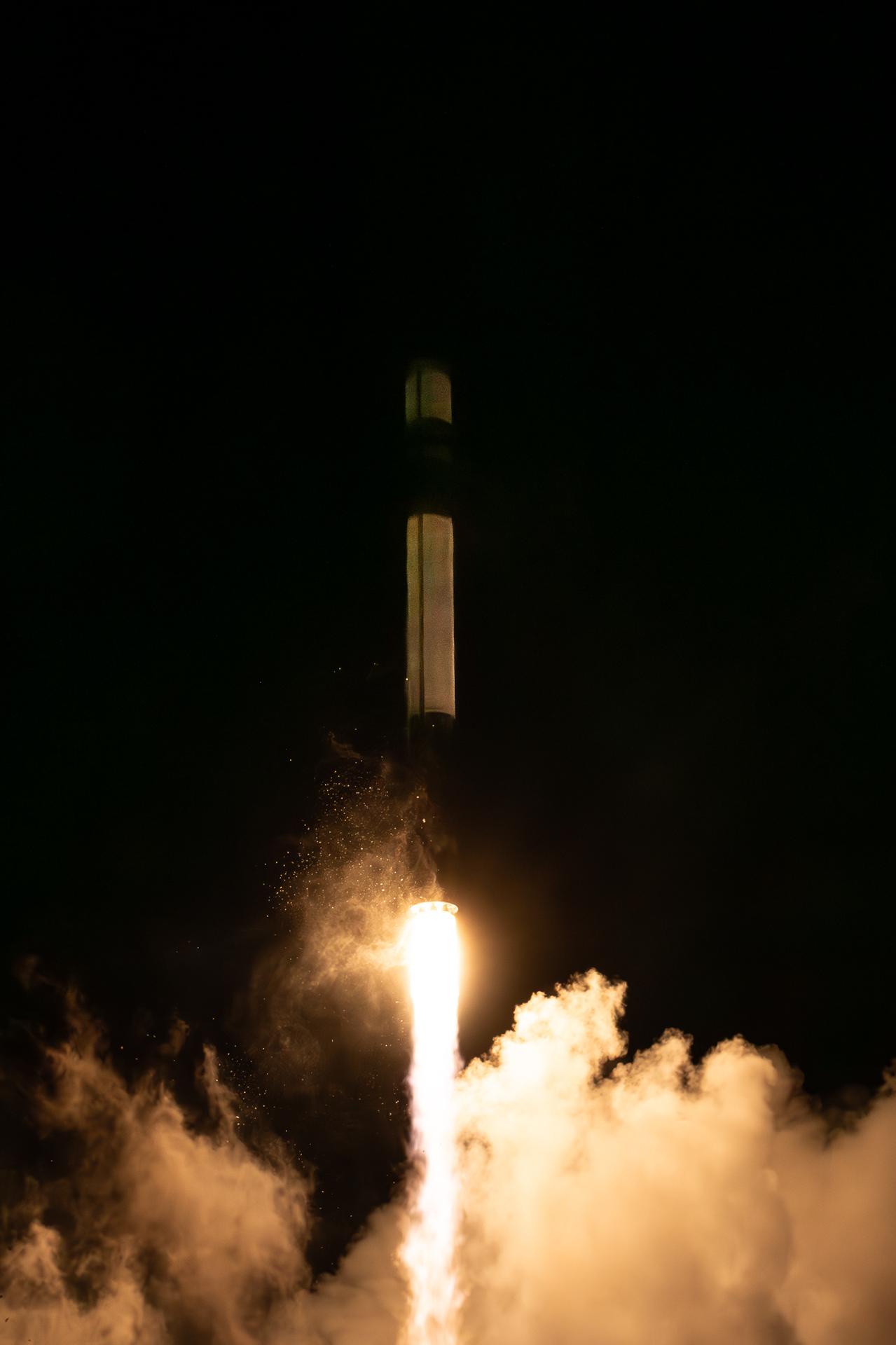
Rocket Lab's Neutron has not flown yet, and it now costs more. In its third-quarter 2026 results on November 9, the company said it had raised Neutron's base price from $55 million to $70 million on several missions. That is an increase of about 27 percent. In the same report it said it signed more than $515 million in new Neutron contracts during the quarter.
A launch provider usually cuts its price to win early customers for a rocket that has never flown. Rocket Lab has done the opposite. That tells you something about the company, and also about how hard it currently is to get a ride to orbit.
"Launch is extremely constrained, and that is exactly the situation we predicted," CEO Peter Beck said on the earnings call, as reported by Space.com. "We saw a pent-up launch market on the horizon, and rather than provide early discounted launches, we set out to deliver a rocket into an environment with extreme demand at full price or higher."
The numbers behind the price hike
The new Neutron business is eight missions. Rocket Lab named four commercial customers: ICEYE (three launches), Muon Space (two), Starcloud (one) and Kepler Communications (one). The company also signed one dedicated launch for the U.S. Space Force under its SB-AMTI program. With those added, the Neutron manifest stands at 16 missions. The company says the first 16 launches are sold out, so new customers are being offered slots in the 2030s.
The average works out to roughly $64 million per launch, which is below the new $70 million base price. That fits with Rocket Lab's wording that the higher base price applies to "several" of the missions, not all of them. Some of this quarter's contracts were probably priced, or partly priced, before the increase. The $70 million figure is best read as what the next customer will pay.
The rest of the report showed similar growth:
- Revenue: a record $268 million for the quarter, up 73 percent from a year earlier.
- Backlog: a record of about $3.57 billion, up 52 percent since the end of the second quarter.
- Launch contracts: about $1 billion in new launch business during the quarter across Electron, HASTE and Neutron, bringing the total launch backlog to 117 launches.
- Guidance: fourth-quarter revenue expected between $270 million and $290 million.
The company also said its planned acquisition of Iridium has its funding in place and has been approved by Iridium's shareholders.
A rocket that still has to fly
All of this rests on a vehicle that has not yet launched. Neutron's first flight is now scheduled for no earlier than 2027. That date slipped from late 2026, and the company announced the delay the month before these results, citing a manufacturing issue that it says is now under control. Rocket Lab says the first flight hardware has been delivered to Launch Complex 3, the site Neutron will launch from.
The rocket is 141 feet (about 43 meters) tall. It is designed to carry up to 13,000 kilograms to low Earth orbit, and its first stage is meant to be reused. That puts it in the medium-lift class. Electron, Rocket Lab's small launcher, has flown 90 orbital missions, but it can lift only about 300 kilograms to low Earth orbit, a fraction of what Neutron is designed to carry.
Customers are booking well ahead of a debut that has already moved once. That is a bet on Rocket Lab's track record with Electron. It also suggests they see few other options for getting mid-sized payloads to orbit on a predictable schedule in the coming years.
How Neutron compares with Falcon 9
The obvious comparison is SpaceX's Falcon 9. Space.com says SpaceX currently charges $74 million per launch for a rocket that can carry about 22.7 tonnes to low Earth orbit. On paper that is much cheaper per kilogram:
- Falcon 9: about $3,260 per kilogram at full capacity.
- Neutron at $70 million: about $5,385 per kilogram at full capacity.
Per-kilogram price is not the only measure, though. A customer launching a batch of satellites that does not fill a Falcon 9 pays for capacity it cannot use, and one that wants a dedicated rocket, a specific orbit and control of the launch date may value those things above the cheapest price per kilogram. A $70 million Neutron can still make sense next to a $74 million Falcon 9 if the payload fits Neutron's 13 tonnes.
Falcon 9 also has an end date. Space.com reports that SpaceX plans to retire it around 2028 as Starship takes over, and that early Starship operations are expected to focus on SpaceX's own constellations. A customer planning a constellation for the late 2020s and 2030s therefore can't assume today's Falcon 9 prices and availability will last. Beck made the same point on the call, saying the coming bottleneck is behind the demand for Neutron. Rocket Lab's price increase looks timed for that shift.
Why It Matters
The price increase is a straightforward signal about supply and demand. If a provider can raise prices by more than a quarter before its first flight and still fill its manifest into the next decade, there are not enough medium-lift launches to go around. The medium-lift market now looks like one where buyers outnumber rockets, and Rocket Lab itself describes launch capacity as tightening across the industry.
That has consequences for satellite operators. Booking far ahead is starting to look like the safer approach, and relying on a single provider carries more risk. A sold-out manifest also means Neutron's early schedule has little slack. If the 2027 debut slips again, or the first flights are slow to reach a regular cadence, the delay hits every customer behind it, and those customers may have few alternatives.
For Rocket Lab, the outcome turns on execution. The company now has a $3.57 billion backlog, a large acquisition in progress and 16 Neutron missions waiting. The $70 million price is a fair reading of today's market, but it only pays off if Neutron starts flying.
Sources
- Rocket Lab Announces Third Quarter 2026 Financial Results (Exhibit 99.1 to Form 8-K, SEC EDGAR)
- 'There's tremendous demand': Rocket Lab raises price of Neutron launch from $55 million to $70 million (Space.com)
- Rocket Lab Lands Over $515M in Neutron Launch Deals From Constellation Operators in Q3 (Rocket Lab press release, via mirror)
