
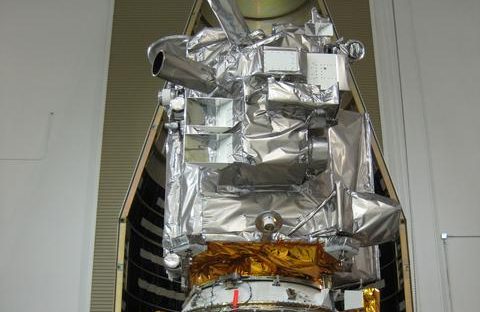
The Volatiles Investigating Polar Exploration Rover, better known as VIPER, was supposed to spend 100 days near the lunar south pole, driving into permanently shadowed craters, drilling into regolith, and answering the most practically important question about the moon: exactly where is the water ice, how much is there, and can humans use it?
In July 2024, NASA cancelled VIPER. The stated reason was cost growth — from an original $433.5 million to an estimated $609.6 million — and a schedule that had already slipped two years. The decision was controversial: the rover was largely complete, already delivered to its commercial lander partner Astrobotic, and cancelling it meant writing off hundreds of millions in sunk costs. Critics argued that NASA was making a false economy. Supporters of the cancellation noted that throwing more money at an overrunning program rarely produces proportionate value. Whatever the merits of that accounting argument, VIPER's cancellation left a significant gap in what NASA knows about the place it plans to land astronauts.
What VIPER Would Have Found
The lunar south pole's water ice is not a simple deposit waiting to be scooped up. Orbital observations from the Lunar Reconnaissance Orbiter and India's Chandrayaan-1 mission confirmed the presence of hydrogen-bearing compounds in permanently shadowed regions (PSRs) — craters and topographic hollows that sunlight never reaches, keeping temperatures at or below -173 degrees Celsius for billions of years. In those conditions, volatile compounds delivered by comets and asteroids — water, methane, ammonia, carbon dioxide — can survive essentially indefinitely.
But "hydrogen detected from orbit" is a far cry from "minable ice ready for astronaut use." The distribution is patchy. In some areas, ice appears to be a thin frost on individual regolith grains at concentrations of a few percent by weight. In others, orbital data hints at purer deposits that might be more practically useful. The vertical profile — whether ice concentration increases or decreases with depth — is unknown. The grain size, the presence of other volatiles mixed in, the mechanical properties of ice-bearing regolith — all of these matter enormously for determining whether in-situ resource utilization (ISRU) at the lunar south pole is a viable strategy or wishful thinking. VIPER was designed to measure all of these things systematically.
Why It Matters for Artemis
The Artemis program's long-term vision depends on ISRU. Hauling all the water, oxygen, and hydrogen propellant for a sustained lunar presence from Earth is prohibitively expensive — estimates frequently cited in the range of $10,000 to $100,000 per kilogram to the lunar surface, depending on the launch vehicle and mission architecture. Water ice at the south pole, if accessible, is fuel: electrolyze it to hydrogen and oxygen, and you have rocket propellant and breathable air. Use it directly for crew hydration and radiation shielding.
Planning a base at the lunar south pole without knowing the ice distribution in detail is planning around an assumption rather than a measured resource. If astronauts arrive at their designated landing site and the ice is in a form or concentration that makes extraction impractical, the entire logistical model needs revision — at a point in the program where revision is extraordinarily expensive.
What Comes Next
NASA stated that VIPER's cancellation would free resources to pursue alternative approaches to ice characterization, including instruments on future CLPS (Commercial Lunar Payload Services) landers. Several CLPS deliveries are planned for the south polar region, and each can carry science payloads including miniaturized spectrometers and neutron sensors.
The concern among planetary scientists is that CLPS payloads, typically much smaller than a dedicated rover's instrument suite, cannot replicate the systematic, multi-site coverage that VIPER's mobility would have provided. A stationary lander measures one spot; a rover traverses the variety of environments that makes a scientific conclusion statistically robust.
International missions offer some hope: the JAXA-ISRO LUPEX (Lunar Polar Exploration Mission) rover, targeting the south pole, carries a drill and water detection instruments and is intended to address similar questions. Its launch date has slipped repeatedly, currently targeting the late 2020s. For the moment, the lunar south pole's water ice remains as it has been for decades: detected, partially mapped, scientifically tantalizing, and insufficiently characterized for the decisions that Artemis planners need to make about humanity's next home away from Earth.
