
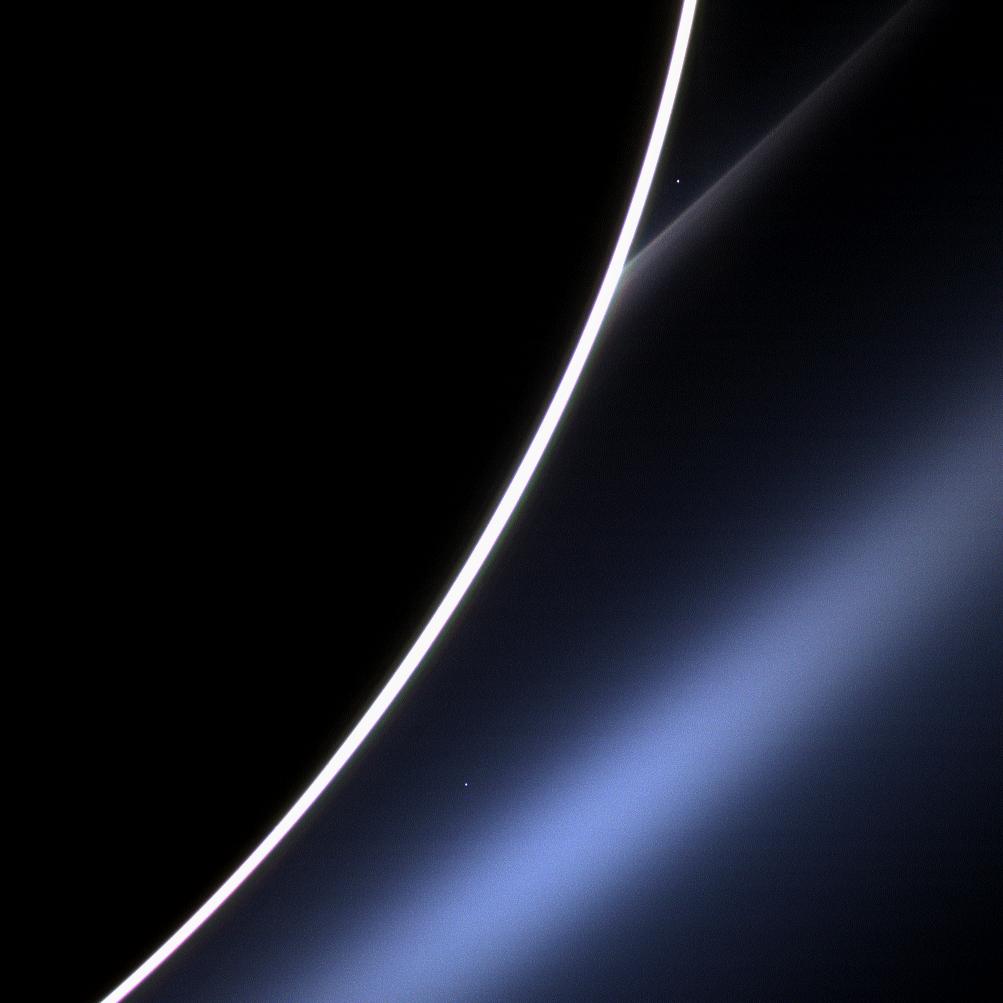
At 10 A.M. EST on Wednesday, November 11, Venus came to a halt. Nobody on the ground could have seen it happen, since the planet was lost in daylight by then, but the moment marks a turning point in the planet's path through Virgo. According to Astronomy magazine, Venus reached a stationary point at that hour, ending its retrograde motion. From here it starts moving eastward against the background stars, passing north of Spica, a bright star in Virgo.
That makes this one of the easier sky events of the season to follow. You don't need a dark site or a big telescope. You need a clear view of the eastern horizon and an alarm set early enough to be outside about an hour before sunrise.
What you'll see
Venus is hard to miss. Astronomy notes its brightness has increased over just the past few days, and it now blazes at magnitude -4.7. An hour before sunrise it stands about 10 degrees above the horizon, with Spica just to its lower left. EarthSky's planet guide, updated November 12, likewise describes brilliant Venus with Spica next to it in the eastern morning sky.
The pairing works because the two are so different. Spica is one of the brightest stars in the sky, yet next to Venus it looks faint, a bluish point beside a glare. Over the coming mornings, as Venus moves eastward, watch how its position relative to Spica shifts. EarthSky expects Venus to be farther from Spica by the end of November. Following one planet against one star from day to day is the simplest way to see a planet actually move.
A crescent, not a dot
Put even a small telescope on Venus and the brilliant point turns into a shape. Astronomy reports the disk is just 10 percent lit and measures 53 arcseconds across. The result is a thin crescent, a phase most people don't expect to see on what looks like a bright star to the naked eye.
Mercury in the murk
The harder target sits below Venus. Astronomy places Mercury only about 1.5 degrees above the horizon an hour before sunrise, at magnitude 1.2, roughly 13 degrees east of Venus, which puts it to the lower left from the observer's point of view. At that altitude, Astronomy says you will need a particularly flat horizon free of trees, buildings and lights. Mercury also rises as twilight brightens, which can make it harder to see in the growing light.
Astronomy suggests scanning for Mercury with binoculars, with a firm reminder: put them away well before sunrise from your location, which may differ from the time given in the column. Sunrise in the column is listed as 6:41 A.M. for 40 degrees north, 90 degrees west, so check your own local time.
The good news is that Mercury won't stay this low for long. EarthSky describes it as sitting midway between Venus and the horizon and climbing quickly. Mercury reaches its greatest distance from the Sun on November 21, so the next week and a half should bring easier views for anyone willing to check each morning.
The Moon stops by
NASA's Astronomy Picture of the Day for November 12 captured the group with an extra member. The image by Wlodzimierz Bubak, taken in Poland, shows the crescent Moon above the Tatra Mountains, with bright Venus close by and a little lower, and Spica to the left of Venus. As the APOD caption notes, meetings like this don't happen by chance. They follow the precise laws of celestial mechanics.
The caption also points out that Spica is more interesting than its role as Venus's backdrop. The star lies about 250 light-years away. In 1890 it was found to be a binary: two massive blue stars orbiting each other every four days. Earlier this year it was reported to be a triple system. So the faint point beside Venus is really a close group of stars, and a reminder that a single bright dot can hide a lot of structure.
Why It Matters
Planetary motion is easy to read about and hard to feel. A stationary point is when it becomes visible. Venus has been moving westward through Virgo, and now it has stopped and turned eastward. With Spica sitting right there as a fixed reference, anyone who looks on several mornings can watch the change for themselves, no software or star chart required.
The coming weeks also offer a clear set of dates to plan around. Mercury reaches greatest elongation on November 21. Venus reaches its greatest brilliancy in the morning sky on November 29, according to EarthSky. The rest of the solar system is busy too: EarthSky notes that Mars passes 1.2 degrees north of Jupiter on November 15, while Saturn holds the evening sky. Between a crescent Venus, a rising Mercury and a close pass of Mars and Jupiter, November rewards anyone willing to get up before dawn.
The practical advice is simple. Go out about an hour before sunrise, find the brilliant point low in the east, look for Spica beside it, and scan below and to the left for Mercury. If you use binoculars, put them away well before the Sun comes up.
