
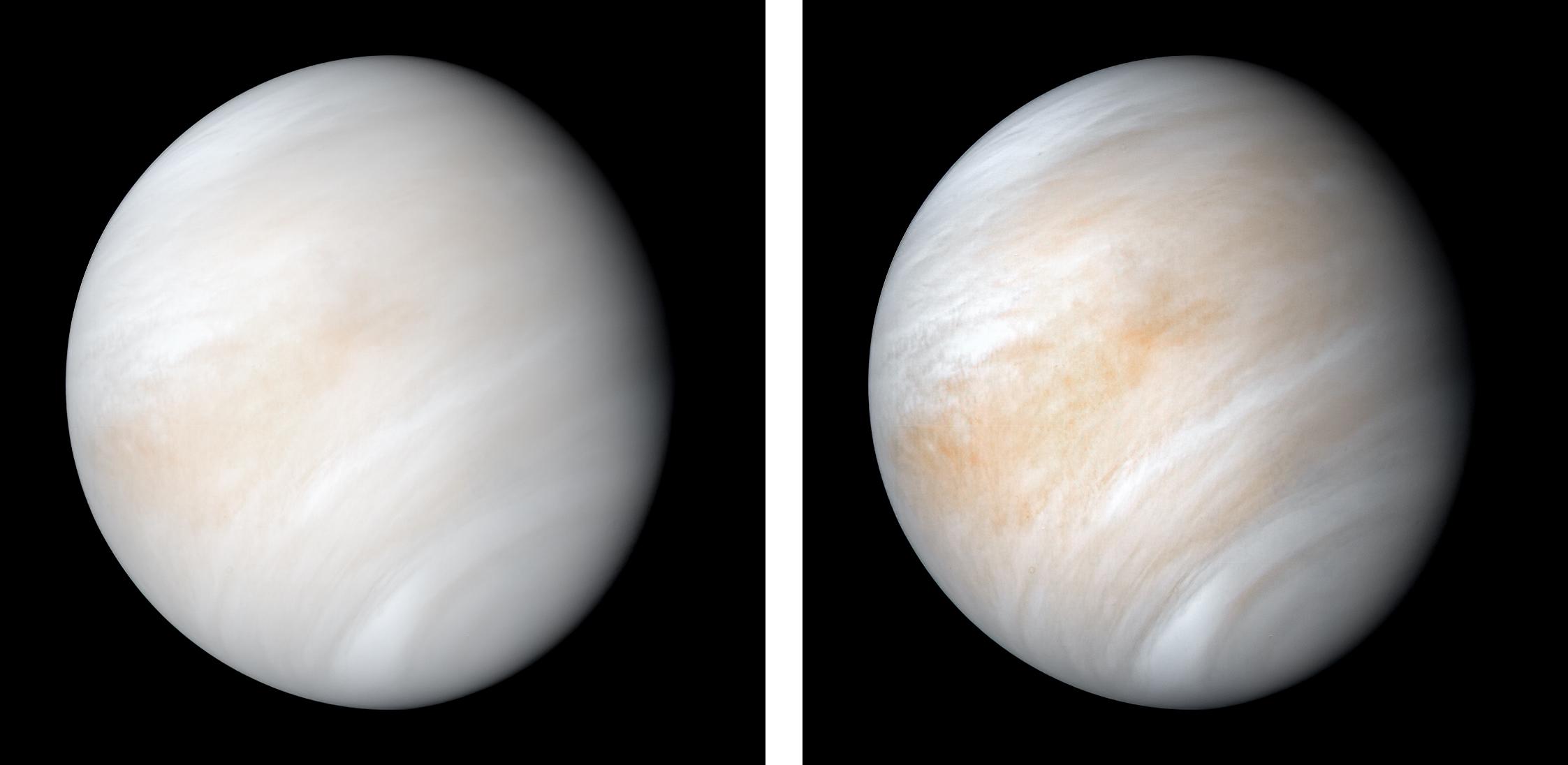
If you've glanced west after sunset lately and noticed an impossibly bright point of light refusing to set, that's not an airplane, a drone, or a UFO tip line waiting to happen. That's Venus, and this weekend it puts on its best evening performance of the year.
At 6 UTC on August 15, 2026, Venus reaches what astronomers call greatest eastern elongation — the point in its orbit where it appears farthest from the Sun as seen from Earth, about 46 degrees away. NASA's monthly skywatching guide flags the whole window from August 14 through 16 as prime viewing, and the independent sky-tracking site In-The-Sky.org lists the event's peak on August 14, underscoring that this isn't a single sharp moment so much as a several-day stretch where Venus sits at its evening best.
What "Elongation" Actually Means
Venus orbits the Sun closer in than Earth does, which means it never wanders far from the Sun in our sky the way Mars or Jupiter can. Instead, it swings back and forth between the morning and evening sky, and its apparent distance from the Sun waxes and wanes as it does. The absolute maximum that swing can reach is around 47.3 degrees, set by the geometry of Venus's orbital radius relative to Earth's. This week's 46-degree separation is about as close to that ceiling as Venus gets, which is exactly why it's lingering so long after sunset instead of ducking below the horizon minutes behind the Sun.
"Eastern" elongation specifically means Venus is trailing the Sun across the sky from our vantage point, which is what puts it in the western sky each evening rather than the pre-dawn east. That's the setup that makes this an evening event: no alarm clocks required, just clear skies and a spot with an open view toward the horizon where the Sun went down.
How to Find It
You won't need a star chart. Venus at magnitude -4.4 is, by a wide margin, the brightest point of light in the evening sky — brighter than any star, brighter than any planet currently visible, bright enough to be mistaken for a landing light. Step outside shortly after sunset, face west, and look low toward the horizon. It'll be the first "star" you see, often visible even before true darkness sets in.
For extra reference points this week, NASA and EarthSky both note a crescent Moon and the bright star Spica keeping Venus company nearby, giving observers a natural triangle to hunt for rather than a single isolated dot. None of this requires equipment — Venus at greatest elongation is a naked-eye event, full stop.
What a Telescope Adds
Where things get genuinely interesting is if you do have a telescope or even a decent pair of binoculars on a steady mount. Venus goes through phases just like the Moon, driven by the same basic geometry: how much of its sunlit hemisphere faces Earth depends on where it sits in its orbit relative to both the Sun and us. At greatest elongation, the Sun-Venus-Earth angle works out to roughly 90 degrees, so Venus shows up close to half-illuminated — EarthSky pegs it at about 49% lit, essentially a first-quarter phase. NASA describes the view through a telescope the same way, saying Venus "will look close to half lit, like a tiny lunar phase." The disk itself spans about 24.5 arcseconds, large enough that even modest optics should resolve the phase shape rather than just a bright blob.
This is the payoff moment for planetary observers who track Venus through its cycle: earlier in the year it shows as a small, nearly full disk far across the solar system from us; as it swings toward elongation and eventually inferior conjunction, it grows larger and its crescent thins. Right now it's at the geometric sweet spot where the half-disk view is at its most textbook-clean.
Why It Matters
Greatest elongation isn't just planetary trivia — it's one of the handful of nights a year when the mechanics of the solar system are laid out plainly for anyone willing to look up. The fact that Venus can only ever appear about 47 degrees from the Sun is a direct, visible consequence of its orbit lying inside Earth's. Watching that phase for yourself this week is a low-effort way to see orbital mechanics rather than just read about it.
It's also simply a good week to be outside after dark. This elongation follows closely on the heels of the August 12 total solar eclipse and the Perseid meteor shower peak, and it sets up a run of Venus visibility that EarthSky says will hold through October, with the planet reaching its point of greatest brilliancy — its single brightest evening — around September 18. If clouds spoil the view this weekend, in other words, you get another shot at good Venus watching before it cedes the evening sky. And with a roughly 93%-illuminated partial lunar eclipse arriving August 27-28, this stretch of the month rewards anyone keeping a regular habit of looking up after sunset.
