
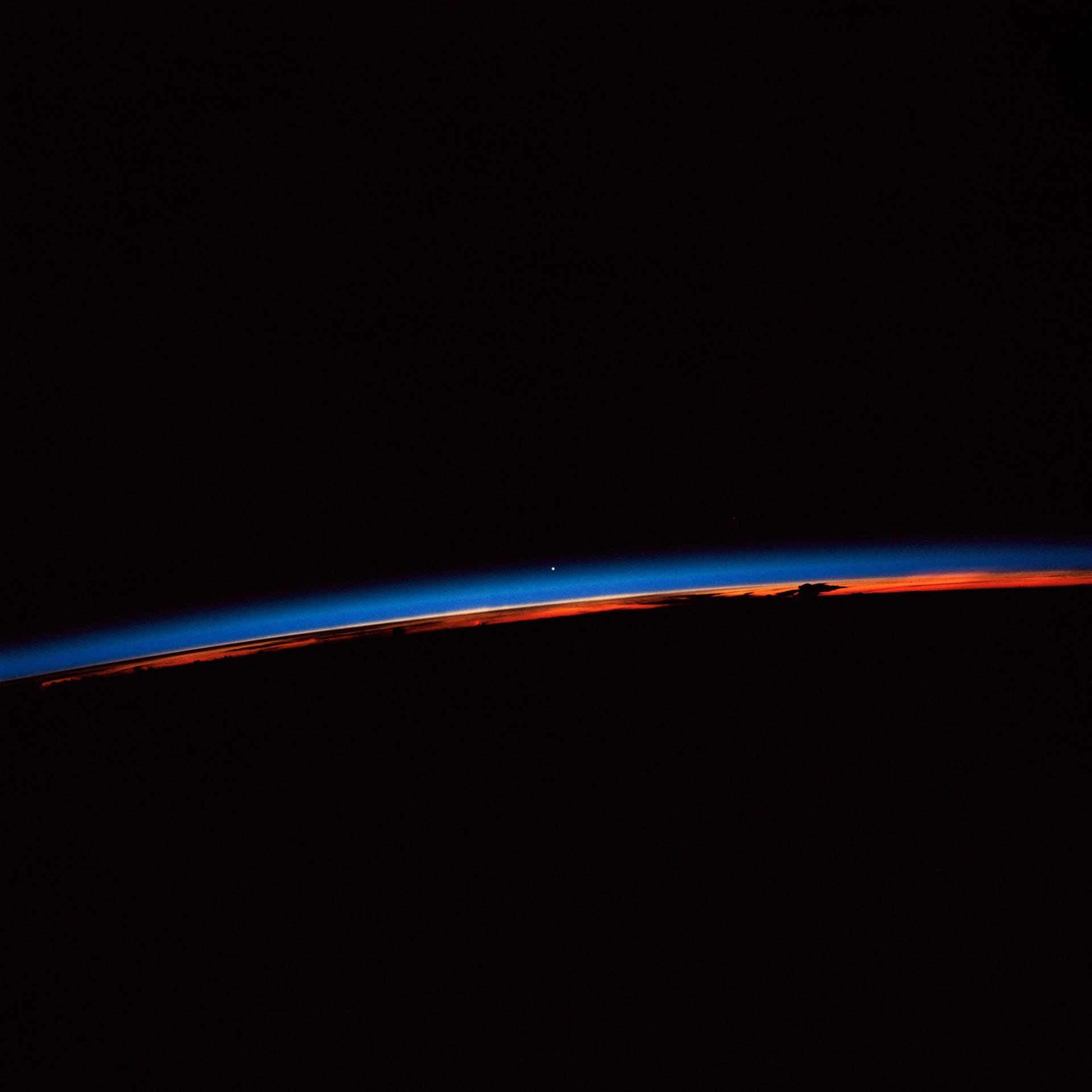
If you stepped outside shortly after sunset this past weekend and caught a blazing point of light hanging low in the west, refusing to fade even as the rest of the sky went dark, you weren't imagining things. Venus just hit the high point of its current evening act — greatest eastern elongation — and for the next several weeks it's putting on one of the easiest, most rewarding skywatching shows of the year.
The moment itself was precise. According to In-The-Sky.org, Venus reached greatest elongation on August 14, 2026, at 9:59 PM UTC, shining at magnitude -4.3 and sitting in the constellation Virgo. EarthSky pins the peak slightly later, at 6 UTC on August 15, with a brightness of magnitude -4.4 — the kind of small discrepancy that's normal when different observatories define the exact peak second differently, but both numbers land in the same neighborhood: blindingly bright by any naked-eye standard, and the brightest point of light in the night sky after the Moon.
What "Greatest Elongation" Actually Means
Venus and Mercury are the two planets that orbit closer to the Sun than Earth does, which means from our vantage point they never stray far from the Sun in the sky — they're always trailing along near sunrise or sunset, never visible at midnight the way Mars or Jupiter can be. Their angular distance from the Sun, as seen from Earth, swells and shrinks as both planets move along their orbits. Greatest elongation is simply the moment that angular distance maxes out for a given apparition — the widest gap Venus opens up between itself and the Sun's glare before it starts swinging back.
For this appearance, EarthSky puts Venus at 46 degrees from the Sun, just shy of the theoretical maximum of about 47.3 degrees that Venus's orbital geometry allows. That's "eastern" elongation because Venus currently trails the Sun across the sky to the east, which puts it in the evening sky — visible after sunset rather than before sunrise. In-The-Sky.org notes the planet was standing about 21 degrees above the western horizon at sunset a few days before the event, and was setting locally around 9:50 PM on August 14 itself — plenty of time in a dark-enough sky for a good, unaided look.
A Half-Moon in Miniature
Point even a small telescope or a decent pair of binoculars at Venus right now and you won't see a full disk — you'll see something that looks uncannily like a tiny, brilliant crescent Moon at first quarter. That's not a coincidence; it's the whole point of elongation. NASA's monthly skywatching guide describes it as "a tiny lunar phase," and the numbers back that up: In-The-Sky.org measured the disk at 51% illuminated (in the days around the event), while EarthSky puts it at 49% illuminated and 24.48 arcseconds across. Split the difference and Venus is essentially exactly half-lit, which is more or less the geometric definition of greatest elongation for an inferior planet — the angle formed by the Sun, Venus, and Earth is close to a right angle at that moment, so we see the planet's day and night hemispheres in roughly equal measure.
As Venus continues its orbit past greatest elongation, that illuminated fraction will keep growing — the planet fattens toward a full, gibbous-looking disk even as it appears to shrink and dim slightly, because it's also moving farther from Earth on the far side of its orbit relative to us.
Finding It: The Moon and Spica as Guideposts
Around the date of greatest elongation, skywatchers got some extra help pinpointing Venus: EarthSky reports that around the evening of August 15 the planet appeared near a young crescent Moon, with the bright star Spica — Virgo's brightest member — also nearby in the evening twilight. That's a useful trick for casual observers — even if you can't immediately identify Venus against a still-bright sky, a crescent Moon nearby is an easy anchor point, and Spica's blue-white glint offers a second reference a bit fainter and to the side.
NASA's guide, which covers the full month of August 2026, also flags two other headline events bracketing this one: the Perseid meteor shower peaking August 12-13, and a partial lunar eclipse on August 27-28 that will darken roughly 93% of the Moon's diameter as it passes through Earth's umbral shadow. Venus's elongation lands squarely in the middle of a busy month for skywatchers.
Why It Matters
Greatest elongation isn't a rare event — Venus regularly cycles between evening and morning apparitions relative to the Sun as both worlds orbit, so an elongation like this comes around on a predictable schedule. What makes it worth stepping outside for is accessibility: this is Venus at its most conveniently placed for casual, no-equipment observing, hanging well above the horizon in a dark-enough sky rather than lost in twilight glow near the horizon. It's also one of the few times an amateur telescope reveals a planet visibly changing shape from one week to the next, the same way the Moon does — a small, satisfying reminder that Venus is a world with its own geometry relative to ours, not just a bright dot. According to EarthSky, Venus will remain visible in the evening sky through October 2026, when it will drop into the sunset glare — so there's a real window, not just one night, to catch it.
