
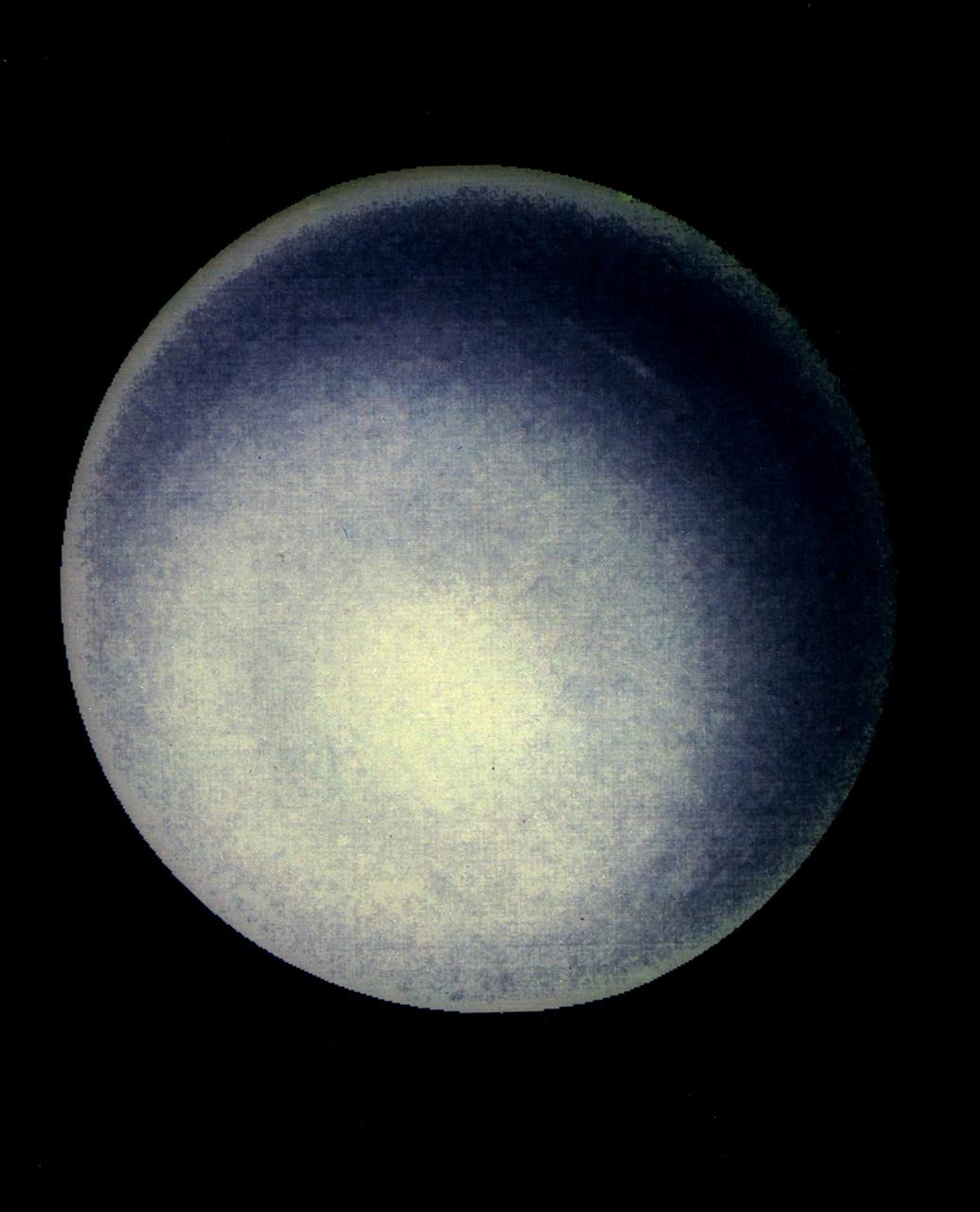
Most planets announce themselves. Jupiter blazes, Saturn holds a steady golden glow, and Mars turns obviously red when it comes close. Uranus does none of that. Even at its best it looks like one more faint point among thousands, and it barely reaches naked-eye brightness. That best moment arrived this week. Uranus reached opposition at 5 p.m. CST (23:00 UTC) on November 25, 2026, which made it the brightest and closest it will be all year.
This year it is also easy to find. The seventh planet sits in Taurus, between two of the best-known star clusters in the sky, the Pleiades and the Hyades. If you have ever spotted the Seven Sisters on an autumn evening, you have already looked within a few binocular fields of Uranus.
What Opposition Means, and What You Will Actually See
At opposition, Earth sits between Uranus and the Sun. The planet lies directly opposite the Sun in our sky and is at its nearest for the year. According to EarthSky, Uranus is now about 18.4 astronomical units from Earth. That works out to roughly 2.6 light-hours, so the sunlight you catch bouncing off its clouds left the planet more than two and a half hours earlier.
EarthSky puts its brightness at magnitude +5.6, and Universe Today gives a figure near +5.5. Either way it sits right at the limit of naked-eye vision. Under a truly dark rural sky, a sharp-eyed observer who knows exactly where to look can sometimes see it without help. For everyone else, binoculars are the realistic starting point. Opposition is not a one-night window, either. EarthSky notes that Uranus shines at this brightness from about mid-October to mid-December and remains in the evening sky through April 2027.
A telescope changes the picture, though only a little. The planet's disk spans about 3.8 arcseconds, small enough that at low power it is easy to mistake for a star. Universe Today describes its low-power appearance as a blue-green "star" that stubbornly refuses to snap into focus. EarthSky describes it through a telescope as a tiny, greenish disk, and says observers may look for up to four of its moons around it.
Finding It in Taurus
Start with the Pleiades, the compact cluster that most people can find without a chart. Then locate the Hyades, the wider V-shaped group that marks the face of Taurus the Bull. Uranus lies between them. Sweep the gap slowly with binoculars and look for a "star" that seems slightly off-color or that is not on your chart. A planetarium app or printed finder chart for the current week will narrow it to one point. Because Uranus moves slowly against the background stars, you can also check your identification by sketching the field and coming back a few nights later.
The timing this week comes with a complication. The Moon occulted the Pleiades on November 24, as seen from the Arctic, the night before opposition, which shows how close Uranus sits to the full Moon's part of the sky. By Thanksgiving night, November 26, Space.com reports a waning gibbous Moon 2.5 days past full and 91 percent illuminated, rising around 6:25 p.m. local time. That much moonlight makes a magnitude 5.6 target noticeably harder to catch. Binoculars or a telescope will still show it, but anyone hoping for a naked-eye sighting will do better once the Moon moves on. With Uranus staying well placed for months, nothing is lost by waiting.
If you want an easier target to warm up on, Space.com points to Saturn, shining at first magnitude high in the southern sky. Its rings are tilted only about 6 degrees toward Earth right now, so they look like a very thin line rather than the familiar wide oval.
A Planet on a Slow Clock
Uranus runs on a timescale that makes human calendars look rushed. Universe Today notes that it takes 84 years to circle the Sun. Because Earth has to travel a bit more than one full orbit to line up with it again, Uranus reaches opposition every 370 days or so, and Universe Today says its oppositions slide forward about five days each year. EarthSky's list shows the drift: November 21 in 2025, November 25 in 2026, and November 30 in 2027.
Its distance also changes over that long orbit. Universe Today reports that Uranus reached aphelion, its farthest point from the Sun at about 20 AU, in 2009, and will reach perihelion, about 18.3 AU, in 2050. NASA gives its average distance from the Sun as about 1.8 billion miles, or roughly 19 AU. Over the coming decades, its closest approaches to us will slowly creep nearer.
There is a historical milestone ahead as well. William Herschel discovered Uranus on 13 March 1781, and NASA notes it was the first planet ever found with a telescope. Universe Today points out that in 2033 the planet will pass the point in Taurus where Herschel first found it, between the horns of the Bull. That will be three full orbits, about 252 years, after the discovery.
The Strangest Giant
The faint dot in your eyepiece is not small. NASA lists Uranus's equatorial diameter as 31,763 miles (51,118 km), about four times Earth's. It has 13 faint rings and, by NASA's count, 28 small moons. Its oddest trait is its tilt. NASA gives the axial tilt as 97.77 degrees, so the planet effectively rolls around the Sun on its side.
Almost everything we know about it up close comes from a single visit: Voyager 2's flyby in 1986. Universe Today notes it remains the only mission to have seen the planet close up, and that an orbiter would be feasible around the 2040s. For a world four times Earth's width with a rotation axis that defies easy explanation, that is a thin record.
Why It Matters
Uranus is something of a test of attention. It is the one planet you can see from a backyard that the ancients never recognized as a planet. It was in the sky all along, too faint and too slow to stand out, until a careful observer with a telescope noticed that one "star" was not behaving like the others. Finding it yourself retraces that discovery in a small way. You learn to read star fields closely enough to spot the point that does not belong.
It is also a reminder of how little direct information we have about the ice giants. One flyby four decades ago is most of what we know from close range about the planet sitting between the Pleiades and the Hyades this month. Seeing it at opposition will not fill that gap. It does make an abstract, distant world concrete: a pale green-blue point 2.6 light-hours away, on a path that takes 84 years to complete.
The practical message is simple. Uranus is as good as it gets for 2026, it is parked beside a landmark almost anyone can find, and it will stay there for months. Pick a clear night once the Moon has thinned, take out the binoculars, and look between the clusters in Taurus.
