
Most months, the Moon gets in the way of something. In December 2026 it mostly stays out of the way, and the timing works out well. The Moon reaches new phase just days before the Geminid meteor shower peaks, so one of the year's best and most reliable showers happens under dark skies. Before that, a waning crescent passes Venus and the star Spica in the morning sky. After it, the Moon moves through the evening and reaches full as the Cold Moon, two days before Christmas.
Here is the month in date order, with the times and caveats you need to plan.
Late November warm-up: Venus at its brightest, Moon among the morning planets
The run-up starts before December does. According to EarthSky's planet guide, Venus reaches greatest brilliancy in the morning sky on Nov. 29. That is the point at which the planet looks brightest in the morning sky, so this is a good week to step outside before dawn and find it.
From Nov. 29 through Dec. 1, the Moon moves past Jupiter, Mars and Regulus, the brightest star in Leo, in the same predawn sky. The Moon reaches third quarter on Dec. 1 at 1:09 a.m. CST. From then on, a smaller crescent rises a little later each morning, heading toward Venus.
Dec. 2-5: The crescent Moon, Venus and Spica
EarthSky lists the Moon near Venus and Spica on two pairs of mornings, Dec. 2-3 and Dec. 4-5. On Dec. 2 and 3 the waning crescent floats above brilliant Venus and the bright star Spica. On Dec. 4 it glows near Venus with Spica between them, and on Dec. 5 a thinner crescent forms a triangle with the pair above the eastern horizon.
On Dec. 7 there is a harder target. The very thin waning crescent lies low in bright morning twilight just above the eastern horizon, with Venus and Spica nearby and elusive Mercury close to the Moon. EarthSky describes Mercury as very low on the eastern horizon this month, and says it will disappear by mid-month, so you will need a flat, unobstructed eastern horizon and a clear sky near the ground. Binoculars help, but put them away before the Sun comes up.
Dec. 9: New Moon clears the stage
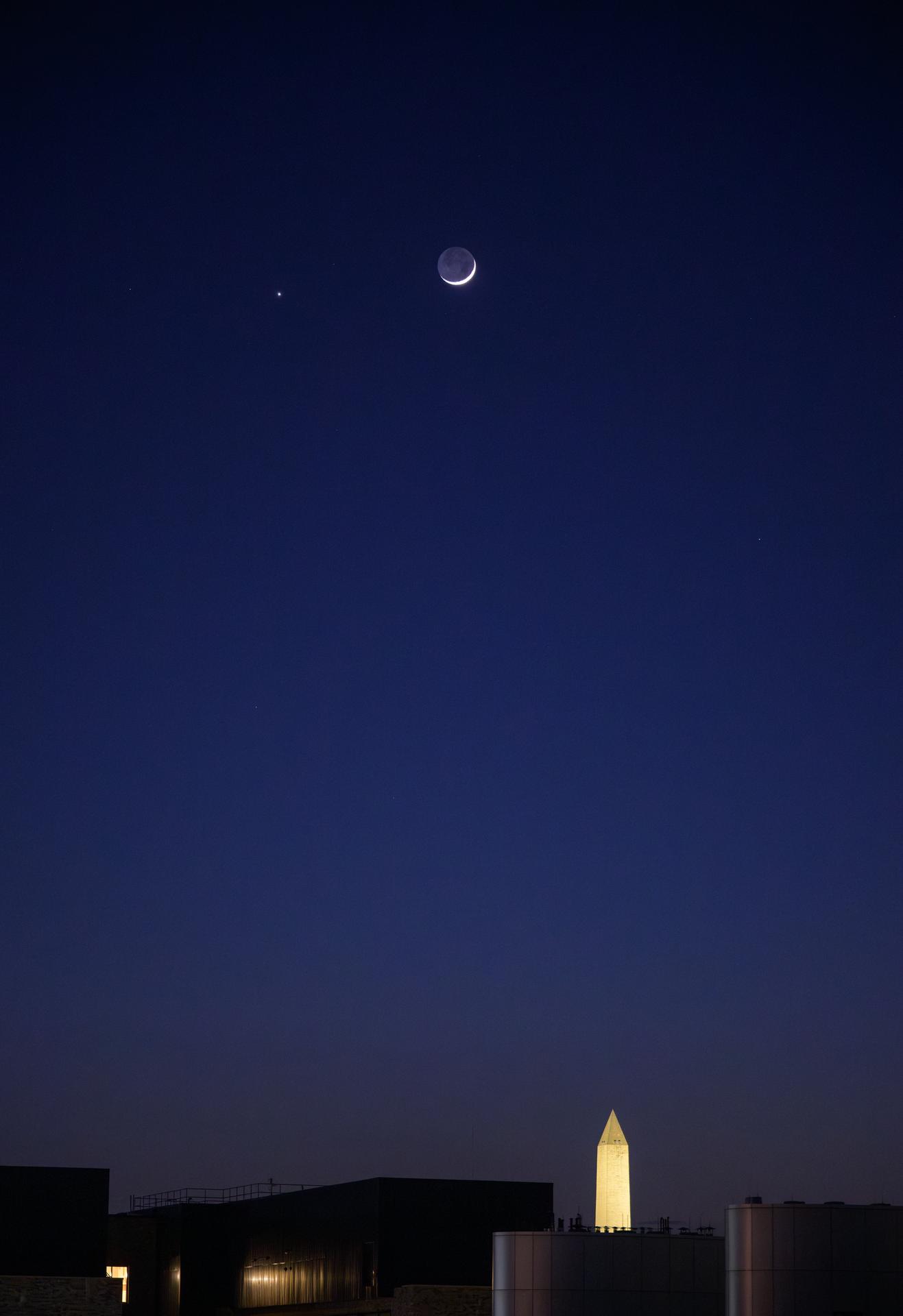
The new Moon falls on Dec. 9 (0:52 UTC). In the Americas that is 6:52 p.m. CST on Dec. 8. EarthSky notes that the nights around new Moon offer the darkest skies. By Dec. 10-11 a thin crescent returns above the western horizon in the evening twilight, and it is worth a look just after sunset. On Dec. 11 it should be easier to spot and glowing with earthshine.
The new Moon matters most for what comes a few nights later.
Dec. 13-14: The Geminids, with almost no moonlight
The Geminids peak overnight Dec. 13-14. Many meteor shower peaks are spoiled by a bright Moon. This year the Moon will only be a few days past new, and EarthSky puts it simply: "a waxing crescent moon won't interfere." EarthSky also says the days before and after the peak might be good as well.
NASA calls the Geminids one of the best and most reliable annual meteor showers. It says that at peak, 120 Geminid meteors can be seen per hour under perfect conditions, while its fast-facts box lists 40 to 50 meteors per hour when observed under dark skies. EarthSky's estimate for this year is that "you might see more than 100 meteors an hour." These are best-case figures, so from a suburban backyard you will see far fewer, but even a fraction of that rate is a good night.
NASA notes a few things that set this shower apart:
- The meteors look different. Geminids are bright and fast, and tend to be yellow.
- The peak is broad. The maximum lasts nearly 24 hours, so the shower is visible across the globe.
- It starts early. NASA says the shower starts around 9 or 10 p.m., which makes it one of the best opportunities for young viewers.
- It has grown stronger over time. The Geminids first appeared in the mid-1800s, when they produced only 10 to 20 meteors per hour.
If you can stay up later, EarthSky says the meteors radiate from near the bright star Castor in Gemini, which is in the east on December evenings and highest in the sky around 2 a.m. local time. NASA says the show lasts until dawn, so you have plenty of time.
How to watch
NASA's advice is simple. Find an area well away from city lights or street lights. Come prepared for winter temperatures with a sleeping bag, blanket or lawn chair. Lie flat on your back with your feet facing south and look up, taking in as much of the sky as possible. After about 30 minutes in the dark, your eyes will adapt and you will begin to see meteors. Be patient, and keep bright screens out of your eyes while you wait.
Dec. 17: The Moon visits Saturn
Saturn is the evening planet this month. EarthSky says to look about 60 minutes after sunset for golden Saturn shining in the east as darkness falls, and that it stays visible until after midnight all month. The Moon reaches first quarter at 11:43 p.m. CST on Dec. 16 in the Americas (5:43 UTC on Dec. 17). On the evening of Dec. 17 the waxing gibbous Moon lies near the steady golden light of Saturn, and the pair set shortly after the middle of the night.
Dec. 20-21: Moon near Aldebaran and the Pleiades
As the Moon grows toward full, it moves into Taurus. On the evening of Dec. 20 the bright waxing gibbous Moon shines near Aldebaran, the brightest star of Taurus, with the Pleiades star cluster nearby. On Dec. 21 the Moon lies even closer to the Pleiades. EarthSky says binoculars will help you pick out the misty cluster near the Moon's glow.
Dec. 23: The Cold Moon
The month's full Moon peaks at 8:28 p.m. EST on Dec. 23, which is 0128 GMT on Dec. 24, according to Space.com. Whether it counts as a Dec. 23 or Dec. 24 full Moon depends on where you live. Either way, it looks full to the naked eye on the nights on both sides of the exact moment.
Its best-known name is the Cold Moon, a reference to the often freezing temperatures at this time of year. Space.com notes that the Mohican name, the Long Night Moon, comes from its closeness to the winter solstice. Other names include the Moon Before Yule (Old English) and the Oak Moon (Celtic). This year it also coincides with the Hindu festival Datta Jayanti.
Why It Matters
A meteor shower's listed rate tells you little unless you know what the Moon is doing. Bright moonlight washes out the fainter meteors, which is one reason the same shower can be excellent one year and disappointing the next. In 2026, the Geminids, which NASA counts among the best and most reliable annual showers, peak just days after new Moon, and EarthSky says the waxing crescent will not interfere. That is close to the best arrangement possible, and the strongest reason to plan a December night outside.
The rest of the month is useful too. In the mornings, Venus is near its brightest, with Jupiter and Mars nearby. In the evenings, Saturn is up all month. The Moon passes Venus, Spica, Saturn, Aldebaran and the Pleiades, and each pairing is an easy way to find a planet or star you might not recognize alone. Most of these events need no equipment, only a clear sky and a few minutes, though binoculars help with the Pleiades.
