
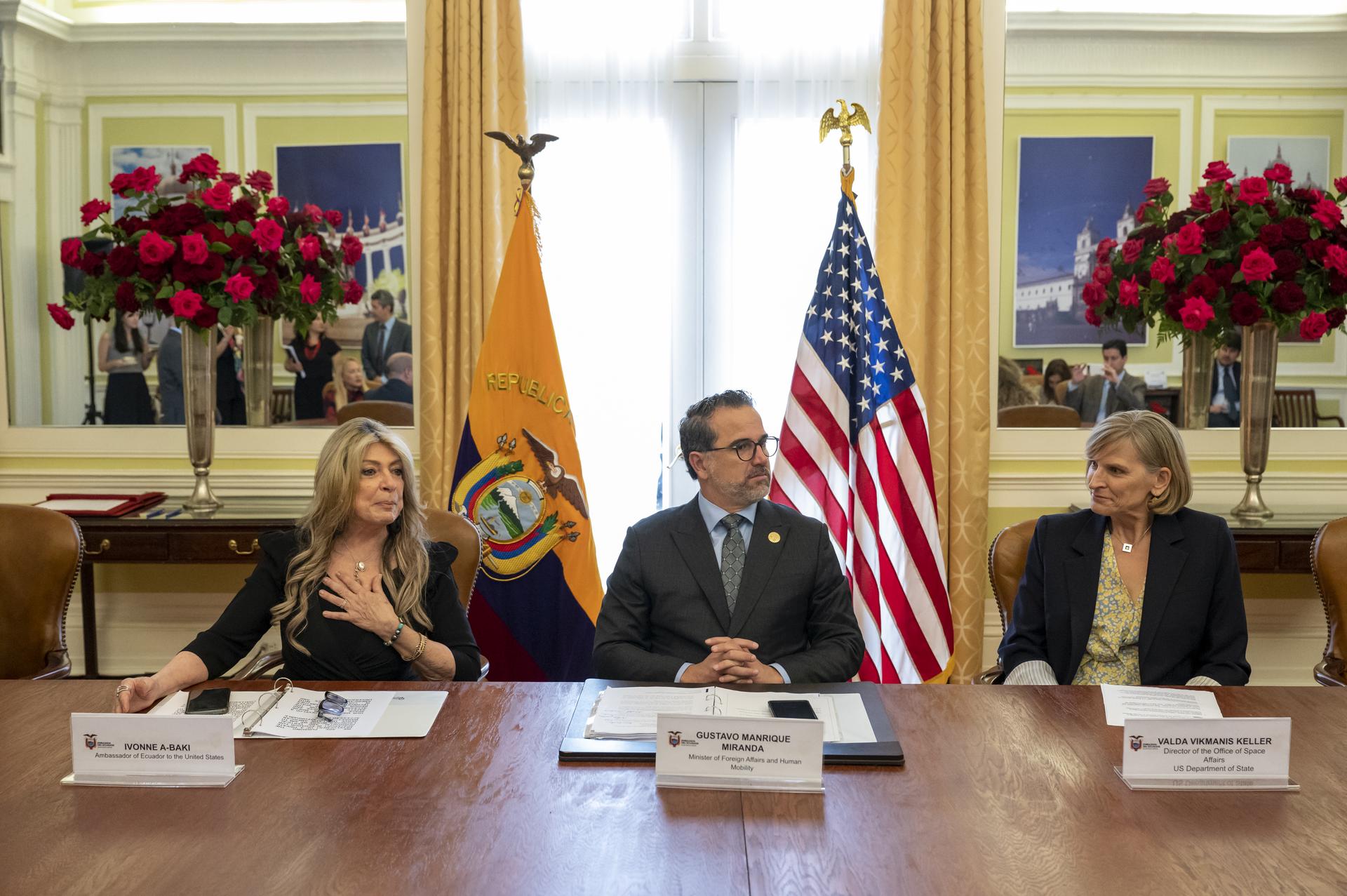
At 2:30 p.m. Eastern on Monday, in a ceremony room at NASA Headquarters in Washington, Turkey put its name to the Artemis Accords. The signing makes Turkey the 71st country to join the framework, which the United States has spent nearly six years assembling as the closest thing the current era of lunar and Mars exploration has to a rulebook.
NASA Administrator Jared Isaacman hosted Turkish Minister of Industry and Technology Mehmet Fatih Kacır for the ceremony, with officials from the U.S. Department of State also on hand. The Accords are jointly led by NASA and the State Department, and signings like this one have become a recurring diplomatic ritual — part space policy, part statecraft, conducted in a building better known for rocket engineering than treaty signings.
What Turkey Just Signed
The Artemis Accords are not a treaty in the binding, ratified-by-parliament sense. They're a set of political commitments — a shared vocabulary, really — that signatory nations agree to apply to their own civil space activities. NASA describes the core principles as covering transparency, interoperability, and safety in space exploration, with an emphasis on peaceful purposes and open scientific data.
The framework dates to October 13, 2020, when NASA and the State Department stood up the Accords with eight founding signatories: Australia, Canada, Italy, Japan, Luxembourg, the United Arab Emirates, the United Kingdom, and the United States itself. Since then the list has grown steadily, ceremony by ceremony, until it reached 70 nations before Turkey walked through NASA's doors this week.
Why Turkey, Why Now
Turkey's space ambitions aren't new — the country has been building out its own national space program, including satellite manufacturing and launch ambitions, for years. In an opinion analysis published by SpaceNews, Turkish space-diplomacy researcher Elif Yüksel argued that Turkey's industrial base is no longer the limiting factor in Artemis participation, and that accession is best read as both an industrial and a diplomatic move: a way to align Turkish space policy with the norms the U.S. and its partners are trying to establish for lunar and Martian activity, while also signaling where Ankara wants a seat at the table as those norms get written.
That dual reading — industry plus diplomacy — is more or less the story of every Accords signing at this point. Countries without a near-term crewed lunar mission of their own still have reasons to sign: influence over how future lunar resource use, data-sharing, and safety zones get defined; access to the diplomatic and, potentially, commercial relationships that come with being inside the tent; and alignment with the coalition NASA is building around its own Artemis program.
The Ceremony, Briefly
Details of the event itself were confirmed independently in event listings ahead of the signing, including from SpacePolicyOnline, which tracked the same date, time, and Washington location as NASA's own release. That kind of independent confirmation is fairly routine for Accords signings now — they're scheduled, announced, and covered with the predictability of a State Department press briefing, which in a sense is exactly what they are.
Why It Matters
Six years in, the Artemis Accords have quietly become one of the more consequential diplomatic instruments in space policy, not because any single signature is dramatic, but because of what the aggregate now represents. With 71 nations signed on, the Accords carry a scale of active political buy-in that non-binding space-policy frameworks rarely reach, even though they remain non-binding and carry no enforcement mechanism of their own.
That matters most in the vacuum where hard law doesn't yet exist: how nations behave around lunar resource extraction, how they deconflict activity near shared landing and operating sites, and how transparently they share data about what they're doing on and around the Moon. The Outer Space Treaty of 1967 sets broad guardrails, but it says little about the specifics of a multi-actor lunar economy. The Accords are, in effect, an attempt by the U.S. and its partners to fill that gap with soft-law norms before other frameworks — or no framework at all — fill it instead.
Turkey's signature doesn't change that dynamic on its own. But every additional signatory narrows the pool of significant spacefaring or space-adjacent nations sitting outside the framework, and shifts the practical default for what "responsible" behavior in cislunar space is assumed to look like. For a country like Turkey, with a growing but still-developing space sector, signing now is also a bet: that being an early participant in shaping how those norms evolve buys more influence than waiting on the sidelines.
