
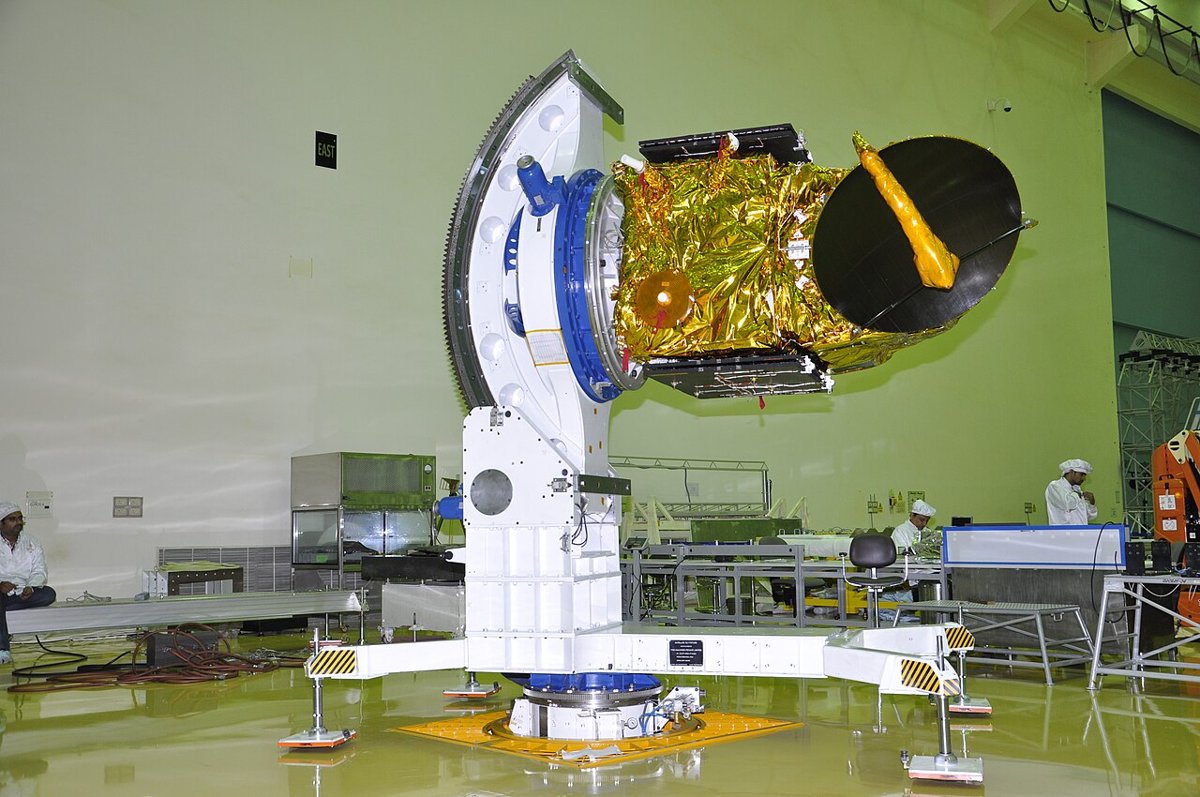
The White House has signed an executive order directing NASA to plan quantum space applications, a directive that could accelerate the development of quantum communication capabilities in orbit. The order marks a concrete policy step toward building satellite networks that leverage the strange properties of quantum mechanics to secure data transmissions against even the most sophisticated eavesdropping attempts.
The order, which tasks NASA with charting a path toward operational quantum applications in space, arrives at a moment when governments and defense establishments worldwide are racing to future-proof their communications against the looming threat of quantum computers — machines that could, in theory, shatter the encryption protocols that underpin virtually all modern digital security.
Quantum Communication, Briefly
To understand why an executive order about satellite infrastructure has physicists and national security analysts paying attention, it helps to understand what quantum communication actually is — and what it is not.
Classical encryption relies on mathematical problems that are extraordinarily difficult for today's computers to solve. Factor a sufficiently large number into its prime components, and you can break RSA encryption. Today's machines cannot do this in any reasonable timeframe for keys of standard length. But a sufficiently powerful quantum computer running Shor's algorithm could, at least in principle, reduce that problem from computationally intractable to straightforwardly solvable.
Quantum communication sidesteps this vulnerability entirely. Rather than relying on mathematical difficulty, it exploits fundamental properties of quantum mechanics — specifically, the no-cloning theorem and the observer effect. In quantum key distribution, or QKD, two parties share encryption keys encoded in the quantum states of photons. Any attempt to intercept or measure those photons inevitably disturbs their quantum states, alerting both parties that the channel has been compromised. The security guarantee is not computational but physical: it is baked into the laws of nature themselves.
The catch is range. Photons transmitted through fiber-optic cables degrade over distance, and quantum states cannot be amplified the way classical signals can — amplification would require measuring the state, which destroys it. Ground-based QKD networks are typically limited to a few hundred kilometers without intermediate trusted nodes. Space-based quantum communication, using satellites to relay quantum-encoded photons between ground stations separated by thousands of kilometers, offers a path around this fundamental limitation.
What the Executive Order Actually Does
The executive order directs NASA to plan quantum space applications. While the directive sets a planning mandate rather than immediately funding construction of orbital hardware, it represents a formal policy commitment to developing the infrastructure necessary for quantum-enabled satellite capabilities.
The directive effectively positions quantum space infrastructure as a strategic priority within NASA's technology development agenda, signaling that quantum applications in orbit are moving from laboratory curiosity toward mission planning.
The Landscape: Who Else Is Working on This
The executive order does not exist in a vacuum. Quantum communication from space has been an active area of research and development for more than a decade, and several nations have made significant investments in the technology.
China's Micius satellite, launched in 2016, demonstrated satellite-to-ground QKD over distances exceeding 1,200 kilometers and performed the first intercontinental quantum-secured video call between Beijing and Vienna in 2017. The European Space Agency has invested in quantum communication studies and pathfinder missions. Canada, Japan, Singapore, and the United Kingdom have all pursued various approaches to space-based quantum key distribution.
The United States has conducted ground-based quantum networking experiments through the Department of Energy and various academic institutions, but has not yet deployed a dedicated quantum communication satellite. The executive order suggests an intent to close that gap by leveraging NASA's spaceflight infrastructure and mission experience.
Why Space Matters for Quantum Networks
The physics of why space is attractive for quantum communication comes down to a simple reality: vacuum is a much friendlier medium for photons than glass fiber or the lower atmosphere.
In optical fiber, photons are absorbed and scattered as they travel, with signal loss accumulating over distance. Quantum repeaters — devices that could extend the range of quantum communication through fiber — remain largely experimental. The atmosphere, particularly its lower and denser regions, introduces turbulence, absorption, and scattering that degrade quantum signals.
In space, by contrast, photons travel through near-vacuum for most of their journey between a satellite and a ground station. The only significant atmospheric interference occurs in the final roughly 10 kilometers of descent to a ground receiver. Satellites in low Earth orbit can establish quantum links with ground stations across distances that would be impractical through fiber alone, and a constellation of such satellites could, in principle, enable global quantum key distribution.
There are still formidable engineering challenges. Pointing a narrow beam of single photons from a satellite moving at roughly 7.5 kilometers per second to a ground telescope requires extraordinarily precise tracking. Atmospheric conditions at the ground station — cloud cover, turbulence, light pollution — affect link availability. And the satellites themselves must carry quantum light sources and optics that survive the vibration of launch and the thermal extremes of orbit.
Quantum Sensing: A Related Frontier
Beyond communication, quantum space applications could also encompass quantum sensing — a category of instruments that exploit quantum effects to achieve measurement precision beyond what is possible with classical sensors.
Quantum sensors can include atomic clocks of extreme accuracy, atom interferometers for measuring gravitational fields, and magnetometers sensitive enough to detect subtle variations in Earth's magnetic field. In orbit, such instruments could improve navigation, enable higher-resolution gravity mapping for Earth science, and enhance the detection of underground structures or resources.
For NASA's science portfolio, quantum sensors in space could open new measurement capabilities for Earth observation, planetary science, and fundamental physics experiments. For national security applications, the same technology could improve the precision of satellite navigation and the detection of submarines, tunnels, or other objects that produce faint gravitational or magnetic signatures.
Why It Matters
The executive order matters for two reasons that operate on very different timescales.
In the near term, it signals a policy commitment that could unlock federal funding, attract private-sector investment, and accelerate research partnerships between NASA, the Department of Defense, the Department of Energy, and academic institutions working on quantum technologies. Planning mandates from the White House tend to create institutional momentum — they put agencies on notice that progress reports will be expected, and they give program managers political cover to request budgets for work that might otherwise be considered too speculative.
In the longer term, the development of quantum-secured space communication infrastructure could fundamentally alter the security landscape for satellite communications. Today, encrypted satellite links rely on the same mathematical assumptions that quantum computers threaten to undermine. A satellite network capable of distributing quantum keys would offer a layer of security that is immune to advances in computational power — whether from quantum computers or any other future technology. The protection comes from physics, not from the assumption that an adversary lacks sufficient computing resources.
This distinction matters because critical government and military communications increasingly rely on satellite links. Diplomatic traffic, command-and-control data, intelligence products, and financial transactions all traverse satellite channels that could become vulnerable as quantum computing matures. Building quantum-secured alternatives before that vulnerability is exploited is the strategic logic behind the executive order.
There is also an industrial dimension. The nations and companies that master quantum space infrastructure first will likely set standards and capture markets for quantum-secured communications services. Government investment in the underlying technology tends to create spillover benefits for commercial applications — a pattern that has repeated throughout the history of space technology, from GPS to weather satellites to broadband internet constellations.
The executive order does not, by itself, put quantum hardware in orbit. But it sets the planning in motion, and in the bureaucratic mechanics of federal space programs, the planning phase is where architectures are defined, partnerships are forged, and the technical choices that shape a program for decades are made. What NASA's quantum space planning produces in the coming months will likely determine whether the United States leads, follows, or watches from the sidelines as quantum communication moves from laboratory demonstrations to operational infrastructure.
