
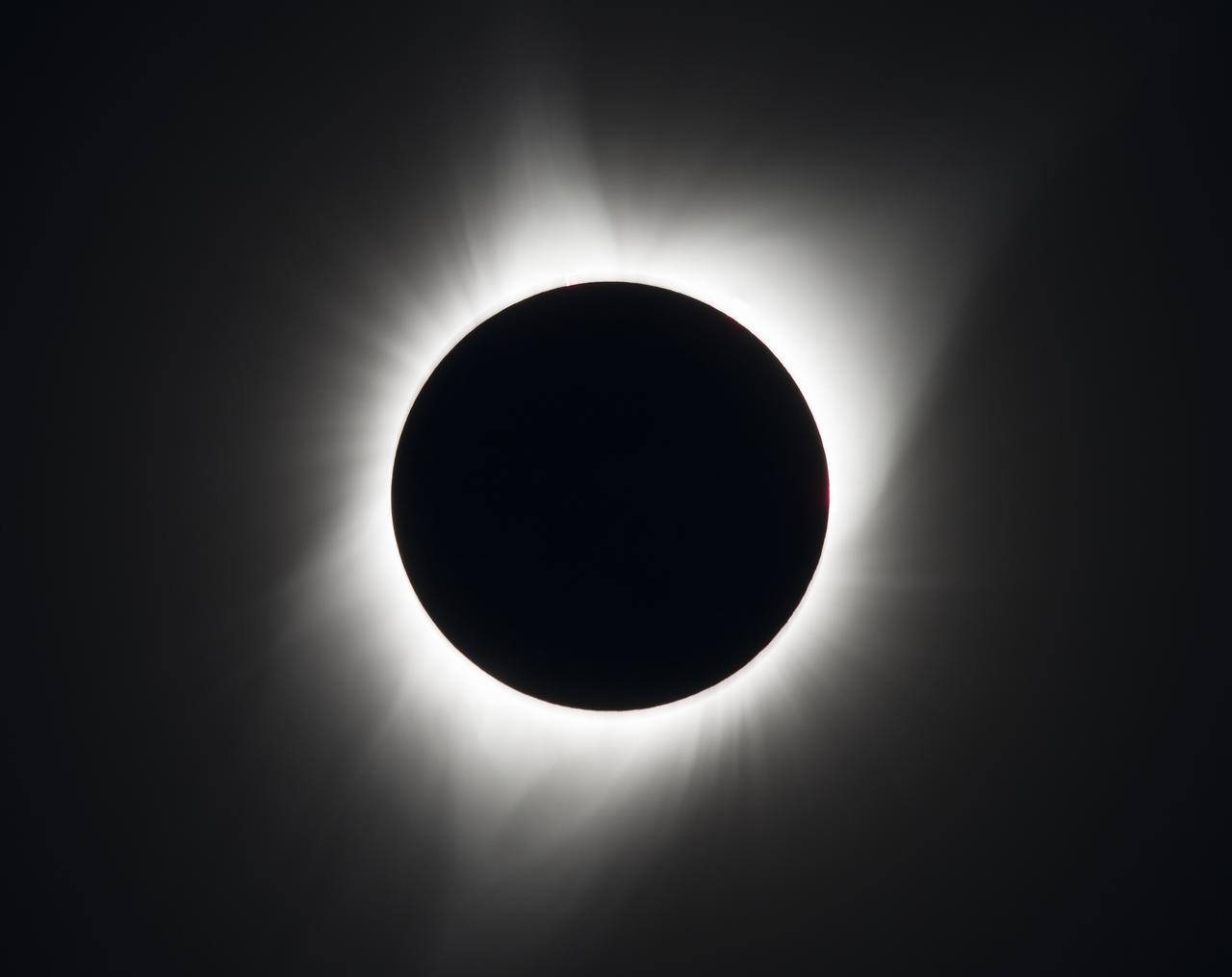
Skywatchers rarely get two headline events on the same calendar date, let alone the same night. On August 12, 2026, the Moon will blot out the Sun across a narrow corridor of the Northern Hemisphere in the morning and early afternoon, and then, once darkness falls, the same New Moon that made totality possible will also strip the sky of moonlight just as the Perseid meteor shower reaches its annual peak. It's an unusual bit of orbital bookkeeping: the same lunar phase responsible for one spectacle is quietly enabling the other.
The eclipse itself is the marquee event. According to NASA's "What's Up" skywatching guide for August 2026, the path of totality runs through northern Russia, Greenland, Iceland, and northern Spain, with a small corner of Portugal also catching the full shadow. A much wider swath of the globe will see a partial eclipse — NASA notes visibility stretching from Alaska to North Carolina, though at low percentages in North America.
Spain's First Total Eclipse in Over a Century
For Europe, the story is Spain. The European Space Agency, which is coordinating a public broadcast and viewing events, says Spain will see the largest area of totality in Europe and that this will be the first total solar eclipse visible from mainland Spain since 1905 — a gap of 121 years. ESA also notes it's the first of three eclipses that will sweep across Spain between 2026 and 2028, making this month's event something of an opening act for a stretch of unusually good eclipse luck for the country.
ESA is marking the occasion with a live broadcast from the Observatorio Astrofísico de Javalambre in Teruel, hosted by Dame Dr. Maggie Aderin with ESA Director of Science Prof. Carole Mundell, alongside a public viewing event in León run jointly with the University of León. A report published August 10 by ScienceDaily, two days ahead of the eclipse, confirms Spain is shaping up to offer some of the best viewing conditions anywhere along the path.
Out over open water, the eclipse reaches its longest duration. Astronomy.com reports that the point of greatest eclipse falls off the coast of Iceland, where totality will last 2 minutes and 18 seconds — the ceiling for how long any single location will experience full darkness during this event. Viewers in Iceland and the Spanish mainland will see shorter but still substantial totality windows as the Moon's shadow races across the Atlantic and into Europe.
What North America Gets — and Doesn't
Nobody in North America will see the Moon fully cover the Sun this time. Astronomy.com's breakdown of partial coverage puts Philadelphia at just 7%, Anchorage at 28%, and St. John's, Newfoundland — the closest major North American city to the path — at 53%, the best partial view available on the continent. NASA's advisory is blunt on safety: anywhere the eclipse is only partial, certified eclipse glasses are required for direct viewing at any point during the event, since even a sliver of exposed solar disk is enough to damage unprotected eyes.
Then the Sky Does It Again: Perseids at the Peak
As the eclipse shadow moves off toward the Atlantic and daylight returns to Europe, the same date sets up a second event after dark. The Perseid meteor shower, active since mid-July and running through August 24, peaks on the night of August 12 into the early hours of August 13, with its radiant — the point in the sky the meteors appear to stream from — in the constellation Perseus. Two things make this a strong year for the shower. First, the timing lines up almost exactly with the eclipse. Second, and more consequentially for meteor-watchers, August 12 is a New Moon — the same lunar phase that puts the Moon directly between Earth and Sun to cause the eclipse also means no moonlight will be washing out the night sky hours later.
NASA and Astronomy.com both flag the New Moon as the key variable. Astronomy.com puts the theoretical zenithal hourly rate — the count under ideal conditions with the radiant directly overhead — as high as 100 meteors per hour, while noting a more realistic expectation of 60 to 80 per hour for observers watching with the radiant around 60 degrees above the horizon, which is closer to what most viewers will actually experience. Either figure is a meaningful jump over a typical Perseid night with a bright Moon in the sky, since lunar glare is normally the single biggest factor suppressing how many meteors an observer can actually see.
Why It Matters
Eclipses and meteor showers operate on completely different clocks — one is a precise geometric alignment predictable centuries in advance, the other a diffuse stream of comet debris that Earth plows through every year regardless of the Moon's position. That they land on the same calendar date, with the eclipse's New Moon phase happening to also be the ideal condition for meteor viewing, is coincidence rather than connection. But it's a useful coincidence: for Spain, it's the end of a 121-year wait for a total eclipse and the start of a rare three-eclipse stretch through 2028, a boost for regional tourism and public science outreach that ESA is leaning into with its León and Teruel events. For meteor observers everywhere else — including the large stretch of North America that will see no eclipse at all — the dark, moonless sky on the night of August 12 is a genuine, independent reason to go outside, regardless of where you stand relative to the eclipse path. Two rare-ish events sharing one date means more people looking up on the same night than usual, and that's good for public engagement with astronomy even if the physics behind each event has nothing to do with the other.
Practical Notes for Skywatchers
Anyone in the partial-eclipse zone — which per NASA includes locations from Alaska to North Carolina — needs certified eclipse glasses for any moment they look toward the Sun during the event; there is no point in a partial eclipse where it's safe to view the Sun with the naked eye. Those along the path of totality in Iceland or northern Spain get a brief window, up to 2 minutes 18 seconds at the point of greatest eclipse, where glasses can come off during full totality only.
For the Perseids, no equipment is needed beyond a clear view of the sky and, ideally, a location away from artificial light. NASA and Astronomy.com both point observers toward the shower's radiant in Perseus, though meteors can appear anywhere in the sky, so a wide, unobstructed view tends to work better than staring at one fixed point. With the Moon absent from the sky the entire night, August 12 into August 13 is about as good as Perseid viewing conditions get.
