
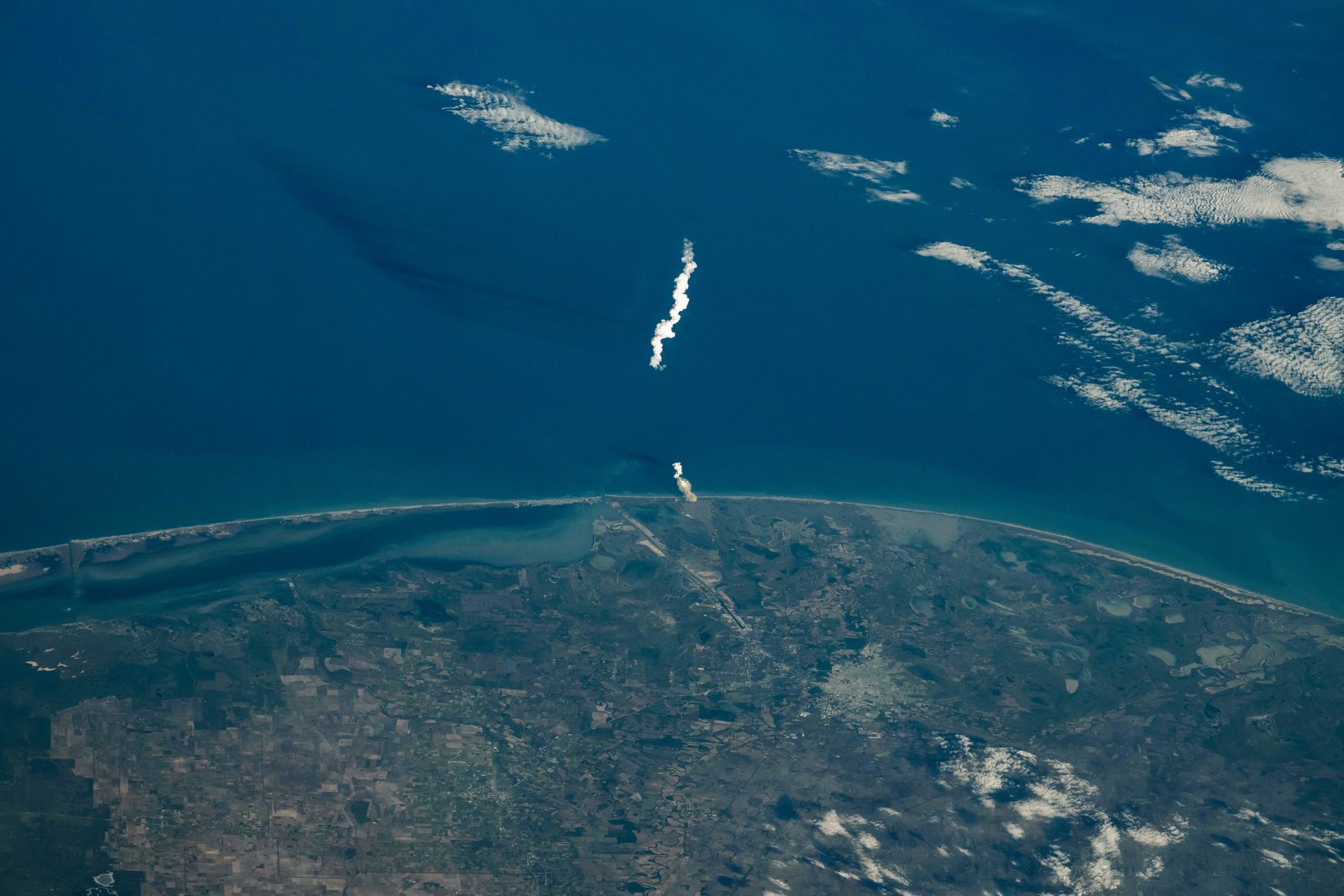
SpaceX's Starship program notched a genuine operational milestone on July 24, 2026, when Flight 13 lifted off from Pad 2 at Starbase, Texas, and deployed 20 third-generation Starlink satellites — the first time the vehicle has released production spacecraft that went on to make contact with ground receivers. But the mission's second half was messier: the Super Heavy booster lost more than half its engines during its landing burn and hit the Gulf waters hard, a reminder that Starship's reusability record is still very much a work in progress.
The launch itself came after two scrubbed attempts. A pad abort tied to engine trouble pushed the flight past a July 16 try, and a second attempt on July 23 was called off ahead of Tropical Storm Bertha. When the 90-minute window finally opened at 5:45 p.m. CDT (6:45 p.m. EDT) on July 24, the vehicle got off the pad clean, with all 33 Raptor engines on the Super Heavy booster contributing roughly 16 million pounds of thrust at liftoff.
What Actually Happened in Space
Once separated, Starship's upper stage performed about as well as SpaceX could have hoped. All six Raptor engines on the ship fired through ascent, and the vehicle reached space intact. From there, it executed the flight's headline objective: releasing 20 Starlink V3 production satellites, each designed to demise safely on reentry roughly 20 minutes after deployment. Unlike earlier Starship flights that carried Starlink simulators or non-functional mass models, these were real, operational satellites — and according to NASASpaceflight's reporting, they went on to establish contact with ground stations, a first for the program.
Starship also demonstrated an in-space relight of a Raptor engine, a capability SpaceX needs to prove out for future missions that require orbital maneuvering, deorbit burns, or eventually translunar and transmartian trajectories. The ship then flew itself to an intact splashdown in the Indian Ocean, capping a flight that lasted one hour and five minutes from liftoff to water contact.
The Booster's Rough Landing
The Super Heavy booster, designated Booster 20, had its own set of objectives: a boostback maneuver and a controlled splashdown in the Gulf. It got there, but not gracefully. Of the 13 engines Super Heavy needed for its landing burn, only 10 managed to restart. That number kept dropping as the booster descended — by the time it reached the water, just five engines were still firing, and the result was a hard impact rather than the soft touchdown SpaceX has been chasing since Starship's earliest ocean landing attempts.
It's a notable step back from the ship's clean performance on the same flight, and it puts fresh scrutiny on Super Heavy's propulsion reliability specifically during relight sequences — a recurring theme for the program.
Shadow of the Last Investigation
Flight 13 flew just eleven days after the FAA formally closed its mishap investigation into Flight 12. That inquiry, wrapped up July 13, found no reports of public injury or property damage, but identified two root causes: heat effects on propulsion system components during ascent, and erroneous engine-alarm settings that misread real conditions. SpaceX told the FAA it had applied hardware and software corrective actions before Flight 13 was allowed to proceed.
Those fixes appear to have addressed whatever went wrong on Flight 12's ascent — Flight 13's climb to space was clean on both stages. But the booster's engine dropout during descent is a different failure mode, occurring during the landing burn rather than ascent, and it's not yet clear from available reporting whether it traces back to a related root cause or something new.
Why It Matters
Starship's value to SpaceX — and to NASA's Artemis lunar lander plans, which depend on a Starship variant — hinges on two things happening reliably at the same time: the ship deploying real payloads, and the booster coming back in one piece for reuse. Flight 13 proved SpaceX can do the first. Twenty operational Starlink satellites deploying on a real flight profile and talking to the ground is the clearest sign yet that Starship is transitioning from a test article to an actual delivery vehicle, and the in-space Raptor relight checks off a capability every deep-space or complex-orbit mission will need.
But Super Heavy limping to a hard splashdown on 5 of 13 engines is a warning that the booster side of the equation isn't solved. SpaceX's entire economic case for Starship rests on rapid, low-cost booster reuse; a landing-burn engine dropout, even on an already-expendable ocean splashdown test, is exactly the kind of failure that would be catastrophic on a tower-catch attempt. Coming so soon after an FAA investigation into a different propulsion-related failure on Flight 12, it keeps the pressure on SpaceX to show that Raptor reliability — not just payload delivery — is trending in the right direction before the vehicle takes on higher-stakes missions.
