
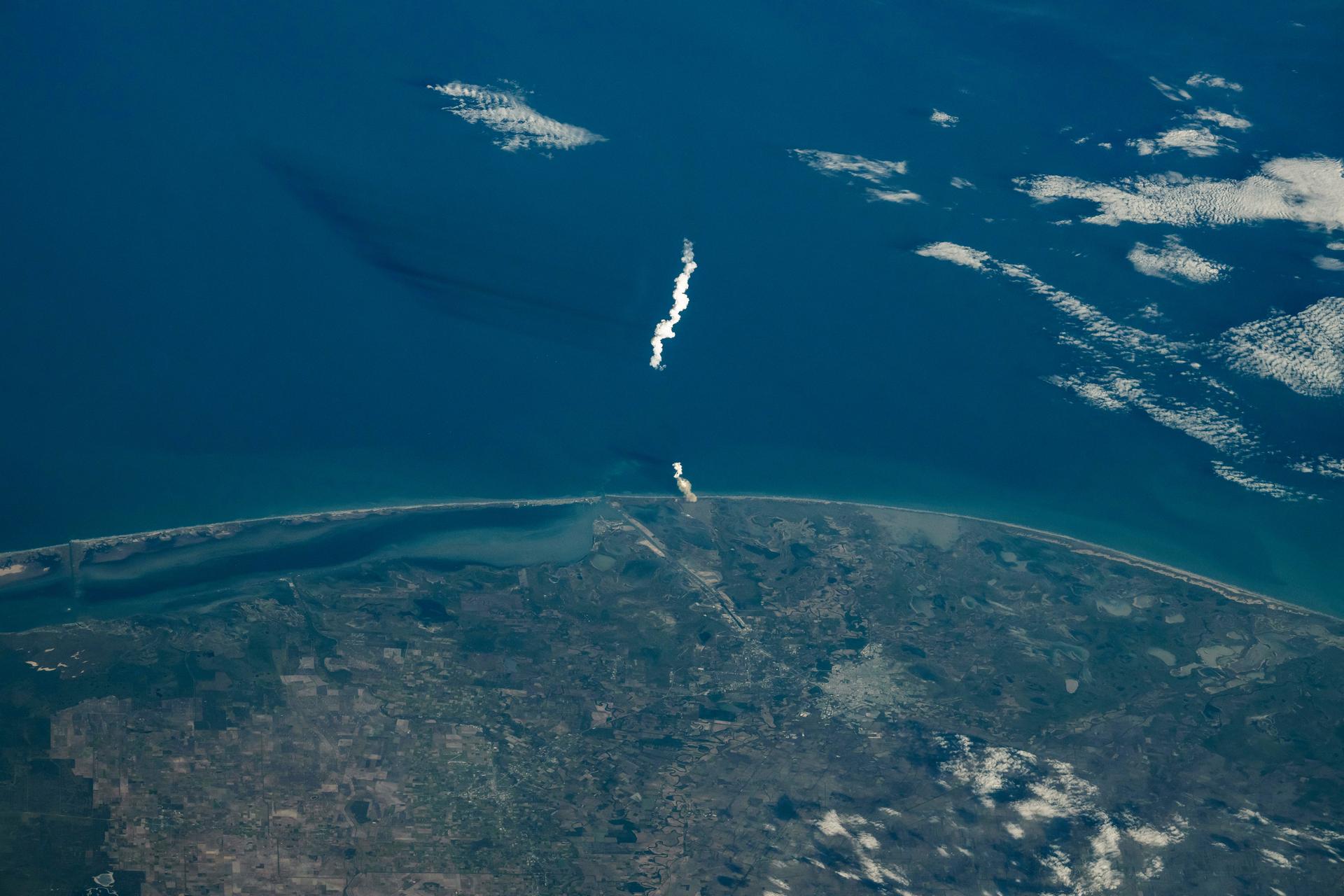
For most of its history, Starship has worked on one problem at a time. First the vehicle had to survive. Then the Super Heavy booster had to come home and be caught by the launch tower's "chopstick" arms. On its third-quarter 2026 earnings call on Oct. 20, SpaceX said the next step is the one it has been building toward all along. On the next flight, it will try to catch both stages.
If Flight 15 goes to plan, both the Super Heavy booster and the Ship upper stage will return to the tower. Elon Musk called it "the first time that an orbital launch vehicle has been fully recovered" and "a profound technology milestone," according to Space.com. The company is aiming to fly next month, in November.
The same call also set out a much bigger goal. Musk said he expects Starship to fly every week in the first half of 2027 and twice a week in the second half. Those are two very different claims. One is a test objective with a date on it. The other is a production-and-operations target that depends on that test, and on many more after it, going right.
Where Starship stands
The context comes from SpaceX's own filing. In the Form 8-K exhibit it submitted to the SEC on Oct. 20, the company describes Flight 14 as "our first orbital Starship flight, delivering 26 Starlink V3 satellites." That also makes Flight 14 the first Starship mission to carry a revenue-generating payload rather than test hardware. SpaceX says those 26 satellites add about 10 times the downlink capacity of a single Falcon 9 Starlink launch. That ratio explains why the company is so focused on getting Starship into regular service.
Writing for Ars Technica, Eric Berger noted that Flight 14 flew a little more than three weeks before the call. It largely went well, though there were some issues with the Raptor engines. Space.com adds that across 14 test flights, Super Heavy has been caught by the chopsticks three times. Ship has never been caught. The full stack is more than 400 feet (122 meters) tall.
What catching the Ship actually asks for
The three booster catches show that SpaceX can bring a very large stage back to a tower and grab it. But a booster catch and a Ship catch are not the same problem. Space.com notes that Ship is the harder proposition because the upper stage travels higher, farther and faster than the booster does. On a mission like Flight 14, Ship is the stage that actually reaches orbit. To catch it, SpaceX has to bring a vehicle down from orbital flight, through reentry, and into the arms with enough precision to land it on the tower rather than near it.
That is why Musk is careful to describe the full-recovery attempt as a first for an orbital launch vehicle. Ars notes that achieving complete reusability with an orbital rocket has never been done before. A clean double catch would show that the whole rocket can come back, not just its first stage. Only then can the goal of rapid reuse really be tested.
Musk set that goal out on the call. Ars reports he said some refurbishment will be needed between flights at first, and that SpaceX will iron out that need until the rocket can "immediately land the rocket and launch it again, just like an airplane." That is the end state. Flight 15 is the first serious attempt at the part that comes before it: getting both halves back at all.
Not everything can be judged from outside. SpaceX has not published, in the sources here, the details of how Ship will return or what condition the hardware has to be in afterward for the attempt to count as fully successful. What is clear is that a Ship has never been caught before. Any first attempt at something that hard should be treated as an experiment, whatever the press language around it says. Musk himself said success is "more likely than not" and that if it fails, SpaceX has a steady stream of Starship flight attempts planned through the end of the year.
The cadence question
The scale of the schedule targets stands out. A weekly cadence in the first half of 2027 means roughly a launch every seven days from a vehicle that has flown 14 times in total. Twice a week in the second half doubles that. Further out, Space.com notes that Musk has said he envisions launching Starship more than 10,000 times per year by 2030.
Ars Technica points out the obvious caveat: Musk often offers hyper-optimistic timeframes. That doesn't make the targets meaningless. They show where SpaceX is spending its engineering and manufacturing effort. But readers should treat them as stretch goals rather than forecasts. Each step depends on the one before it. The cadence needs reuse. Reuse needs catches that work again and again. Repeatable catches need a first Ship catch, which hasn't happened yet.
Regulation matters too. Ars reports that the Starship vehicle must return to the launch site over land, including northern Mexico. On the call, Gwynne Shotwell said, "We have had significant constructive engagement with the FAA, and we expect the license for our Flight 15 to include return to launch site and tower catch for both stages." That is encouraging, but launching weekly would require the regulatory process to keep up alongside the hardware.
Shotwell also explained what all those flights would carry. According to Ars, she said SpaceX will largely focus on its own payloads with Starship in 2027, continuing to launch Starlink V3 satellites along with Starmind data center prototypes. In other words, most of the early high-cadence flying would be SpaceX launching its own payloads. That gives the company control over its manifest that a launch provider waiting on outside customers wouldn't have.
The business behind the rocket
The financial results explain why SpaceX can pursue all of this at once. The 8-K reports third-quarter revenue of $14.6 billion, up 161% from $5.6 billion, with net income of $4.4 billion and adjusted EBITDA of $8.8 billion. The company flew 12 customer launches in the quarter, including NASA's Nancy Grace Roman Space Telescope.
Its order book grew as well. SpaceX reported signing three more NASA crew missions to the International Space Station, 18 National Security Space Launch missions, three commercial Starfall missions and a contract to deliver a payload to the lunar surface on Starship. It also announced the planned development of Starbase, Louisiana, a new spaceport designed to support thousands of Starship flights a year, with its first launch targeted for 2029. That is a long-range bet on needing more Starship launch capacity than it has today.
Why It Matters
Fully reusable orbital rockets have been an industry goal for decades and have never been achieved. Recovering the upper stage as well as the booster would remove the last large piece of hardware that is still thrown away on every flight of most orbital rockets. If Flight 15 succeeds, it will be a real engineering first, not a marketing one.
The financial case is equally concrete. A single Starship flight already adds about 10 times the Starlink downlink capacity of a Falcon 9 launch, and SpaceX is now booking revenue on Starship. Every step toward faster reuse multiplies that advantage. That is why the cadence targets matter even if they slip. They show how SpaceX intends to turn a test program into the backbone of its satellite network and its future lunar and data-center work.
The sensible way to watch this is one flight at a time. Next month's attempt will show whether a Ship can be caught at all. The weekly cadence will only become a real question once that is done, and done again.
