
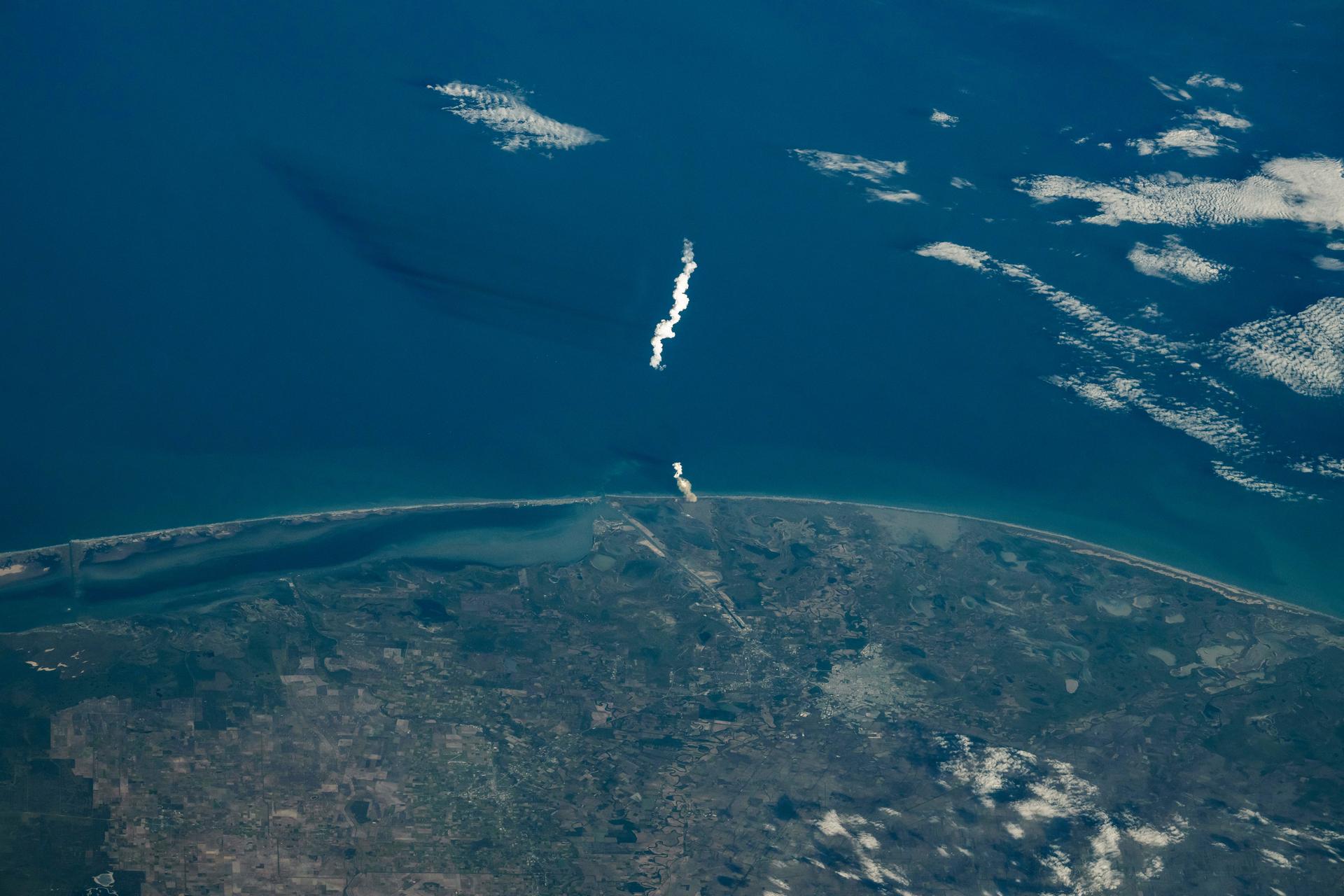
For the first time in the program's history, a Starship came home in one piece.
On July 24, 2026, SpaceX launched the 13th test flight of its Super Heavy-Starship rocket from Starbase, Texas. The 407-foot two-stage vehicle lifted off at 5:51 p.m. EDT, its 33 Raptor engines producing about 16 million pounds of thrust off the pad. Roughly 65.5 minutes later, the upper stage reentered Earth's atmosphere and splashed down intact in the Indian Ocean — a milestone the company had been chasing across a dozen previous attempts.
"This is the first time we've put an intact Starship in the water," SpaceX's Dan Huot said during the broadcast. It was a plain statement for a program that has spent years watching upper stages break apart, burn through, or tumble on the way down. Space.com went further, describing Flight 13 as producing the "softest splashdown ever."
Not every part of the flight went to plan. The Super Heavy booster hit the water faster than intended after an incomplete landing burn. According to SpaceX, not all of the Raptor engines needed for that burn started, so the booster arrived hot rather than settling gently. On a fully operational flight, that same maneuver is meant to slow the booster for a controlled recovery — so the shortfall matters, even if this particular booster was always destined for the ocean rather than a catch.
Twenty real satellites, not simulators
The bigger news may have been the payload. Flight 13 carried and deployed 20 functioning Starlink V3 satellites — the first operational spacecraft Starship has ever released, rather than the mass simulators SpaceX flew on earlier tests. The satellites went through roughly 20 minutes of testing after deployment, according to SpaceNews.
That distinction is easy to gloss over but hard to overstate. A mass simulator is a dumb slug of metal shaped and weighed to mimic a real payload; it proves the deployment mechanism works without risking hardware anyone cares about. Flying 20 actual next-generation Starlink units means SpaceX judged the vehicle reliable enough to trust with functioning spacecraft — and it moves Starship from "test article that occasionally survives" toward "launch vehicle that does a job."
The road to Flight 13
Getting here wasn't clean. An earlier launch attempt on July 16 was aborted, and SpaceX traced the scrub to moisture in the liquid-oxygen turbopumps freezing on 4 of the booster's 33 engines. Frozen turbopumps are exactly the kind of problem that turns a launch attempt into a hold: you do not light 33 engines when a tenth of them have ice in the plumbing.
Eight days later, the vehicle flew. The mostly successful result — an intact ship, real payloads deployed, but a booster that came down harder than planned — is characteristic of how SpaceX runs this program: fly, learn, fix, fly again, and count a flight that achieves its primary objectives as a win even when secondary goals slip.
What comes next
SpaceX president Gwynne Shotwell signaled that Flight 14 could attempt the program's first orbital mission. To date, Starship test flights have followed suborbital or near-orbital trajectories that bring the upper stage down in the Indian Ocean rather than committing it to a full orbit. Reaching orbit — and, eventually, returning from it — is the threshold the vehicle has to cross before it can do most of the work it was designed for.
Shotwell also indicated that Flight 15 would fly from Florida, expanding Starship operations beyond the single Starbase launch site in Texas. A second operational launch site is a prerequisite for the flight cadence SpaceX has promised, and for weathering the inevitable stand-downs that follow any anomaly at a single pad.
Why It Matters
Starship is not just a SpaceX vehicle. NASA selected Starship as its Human Landing System for the Artemis III and IV missions — the spacecraft meant to carry astronauts from lunar orbit down to the Moon's surface and back. In that configuration, the Starship HLS stands about 50 meters tall, roughly the length of an Olympic swimming pool. NASA's timeline for returning humans to the Moon is therefore tied, in part, to how quickly Starship matures from test article to dependable transport.
That's the lens through which Flight 13 is worth reading. The first intact splashdown demonstrates that the upper stage can survive the punishing thermal and aerodynamic loads of reentry — the exact regime a crewed vehicle has to endure. Deploying 20 real Starlink satellites shows the vehicle can do useful work, which is how SpaceX intends to pay for the development program and build up flight experience. And the booster's short landing burn is a reminder of how much reliability engineering still stands between these test flights and the routine, rapid reuse the whole architecture depends on.
Flight 13 didn't check every box. But an intact ship in the water, functioning payloads in orbit, and a credible path toward an orbital Flight 14 add up to the clearest sign yet that Starship is edging from experiment toward operation — with NASA's Moon program watching closely.
Sources
- Super Heavy-Starship rocket chalks up mostly successful test flight — Spaceflight Now
- SpaceX conducts 13th Starship test flight — SpaceNews
- SpaceX's Starship megarocket makes the 'softest splashdown' ever after launching next-gen Starlink satellites in Flight 13 test — Space.com
- Human Landing System — NASA
