
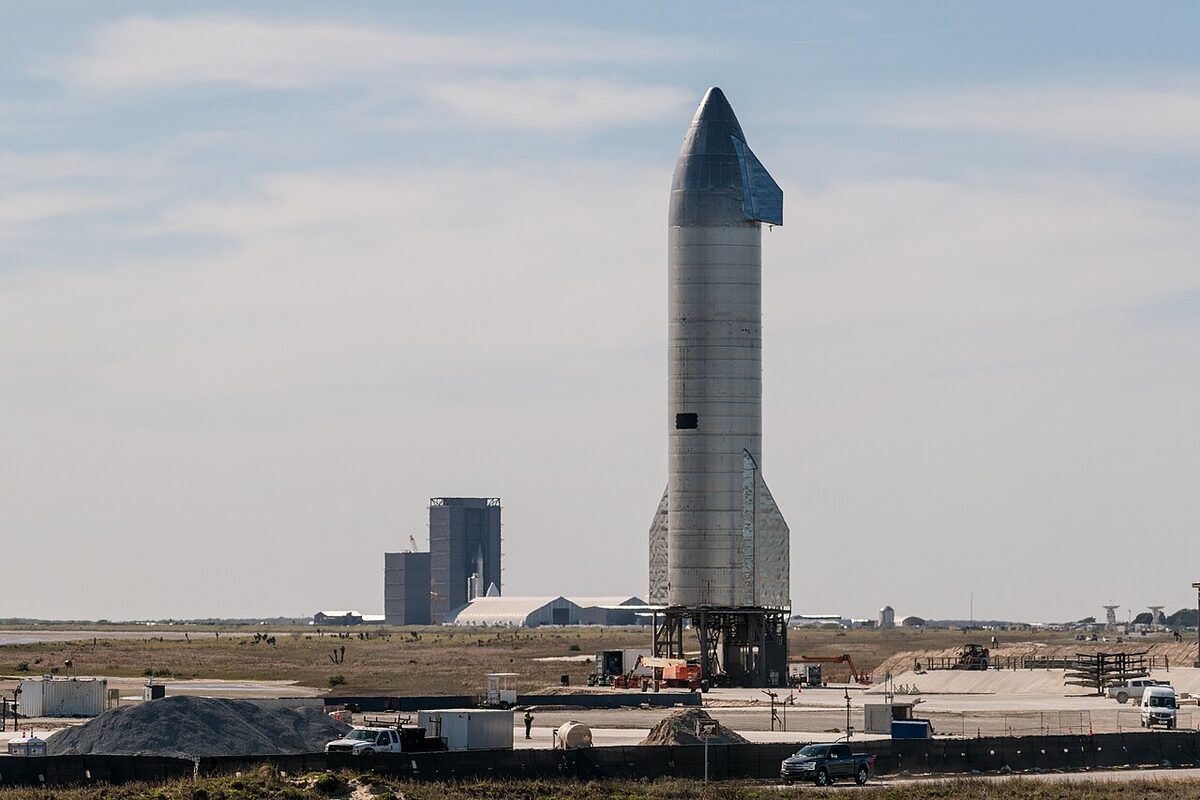
SpaceX's twelfth Starship test flight, on 22 May, was the kind of result that resists a one-word verdict. It was the first launch from the new Pad 2 at Starbase and the debut of Starship Version 3 — a taller, higher-thrust iteration of the vehicle, powered by the new Raptor 3 engine. The upper stage did its job. The booster did not. Both facts are true, and which one you lead with says a lot about how you read the program.
What actually happened
The Super Heavy booster lifted the stack off the pad and separated as planned, but when it came time for the boostback burn — the maneuver that turns the booster around for its return — the engines failed to ignite properly, and the booster crash-landed in the ocean instead of executing a controlled descent. The upper stage, Ship 39, fared far better. It lost one of its Raptor Vacuum engines during ascent yet flew on, completing the rest of the planned trajectory. Its in-space engine relight was cancelled as a precaution, but it deployed 22 Starlink mass simulators, and the final two carried cameras that scanned Starship's heat shield and beamed back imagery — data SpaceX wants for refining how it predicts thermal-protection wear before reentry.
The U.S. Federal Aviation Administration classified the booster's off-nominal performance as a mishap and is requiring SpaceX to run a formal investigation before Starship flies again. That puts the fleet on the ground for now. Attention is centering on the Raptor 3 engines, which made their flight debut on this mission; new engines failing on a new pad on a new vehicle is a lot of "new" stacked into a single test, and the booster's boostback failure is the thread investigators will pull first.
The capability that actually matters
Lost in the spectacle is the real metric for Starship's near-term importance, which has nothing to do with this flight's payload. NASA's Artemis program is depending on a Starship variant to land astronauts on the Moon — and that landing cannot happen until SpaceX demonstrates something no one has done operationally: transferring cryogenic propellant between two Starships in orbit, so a lander can be refueled before heading to the Moon. SpaceX has said both a long-duration flight test and an in-space propellant-transfer test are targeted for 2026. Neither has flown. Until they do, every Flight-12-style result — however much the upper stage achieves — leaves the headline question untouched.
It is worth dwelling on why orbital refueling is so pivotal. A single Starship cannot carry enough propellant to launch, reach the Moon, land, and return; the plan instead calls for a lander Starship to be topped up in low Earth orbit by a series of tanker flights, each ferrying propellant up and transferring it in the cold vacuum of space — cryogenic fluids that want to boil away and drift in microgravity, moved between two vehicles docked nose to nose. Nothing of the sort has been demonstrated at this scale. The V3 vehicle that debuted on Flight 12, flying from the new Pad 2 and powered by the upgraded Raptor 3, is the airframe meant to make that architecture work. Which is why a booster that fails its boostback burn, however routine SpaceX makes such failures look, still leaves the program's hardest milestone ahead of it rather than behind.
How to read a partial success
SpaceX's development philosophy treats explosions as tuition: fly early, break things, learn fast. By that standard, a flight in which the ship completed its mission and returned heat-shield data while the booster failed is genuine progress, not a setback. By the standard NASA needs — a vehicle reliable enough to stake a crewed lunar landing on, with orbital refueling demonstrated — it is a reminder of how much remains unproven on a schedule that keeps slipping. Booster 20 and Ship 40 are already being readied for Flight 13. The pace is real. So is the distance left to cover.
