
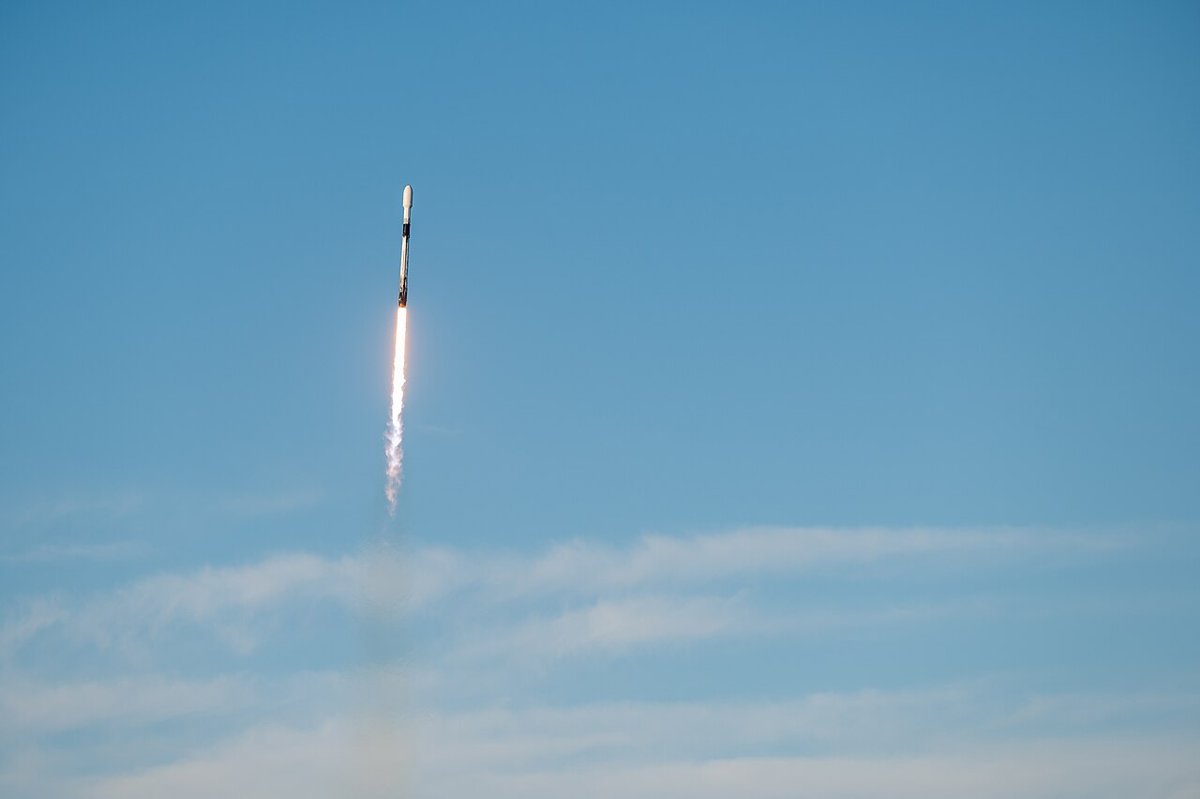
On June 19, a SpaceX Falcon 9 rocket climbed away from the pad carrying a classified payload of intelligence-gathering satellites for the National Reconnaissance Office — the U.S. agency responsible for designing, building, and operating the nation's spy satellites. The mission was, by SpaceX standards, almost routine. By NRO standards, it was anything but.
For decades, the business of placing the country's most sensitive reconnaissance hardware into orbit was the exclusive province of legacy aerospace contractors operating purpose-built rockets under cost-plus contracts that stretched budgets and timelines alike. That a company best known for reusable boosters and Starlink internet satellites now regularly lofts some of the most classified payloads in the U.S. government's inventory tells you everything you need to know about how dramatically the relationship between Washington and the commercial space industry has shifted.
A Quiet Revolution in National Security Launch
The NRO does not discuss the specifics of its payloads. It never has. The agency's missions are designated with the prefix NROL, and beyond confirming that a launch occurred and whether it was successful, details about orbital parameters, satellite capabilities, and mission objectives remain firmly behind classification walls. The June 19 launch followed this long-standing tradition — SpaceX confirmed liftoff and payload separation, the NRO confirmed mission success, and the rest disappeared into the quiet machinery of the intelligence community.
What is not classified, however, is the trend line. U.S. government agencies — from NASA to the Department of Defense to the intelligence community — are increasingly relying on commercial launch and satellite providers rather than developing and operating their own dedicated systems from scratch. The NRO's growing comfort with placing its most sensitive assets atop commercially operated rockets represents one of the most consequential shifts in how the United States approaches national security space.
This is not a matter of convenience. It is a matter of strategic calculation. The commercial launch market, driven largely by SpaceX's relentless cadence, has driven per-kilogram launch costs down to levels that would have been considered fantasy a generation ago. For an agency that needs to place constellations of satellites into various orbits — sometimes on short notice — access to a high-cadence, relatively low-cost launch provider is not just attractive. It is increasingly essential.
The Cadence Argument
SpaceX has been maintaining a launch tempo that dwarfs every other provider on the planet, flying both commercial payloads like Starlink satellites and classified government missions in rapid succession. The same week as the NRO launch, the company was preparing yet another Falcon 9 flight — this time carrying 24 Starlink satellites from Vandenberg Space Force Base in California. That kind of operational rhythm means the infrastructure, the workforce, and the procedures are battle-tested on a near-continuous basis.
For the NRO, this cadence offers something that purpose-built government launch programs have historically struggled to deliver: responsiveness. If a satellite fails in orbit or a new intelligence requirement emerges, the ability to manifest a replacement payload on a rocket that flies every few days is qualitatively different from waiting months or years for a dedicated launch vehicle to become available. The commercial launch market has, in effect, given the intelligence community a kind of on-demand access to space that was previously available only in PowerPoint presentations and long-range planning documents.
There is a second, less obvious advantage to this cadence. Every Falcon 9 flight — whether it is carrying Starlink satellites, a commercial communications payload, or a classified NRO mission — contributes to the vehicle's flight heritage. Each successful mission adds another data point to the rocket's reliability record. For a customer whose payloads are irreplaceable national security assets worth hundreds of millions or even billions of dollars, that ever-growing track record of successful flights is a powerful form of risk reduction.
What the NRO Is Building
While the specifics of the June 19 payload remain classified, the broader contours of the NRO's evolving architecture are a matter of public record. The agency has been moving away from a small number of exquisitely capable — and exquisitely expensive — satellites toward a more distributed architecture featuring larger numbers of smaller, more affordable spacecraft. This approach, sometimes described as a proliferated constellation model, offers resilience through redundancy. Losing one satellite in a constellation of dozens is a setback. Losing one satellite when you only have three is a crisis.
This architectural shift dovetails neatly with the commercial launch model. Building and launching many smaller satellites requires frequent, affordable access to orbit — exactly what companies like SpaceX now provide. The old model, in which each satellite was a bespoke, multi-billion-dollar national treasure that required years of planning and a dedicated launch vehicle, is giving way to something that looks more like the commercial satellite industry's own approach to constellation deployment.
The Trust Question
None of this should suggest that the relationship between the NRO and commercial launch providers is without tension or complexity. Entrusting the nation's most sensitive intelligence-gathering hardware to a privately held company requires a level of institutional trust that has been built incrementally over years of successful missions. Security protocols for handling classified payloads at commercial launch facilities are extensive. Personnel require clearances. Facilities require hardening. Information barriers must be maintained even as commercial and government missions share the same launch pads and processing facilities.
The NRO's willingness to continue expanding its use of commercial launch services suggests that these security arrangements have, to date, met the agency's requirements. But the relationship is not static. As the commercial launch industry evolves — with new vehicles, new companies, and new operational models entering the market — the intelligence community will need to continuously reassess how it manages the intersection of commercial efficiency and national security sensitivity.
Why It Matters
The June 19 NRO launch was not, in isolation, a headline-grabbing event. There was no new rocket, no dramatic landing, no first-of-its-kind payload deployment. It was, in the best sense of the word, ordinary — and that ordinariness is precisely the point.
The fact that SpaceX can launch classified intelligence satellites for the NRO as part of its regular operational rhythm — sandwiched between Starlink missions and commercial payloads — represents a fundamental change in how the United States builds and sustains its national security space capabilities. The commercial launch industry is no longer a supplement to government launch programs. For a growing number of missions, it is the primary means of access to orbit.
This shift carries implications that extend well beyond launch costs and schedules. It changes how the U.S. intelligence community thinks about satellite architecture, constellation design, and operational resilience. It changes the industrial base that supports national security space. And it raises questions — about security, about dependency on a small number of commercial providers, about the long-term sustainability of a model in which the government is one customer among many — that policymakers and military planners will be grappling with for years to come.
For now, the model is working. Rockets are flying, satellites are reaching orbit, and the intelligence community is getting the access to space it needs at a pace and price point that were unimaginable a decade ago. The June 19 mission was one more data point in a trend that is reshaping the relationship between government and industry in one of the most strategically consequential domains on — or above — Earth.
