
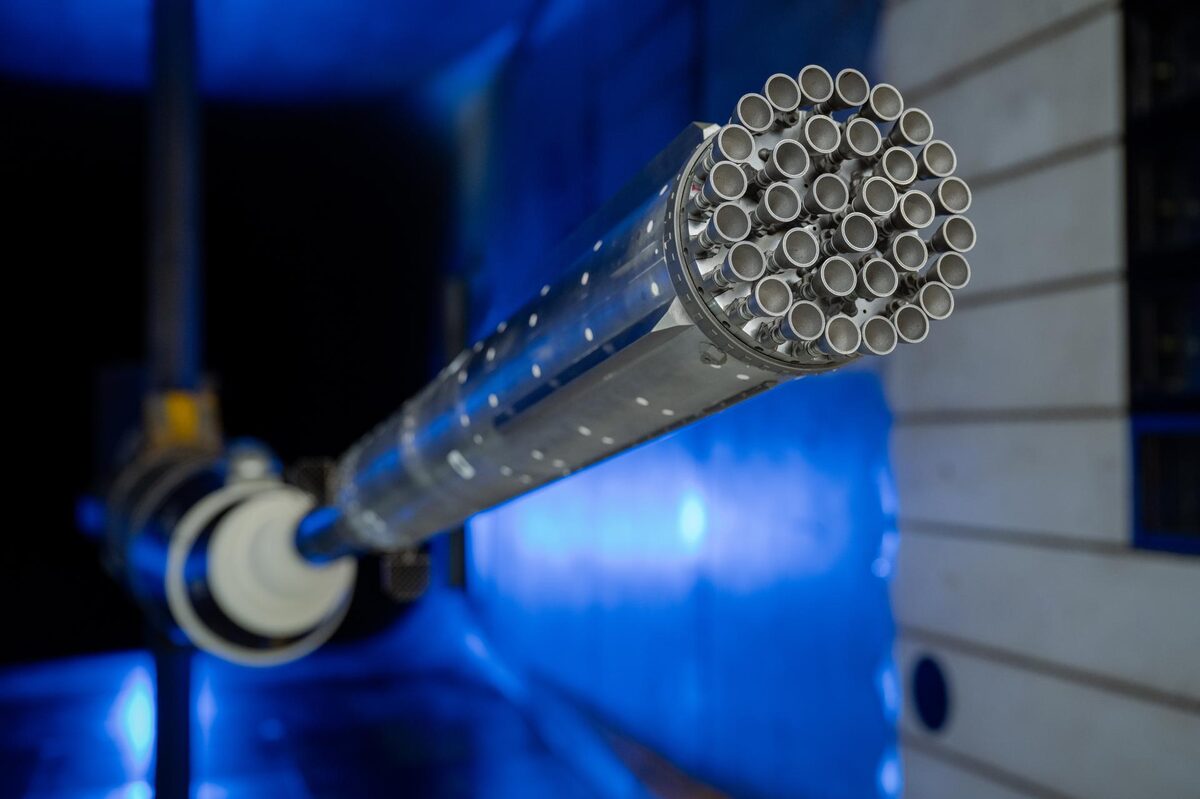
On Sunday, Oct. 25, the Super Heavy booster for SpaceX's next Starship flight held down at Starbase and fired all 33 of its Raptor 3 engines for about 15 seconds. "Full duration 33-engine static fire for the Super Heavy booster preparing for Flight 15," the company posted after the test.
The booster is Booster 22. A static fire is routine, but the flight it is preparing for is not. Elon Musk says Flight 15 will try something SpaceX has never done: catch the Starship upper stage, Ship 42, with the launch tower, as it already does with the booster. If both catches work, Musk said, "this will be the first time an orbital launch vehicle has been fully recovered."
That is a big claim. There is also a lot of work left before anyone can test it.
Where Flight 15 Stands
The booster is only half of the stack. According to Space.com, Ship 42 still needs its own static fire and final systems checks before the two stages can fly together. SpaceX has not given an official launch date. Starlust reports a target of no later than mid-November, which is a schedule estimate, not a commitment.
Regulatory approval is still open as well. SpaceX President Gwynne Shotwell said talks are underway to get the FAA license the mission needs. The payload has not been officially confirmed either. Starlust reports that the flight is expected to be a multi-orbit mission like Flight 14, and Space.com says it could carry another batch of Starlink V3 satellites.
What Flight 14 Showed, and What Went Wrong
Flight 15 builds on a mixed result. Flight 14 launched on Sept. 28, one of three Starship launches so far in 2026, and it was the first Starship to reach orbit. It deployed 26 Starlink V3 satellites, which are too large to fly on Falcon 9. That makes Starship central to SpaceX's plans for the next generation of its constellation.
The flight had problems, though, and several involved the engines that a ship catch will rely on. Starlust reports that one booster Raptor shut down during ascent. Only 31 of the 33 engines relit for the boostback burn, and only 11 of 13 for the landing burn. On the upper stage, one of the three vacuum-optimized Raptors shut down early. SpaceX had planned a 10-hour mission but cut it short, and the ship splashed down in the Pacific about three hours after liftoff.
Those details matter for Flight 15. Bringing a ship back to the tower will presumably demand precise engine-powered control, and early shutdowns or engines that fail to relight would eat into that margin. That is an inference, not something the sources state. The new static fire is a useful data point for the booster. Ship 42's engines have not had their own static fire yet, and an upper-stage Raptor shut down early on the last flight.
The Reuse Argument
SpaceX's reasons for catching the ship are mostly economic. Shotwell said the company plans to reflight a second stage by early next year. Musk has said Starship will fly weekly starting in the first half of 2027. Neither goal looks workable if every upper stage is thrown away in the ocean. Catching the booster is already part of how SpaceX runs Starship. Catching the ship is what would turn full reuse from a plan into something that actually happens.
Those dates should be read with care. Starship's schedule has slipped repeatedly, and weekly flights would be a huge jump from three launches in the first ten months of 2026. Still, the order of steps is clear: static fire the booster, test the ship, get the license, fly, catch, then reuse.
Why It Matters
Starship is no longer only SpaceX's own project. NASA has described a role for a Starship Version 3 test article in Artemis III. SpaceX will launch that vehicle from Florida into a lower orbit, at 206 nautical miles, chosen for good communications coverage. It will carry an added docking system at its forward end.
Orion will meet that Starship and dock with it in a test expected to last up to two hours. The crew will not go inside Starship. NASA says the test will check controllability, communications, integrated software, and how the vehicles behave during docking and undocking. NASA's plan also has Orion dock to a port next to the crew cabin of Blue Moon, and later line up its forward docking system with Starship's nose. After the Starship demonstration, Orion and its crew will have up to five additional days in orbit.
So the hardware tested at Starbase is tied to a crewed NASA mission. Starlust notes that Starship still needs to prove its flight readiness for the crewed flights NASA has bought for Artemis. The engine problems on Flight 14 and how SpaceX fixes them are therefore relevant to lunar planning, not only to SpaceX's launch business.
The ship catch also matters on its own. No orbital rocket has been fully recovered, according to Musk. A successful catch would not settle questions about how fast Starship can be turned around or how reliable it is. It would show that the full recovery architecture SpaceX has promised can actually work.
What to Watch Next
Ship 42's static fire is the next milestone to watch. After that comes the FAA license, then an official launch date. Until all three happen, "mid-November" is only a target. When Flight 15 does launch, watch the engine counts during each burn, both on the booster and on the ship. Those numbers will show whether SpaceX has fixed the problems from Flight 14.
