
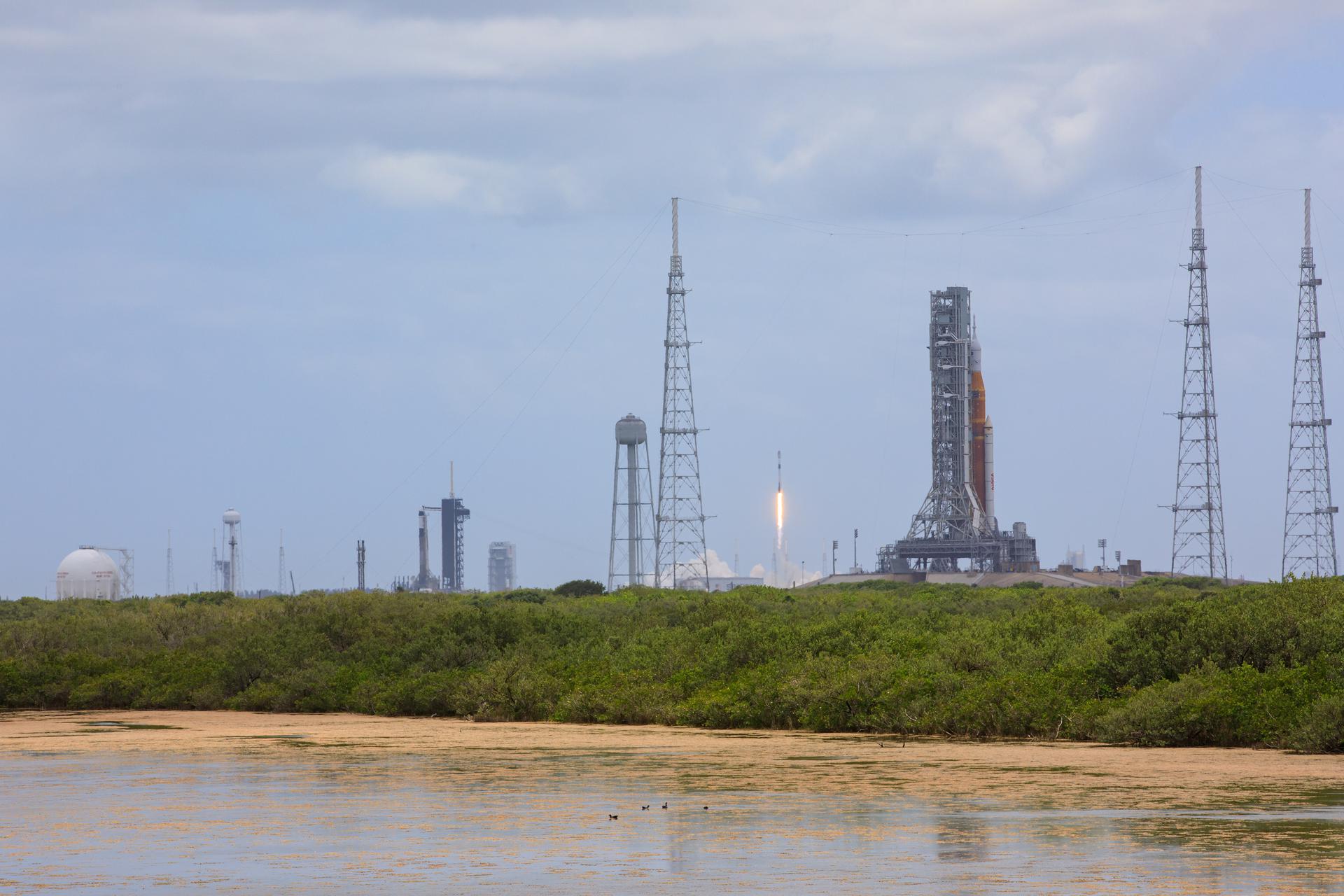
At 7:26 a.m. PDT on September 6, a Falcon 9 lifted off from Space Launch Complex-4E at Vandenberg Space Force Base carrying 27 Starlink satellites into orbit. On paper, it was a routine entry in a launch cadence that has become almost background noise for space watchers. Look at the booster underneath the payload, though, and the mission stops being routine at all.
That booster, designated B1088, was flying for the 19th time. It is also, in a sense, a well-traveled piece of hardware with a resume that spans the breadth of what Falcon 9 does: three national security launches, a rideshare mission called Transporter-12, NASA's SPHEREx infrared space telescope, and now 13 separate batches of Starlink satellites.
A Booster With a Résumé
The mission, cataloged as Starlink 15-24, was SpaceX's 80th Starlink launch of the year — a figure that underscores just how much of the company's overall flight rate is now dedicated to building out its own broadband megaconstellation. Liftoff came at 1426 UTC (10:26 a.m. EDT), and roughly 8.5 minutes later, B1088 touched down on the droneship "Of Course I Still Love You," stationed in the Pacific Ocean.
That landing was the 223rd successful touchdown on OCISLY specifically, and the 659th successful Falcon booster landing overall — numbers that have become so routine they barely register anymore, which is itself a remarkable statement about how thoroughly SpaceX normalized reusability in under a decade.
B1088's flight history is worth dwelling on, because it captures the range of Falcon 9's customer base in a single tail number. Before it started ferrying Starlink satellites, the booster carried out three missions for the U.S. national security space program — payloads that typically fly under tight scheduling constraints and heightened scrutiny. It also flew Transporter-12, one of SpaceX's dedicated rideshare missions that bundles dozens of smallsats from different operators onto a single flight.
Perhaps its most scientifically notable outing came when B1088 launched NASA's SPHEREx observatory, also from Vandenberg's SLC-4E. SPHEREx, an infrared space telescope, is surveying the entire sky; according to NASA, the mission aims to study the origins of the universe, trace how galaxies have formed and evolved, and search for water and organic ice in the Milky Way. That a single reusable booster went from launching a flagship NASA science mission to launching classified national security payloads to, now, routine Starlink batches illustrates how thoroughly SpaceX has blurred the line between "special" launches and "routine" ones — they're all just flights for the same hardware.
Why It Matters
Reusability was always the premise behind Falcon 9's economics, but the numbers coming out of missions like Starlink 15-24 show just how far that premise has been pushed. A booster now routinely flying its 19th mission — after stints supporting national security launches and a NASA astrophysics telescope — is a concrete demonstration that reuse isn't a marginal cost-saving trick bolted onto an otherwise expendable rocket architecture. It's the operating model.
The cadence numbers matter too. Eighty Starlink missions in a single year is an extraordinary flight rate for any launch vehicle in history, let alone one company's single rocket family. It reflects both the scale of the Starlink constellation SpaceX is building and the degree to which Falcon 9's reliability has made frequent, back-to-back launches unremarkable from an operational standpoint — even as the underlying engineering (a booster surviving 19 trips to space and back) remains genuinely hard.
There's also a forward-looking signal buried in this mission: Starlink 15-24 is the third Starlink launch since SpaceX confirmed that Florida-based Starlink flights are moving from Falcon 9 to Starship, and Vandenberg is now handling every Falcon 9 Starlink launch. SpaceX is building three Starship launch towers in Florida — one at Kennedy Space Center's Launch Complex 39A and two at Cape Canaveral's Space Launch Complex 37 — and is targeting the first Florida Starship mission before the end of the year. That handoff, from Falcon 9's Florida pads to SpaceX's much larger next-generation vehicle, would free up those pads for other customers while testing Starship's ability to handle the kind of relentless, high-frequency cadence Falcon 9 has spent years proving is possible.
What Comes Next
For now, Falcon 9 keeps flying at a pace that would have seemed implausible a decade ago, and boosters like B1088 keep racking up flights that mix scientific, military, and commercial payloads without much distinction in how they're treated operationally. Whether Starship can eventually take over Starlink duty from Florida — and whether it can match Falcon 9's reuse cadence — is the next chapter SpaceX watchers will be tracking as 2026 winds toward its close.
