
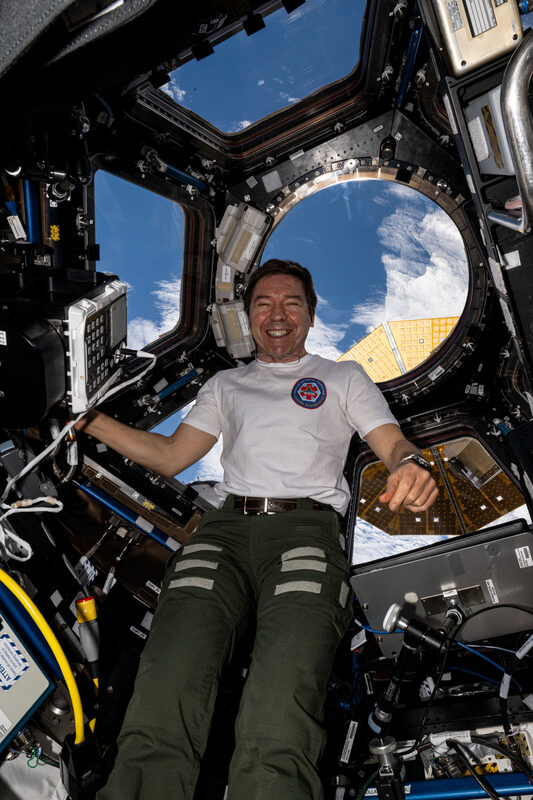
Gravity, on Earth, is pervasive and invisible — so much so that most manufacturing processes never account for it. Convection currents in molten materials, sedimentation of denser components, the weight-induced distortion of structures being assembled, the scaffolding required to support growing biological tissues — all of these are gravity's fingerprints on terrestrial manufacturing. Remove gravity and the physics changes. Some changes are nuisances; others are opportunities that have no terrestrial equivalent.
The clearest commercial example is ZBLAN fiber optic cable. ZBLAN is a glass formulation containing zirconium, barium, lanthanum, aluminum, and sodium fluoride, with theoretical optical transmission properties that make it vastly superior to silica fiber in the mid-infrared spectrum. The problem is manufacturing: on Earth, ZBLAN tends to crystallize as it cools from the melt, introducing scattering defects that degrade performance. In microgravity, where convection is suppressed and the melt can cool more uniformly without gravity-induced crystallization, ZBLAN fiber can be pulled with far fewer defects. Small experiments have confirmed the improvement in fiber quality. A commercial company, ThorLabs spinout FOMS Inc, has been pulling ZBLAN fiber on ISS research flights and on dedicated small platforms. The fiber's primary market would be medical imaging and sensing systems where mid-infrared transmission is critical.
Protein crystals and drug development
Protein crystal growth is one of the oldest microgravity science applications and one of the few with a clear commercial pathway. Determining the three-dimensional structure of a protein — required to design drugs that bind to it precisely — requires X-ray crystallography, which in turn requires large, well-ordered crystals. On Earth, gravity-driven convection disrupts crystal growth and limits crystal size and perfection. In microgravity, crystal growth is diffusion-limited and produces larger, more ordered crystals. NASA has conducted hundreds of protein crystal growth experiments on the ISS; several have yielded crystal structures not obtainable on Earth, leading to improved drug candidates. Pharmaceutical companies including Merck and Eli Lilly have funded ISS crystallization experiments. The economics — payload costs to ISS, crew time, sample return — have historically limited the commercial uptake, but falling launch costs and dedicated commercial platforms are changing the calculation.
Organ printing and biologics
Bioprinting — three-dimensional printing of biological tissues — faces a structural challenge on Earth: soft biological materials collapse under their own weight before they can be cross-linked or cultured into a stable structure. Scaffolding materials can support growing tissue but introduce interfaces and constraints that affect how the tissue develops. In microgravity, bioprinted structures can be maintained without scaffolding, producing more physiologically realistic tissue geometries. BioServe Space Technologies and several startups have printed vascular tissue, tumor models, and cardiac organoids in microgravity on the ISS. The immediate application is not organ transplants — that remains a distant goal — but in vitro tissue models for drug testing that better predict human physiology than flat cell cultures or animal models do. The pharmaceutical industry spends billions on drugs that fail in human trials despite passing animal tests; a better in vitro model has value that exceeds any manufacturing story.
The common thread through all of these applications is that microgravity is not a curiosity but a physical environment with specific manufacturing advantages for specific materials. The question is whether those advantages are significant enough, in the relevant products, to justify the still-substantial cost of access to low Earth orbit. For ZBLAN fiber, the answer is probably yes as launch costs continue to fall. For protein crystals and tissue models, the answer depends on which specific research targets are most valuable, and the pharmaceutical industry is actively evaluating that. The ISS was not built as a factory; the commercial stations that will succeed it may be.
The transition from an ISS-dependent experimental environment to purpose-built commercial platforms is already underway. Axiom Space, Sierra Space, and Blue Origin are each developing private stations that will offer dedicated manufacturing volume, predictable scheduling, and lower access costs than the ISS model allowed — prerequisites for any industry that needs to scale beyond proof-of-concept experiments.
