
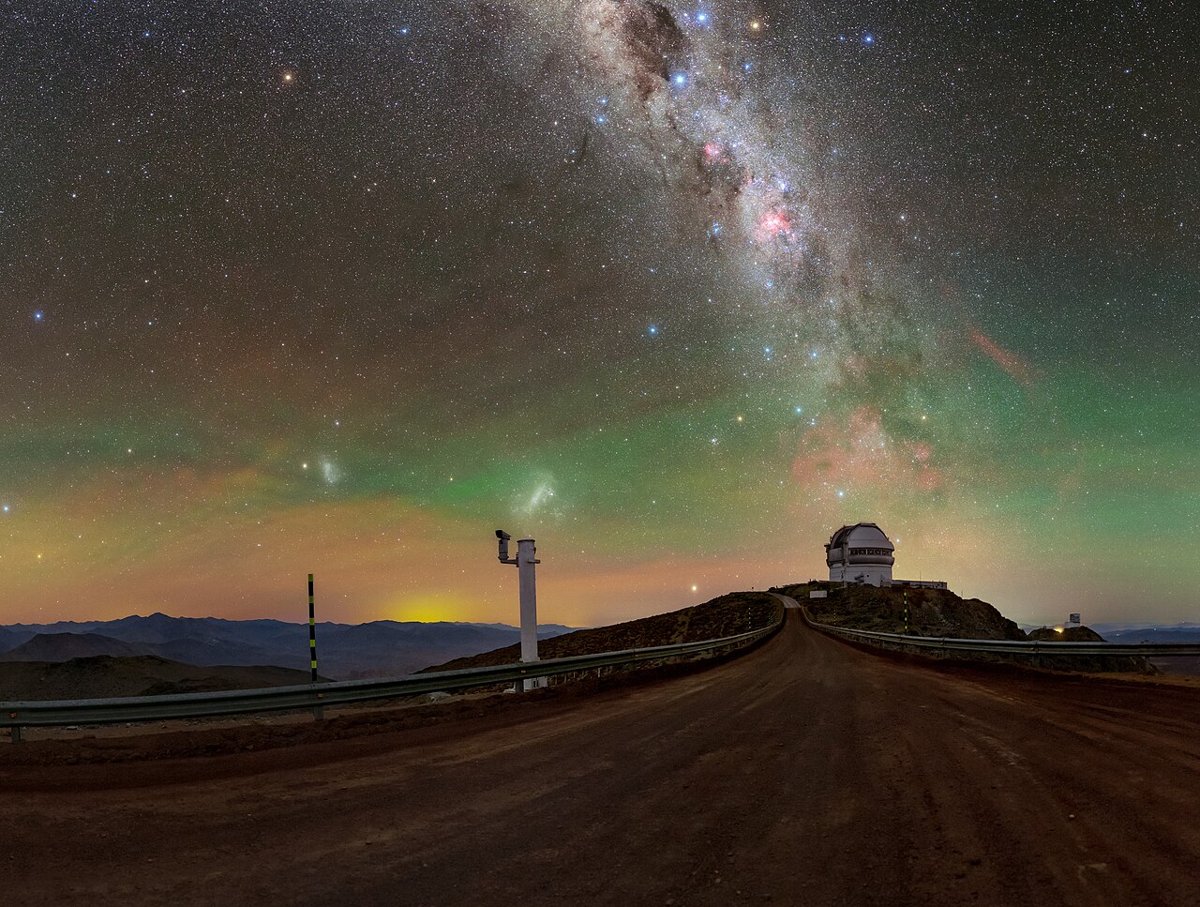
The nights of mid-September 2026 are offering skywatchers a rare stretch of genuinely dark skies, and a lineup of easy-to-find targets to use them on. A new moon on September 11 stripped moonlight out of the evening and morning sky just as a faint, little-known meteor shower called the September Lyncids reaches its peak, and NASA's own monthly skywatching guide points to a string of naked-eye highlights running through the rest of the month.
According to the Meteor Activity Outlook published September 11 by eMetN, the meteor journal of the International Meteor Organization's observing network, the September Lyncids (designated SLY) peaked around September 12, with a radiant near Right Ascension 07:32, Declination +56 degrees, in the northern constellation Lynx. The shower is weak, producing a zenithal hourly rate of less than 1 meteor per hour under ideal dark-sky conditions, best seen after roughly 10:00 p.m. local sidereal time as the radiant climbs. The same outlook notes the moon reaches first quarter on September 18, setting near 10:00 p.m. local time that week, which keeps the more productive early-morning hours free of interfering moonlight through much of the outlook period.
The Lyncids are one of several weak, overlapping meteor sources active in mid-September alongside the ongoing Anthelion source (radiant near 00:12, +02 degrees, ZHR about 2) and the tail end of the September Epsilon Perseids, which peaked September 9 at roughly 8 meteors per hour according to a separate September skywatching roundup from Star Walk. None of these showers rival major annual events like the Perseids or Geminids, but the near-total absence of moonlight around the September 11 new moon — which fell at 03:27 GMT that morning, per Star Walk's astronomical calendar — gave observers in dark-sky locations a genuine chance to catch faint meteors that would otherwise be washed out.
NASA's own "What's Up" skywatching guide for September, published by the agency's Science Mission Directorate, lays out a second wave of targets for the back half of the month that don't require any special equipment. From September 14 through 20, the agency notes, "let the Moon guide you to a few celestial landmarks" — first to Antares, the reddish heart of the constellation Scorpius, and then to the Teapot, the eight-star asterism in Sagittarius that NASA describes as a group of stars that "really does resemble a teapot, complete with a handle, lid, and spout." Under sufficiently dark skies, the guide adds, observers along that stretch of sky may also glimpse the glow of the Milky Way's core.
Venus gets its own moment on September 18, when the planet reaches peak brilliance for its current evening apparition. NASA describes it appearing "low above the western horizon, outshining every star around it" shortly after sunset — a good night to find an unobstructed view toward the west.
The seasons officially turn on September 22, when the autumnal equinox arrives and, per NASA's guide, "day and night are close to equal in length around the world" as the Northern Hemisphere heads into fall and the Southern Hemisphere into spring.
The month closes with the Harvest Moon on September 26, the full moon that falls closest to the equinox. NASA's guide notes it will rise "in the east shortly after sunset," appearing near Saturn and Neptune, the three worlds forming "a wide triangle in the sky." Saturn will be visible to the naked eye, but Neptune — roughly 30 times fainter — will require binoculars or a small telescope, and darker skies away from light pollution, to pick out.
Why It Matters
Weak, obscure showers like the September Lyncids rarely make headlines on their own, but they illustrate something useful about how meteor science actually works: professional and amateur observers around the world log every faint radiant, no matter how sparse, to build the statistical record that eventually reveals a comet or asteroid's dust trail crossing Earth's orbit. The International Meteor Organization's video and visual networks exist precisely to catch these low-rate showers that a casual observer would otherwise dismiss as background noise.
For the general public, the practical takeaway is simpler: September 2026 offers an unusually well-timed run of dark, moon-free nights bracketed by easy, no-equipment targets — Antares and the Teapot in the evening twilight, a blazing Venus low in the west, and a Harvest Moon closing out the month beside Saturn and a hard-to-spot Neptune. NASA's monthly skywatching guides are designed to lower the barrier to that kind of casual observing, translating orbital mechanics into "look here, on this night" instructions that require nothing more than a clear horizon and a few minutes outside after dark.
