
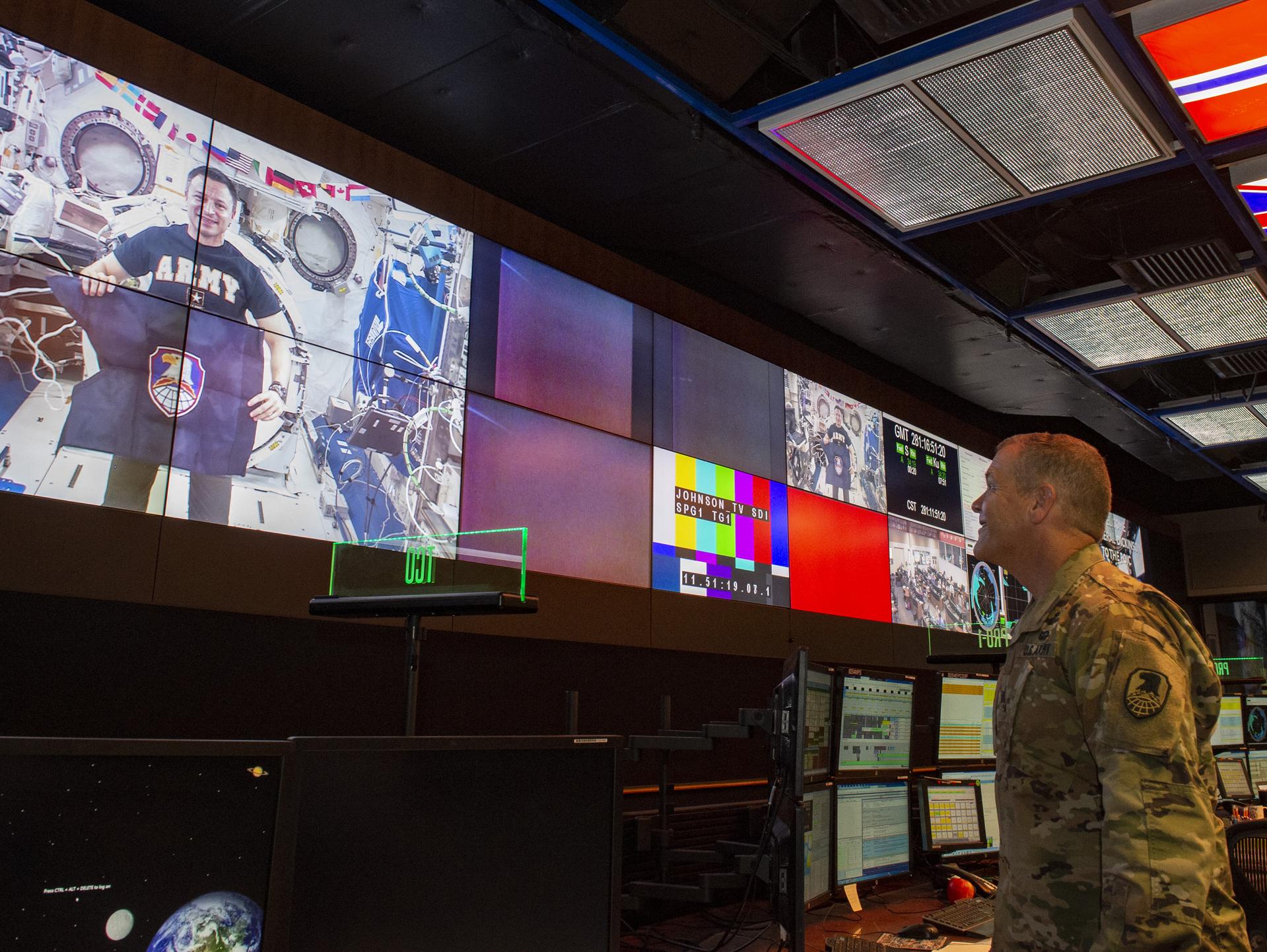
The U.S. Space Force is about to get only its third leader since the service was founded in December 2019. On Aug. 6, 2026, the Senate unanimously confirmed Lt. Gen. Douglas A. Schiess as the next Chief of Space Operations, clearing the way for a formal change-of-responsibility ceremony on Sept. 3 at Joint Base Andrews, Maryland, where Schiess will take over from Gen. B. Chance Saltzman and pin on his fourth star.
The confirmation, recorded on Congress.gov as nomination PN940 in the 119th Congress, covers both Schiess's appointment as Chief of Space Operations and his promotion to the grade of general. According to DefenseScoop, which broke the news the following morning, Schiess was nominated by President Trump in April 2026 and confirmed late Thursday alongside two other national-security picks: Erich Hernandez-Baquero and National Reconnaissance Office Director Roger Mason.
Who Is Douglas Schiess?
Schiess arrives at the Space Force's top job with an unusually direct line of succession. He has been serving as deputy Chief of Space Operations, and before that he was the first commander of Space Forces-Space, the Space Force's primary operational component under U.S. Space Command, from 2023 to 2025. That combination — deputy to the outgoing chief, plus hands-on command of the Space Force's primary operational unit — put him in position to step up without the adjustment period a true outsider would need.
In testimony to the Senate Armed Services Committee in July 2026, Schiess previewed the tone he intends to set: "It will be the honor of my professional career to lead the guardians of the United States Space Force. I will work tirelessly to ensure our Guardians are ready, our capabilities are resilient, our partnerships remain strong, and our service is worthy of the trust placed in us by the American people."
What Saltzman Leaves Behind
Saltzman's departure closes out a tenure that began Nov. 2, 2022, and caps a 35-year military career dating to his 1991 commissioning. Air & Space Forces Magazine, reporting Aug. 13, described the service Saltzman leaves as "battle-tested" — a nod to how far the Space Force has moved from its early years as a fledgling, largely administrative branch toward one directly supporting combat operations.
The numbers back that up. Guardian headcount grew from roughly 8,000 to more than 10,000 during Saltzman's watch, with the service now aiming for 20,000. The budget grew substantially too, climbing from $26.1 billion to $36.1 billion — an increase of roughly 38 percent — and is reportedly on track to nearly double next year. Saltzman is also credited with introducing the "space control" mission concept, a shift toward treating orbital space as a domain the U.S. must be prepared to actively contest rather than simply monitor. Under his leadership, the Space Force supported missile-warning operations tied to Israel in 2024 and, more recently, U.S. operations in Venezuela and Iran in 2026.
Saltzman will hold a separate retirement ceremony at Joint Base Anacostia-Bolling, distinct from the Sept. 3 change-of-responsibility event that formally hands the service to Schiess.
A Ceremony, Not Just a Handoff
The Sept. 3 event carries specific institutional weight. Per details published by SpacePolicyOnline, the ceremony runs at 11:00 a.m. ET at Joint Base Andrews and will be livestreamed at spaceforce.mil/live. It uses the term "change of responsibility" rather than the "change of command" language more familiar from other services — phrasing first adopted when Saltzman himself succeeded the Space Force's inaugural chief, Gen. John "Jay" Raymond, in 2022. Schiess's ascension makes him the third person to hold the job in the service's short history, following Raymond and Saltzman in turn.
Why It Matters
Leadership transitions at the top of a military service are typically procedural. This one lands at a moment when the Space Force is anything but static. The branch Saltzman is handing off has roughly a quarter more people, a substantially larger budget, and a broader operational mandate than the one he inherited — including a newly articulated "space control" doctrine and a track record of directly supporting live combat operations rather than just monitoring from orbit. Whoever takes the helm next inherits both that expanded capability and the expectations that come with it, at a time when the budget is reportedly poised to nearly double next year and the Guardian force is targeting a doubling of its own.
Schiess's background gives some signal about continuity versus change. As the first commander of Space Forces-Space and Saltzman's deputy, he has been embedded in exactly the operational and policy machinery he now inherits, suggesting the Space Force is opting for institutional continuity over a reset. But a change atop any service — particularly one still defining its doctrine and its place among the Joint Chiefs — is worth watching closely, both for what it says about how the U.S. plans to compete in space and for how quickly a new chief can convert a still-young service's rapid growth into durable operational capability.
Sources
- PN940 — Nomination of Douglas A. Schiess, Space Force, 119th Congress (Congress.gov)
- Congress confirms Schiess as third-ever chief of space operations (DefenseScoop)
- Saltzman Prepares to Leave 'Battle-Tested' Space Force (Air & Space Forces Magazine)
- U.S. Space Force Change of Responsibility Ceremony, Sept 3, 2026 (SpacePolicyOnline)
