
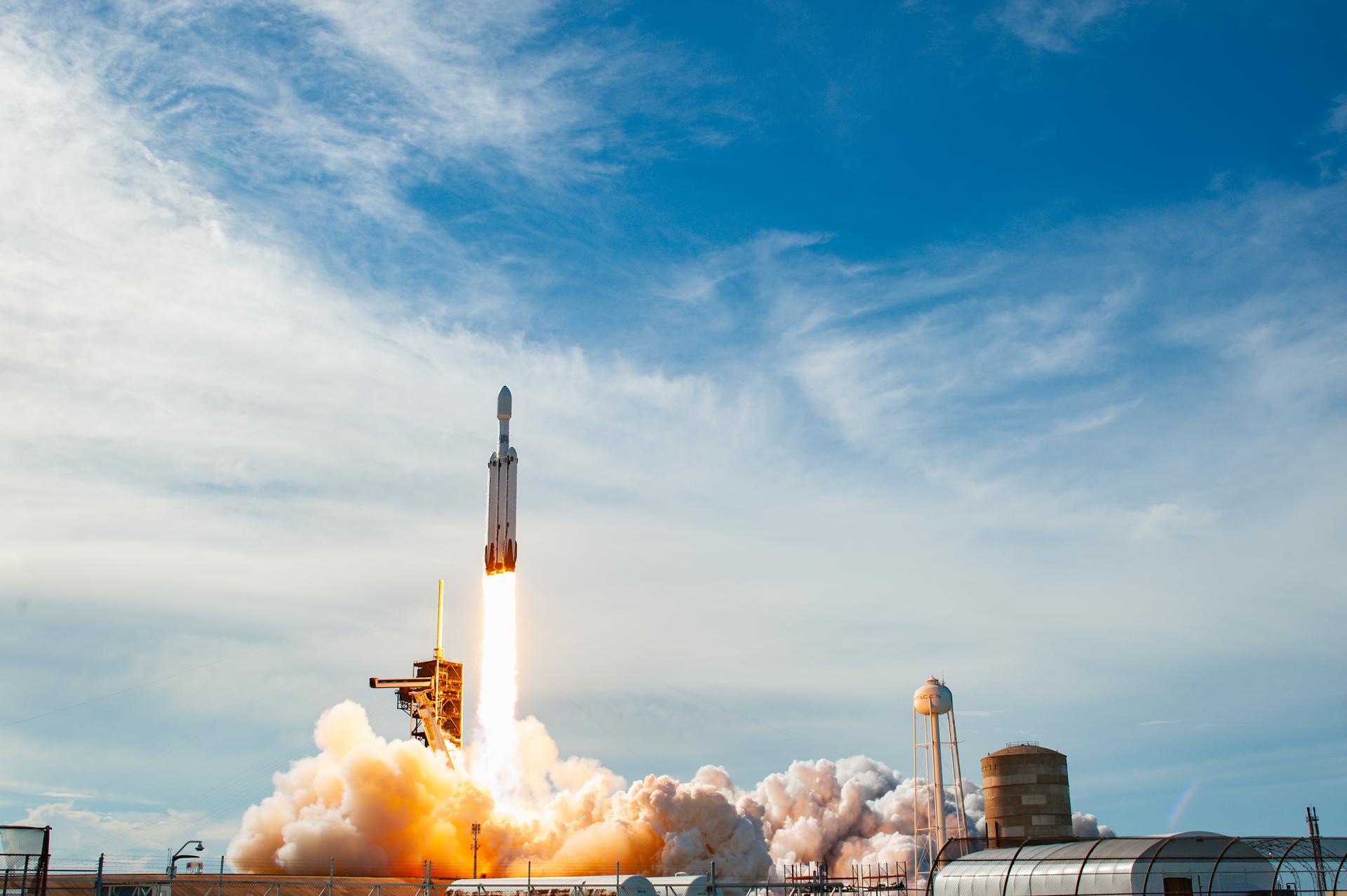
The second try worked. At 12:39 a.m. PDT (0739 UTC) on Saturday, Oct. 10, a SpaceX Falcon 9 lifted off from Space Launch Complex 4 East at Vandenberg Space Force Base carrying 21 data-transport satellites for the Space Development Agency (SDA). The mission flew five days after the first attempt was cut off in the final minute of the countdown.
The mission, designated T1TL-A, is the fourth production launch for the SDA's Proliferated Warfighter Space Architecture. It is also the first to carry Tranche 1 satellites built by Northrop Grumman. According to the SDA, the launch raises the number of Tranche 1 space vehicles on orbit to 84.
What went wrong on Oct. 5
The first attempt, on Oct. 5, ended in the last minute of the count. Spaceflight Now reported that Falcon 9's automated systems stopped the countdown with 58 seconds left after detecting "off-nominal data on Stage Two." SpaceX then lowered the rocket to horizontal so engineers could troubleshoot. Spaceflight Now also reported a range conflict, believed to be a missile test at Vandenberg, as a factor in the schedule.
The SDA's own announcement says only that the launch followed a delay from Oct. 5, when Falcon 9's automated systems halted the countdown just before liftoff. Neither the agency nor the published reporting has publicly explained what the second-stage data showed or what was done about it.
The flight itself
The rocket flew a southerly trajectory out of Vandenberg. The first-stage booster, B1103, was on its sixth flight. Space.com noted that the same booster last flew on the July Tranche 1 mission. It landed at Landing Zone 4, which Spaceflight Now counted as the 37th landing at LZ-4 and the 668th Falcon booster landing overall. Space.com counted this as the 111th Falcon 9 flight of 2026.
Viewers didn't see the satellites deploy. SpaceX ended its webcast before deployment at the SDA's request, which Space.com describes as normal for national security launches. Space.com updated its story at 12:45 p.m. ET on Oct. 10 to say the satellites had deployed successfully.
Northrop Grumman delivered the 21 satellites to Vandenberg on Sept. 28, according to Spaceflight Now. That left about a week between the satellites arriving at the launch site and the first launch attempt.
Three vendors down, one to go
The SDA split Tranche 1 production among several manufacturers. This launch was the first time Northrop Grumman's hardware flew in the tranche. "This launch marks the delivery of satellites built by the third of four vendors selected to field Tranche 1," said GP Sandhoo, SDA director and the U.S. Space Force's portfolio acquisition executive for missile warning and tracking.
Spaceflight Now listed the earlier missions:
- T1TL-B: York Space Systems satellites
- T1TL-C: Lockheed Martin satellites
- T1TL-E: York Space Systems satellites
- T1TL-A (Oct. 10): Northrop Grumman satellites
The missions haven't flown in alphabetical order. Spaceflight Now quotes a Space Force official from September 2025 saying the initial T1TL missions could be launched in any order. The SDA called this mission the delivery of its "fourth orbital plane" of Tranche 1 satellites.
Where the campaign stands
The numbers explain why this launch matters to the program. Space.com describes Tranche 1 as a set of nine SpaceX launches that will build up 154 operational satellites: 126 for data transport and 28 for missile tracking. Four missile-defense test satellites will fly on top of that. Spaceflight Now gives the same breakdown.
Four launches of 21 satellites each makes 84. All 84 are Transport Layer satellites, and all of them flew on Falcon 9s from Vandenberg, according to Space.com. Here is what that leaves:
- Launches: 4 of 9 complete, 5 remaining
- Transport Layer: 84 of 126 launched, 42 remaining
- Tracking Layer: 0 of 28 launched
- Missile-defense demonstrators: 0 of 4 launched
In other words, the data-relay layer is two-thirds launched, but none of the missile-tracking satellites has flown yet. The sources reviewed here don't say which of the remaining five launches will carry which payloads.
All these launches are bought through the National Security Space Launch program. Spaceflight Now reports that this mission is one of 23 awarded under NSSL Phase 2 in August 2020. The SDA says Space Systems Command's System Delta 80 oversees the launches.
Why It Matters
The Transport Layer is the communications backbone of the SDA's architecture. According to the agency, Tranche 1 is meant to provide initial warfighting capability starting in 2027. That includes persistent regional tactical data links, better missile warning and tracking, and targeting beyond line of sight, connected by optical and Ka-band links.
The SDA says its model emphasizes regular industry competition and vendor diversity, and the satellites are launched in batches of 21. This launch is a data point for that approach: a third manufacturer's hardware is now in orbit. The five-day scrub also shows how a single launch attempt can slip the schedule, though the sources do not say the delay affected the wider program.
With 2027 as the target for initial capability, the five remaining launches and the first Tracking Layer satellites are what to watch. For now, the scrub of Oct. 5 cost five days, and the satellites it held up are in orbit.
Sources
- PAE for Missile Warning and Tracking and Space Development Agency Successfully Deliver Fourth Orbital Plane of Tranche 1 Satellites to Orbit (Space Development Agency)
- SpaceX launches 21 data satellites for the Space Development Agency (Spaceflight Now)
- SpaceX launches 21 satellites to orbit for the US military after 5-day delay (Space.com)
