
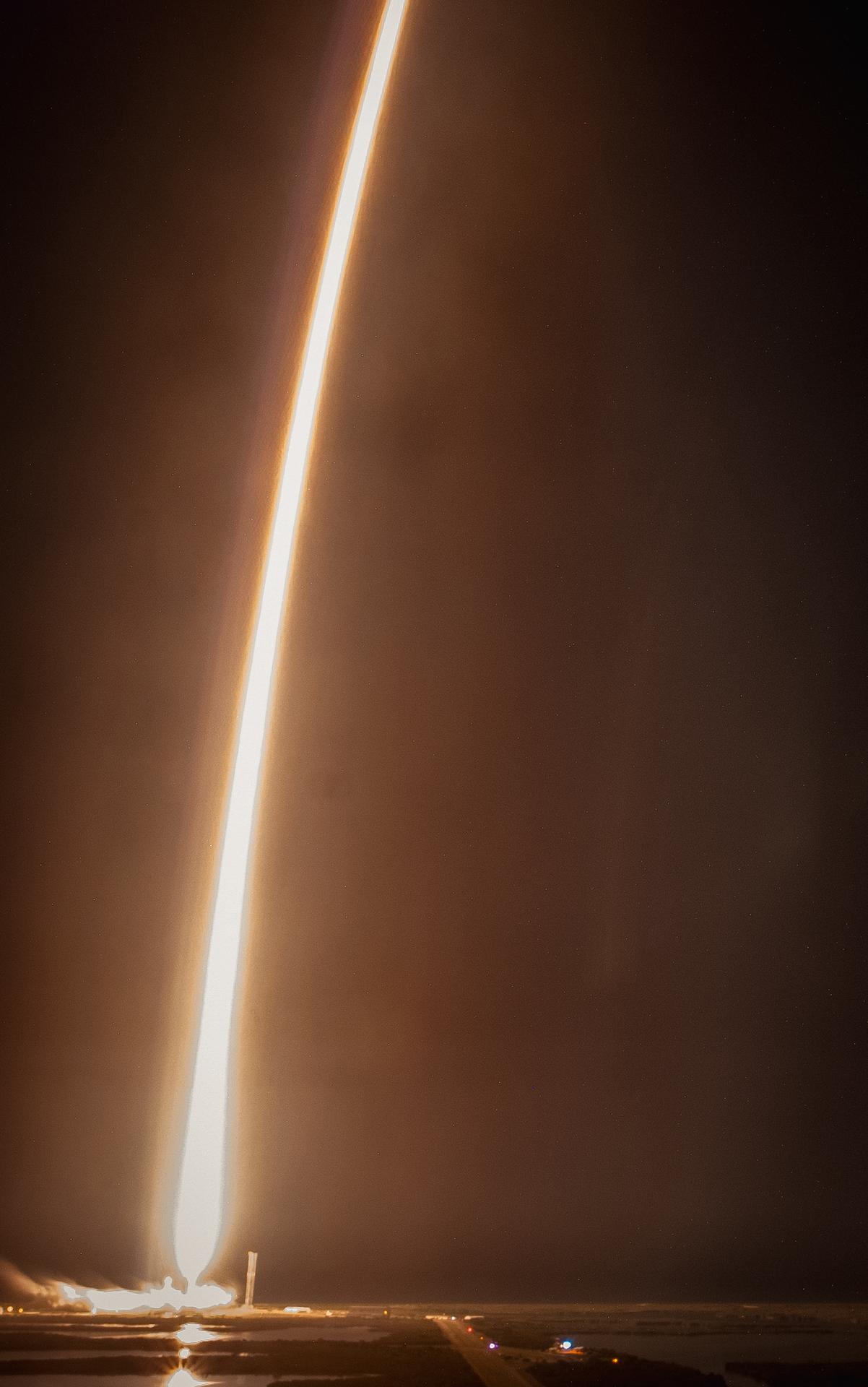
The Space Development Agency's fourth launch of production satellites came within a minute of liftoff on Monday, Oct. 5, before SpaceX stopped the countdown. The Falcon 9 at Vandenberg Space Force Base was carrying 21 Northrop Grumman data-transport satellites for the mission called Tranche 1 Transport Layer A, or T1TL-A. According to Spaceflight Now, the scrub came in the final minute of the count, just as the rocket was shifting into its automated startup sequence. SpaceX did not say what caused it.
SpaceX passed on a Tuesday, Oct. 6 attempt, and the next opportunity is Thursday. The RocketLaunch.Live schedule shows the mission on Oct. 8 from Space Launch Complex 4E with a 7:54 a.m. slot. Launch listings change often, so that time could move.
What's on the rocket
T1TL-A is the fourth SDA mission to carry production satellites, as opposed to earlier demonstration hardware. Northrop Grumman delivered the 21 spacecraft to Vandenberg on Sept. 28, about a week before the first launch attempt, according to Spaceflight Now.
The satellites belong to the agency's Transport Layer, the communications part of the architecture. SDA's Transport Layer overview describes a constellation of 300 to more than 500 satellites in low Earth orbit, between 750 and 1,200 kilometers up. The satellites are to be linked by optical inter-satellite links and are expected to operate over Ka band. SDA's goal for the full constellation is for 95 percent of locations on Earth to have at least two satellites in view at any given time. SDA says the network is meant to be fault tolerant, so that two satellites in view gives a ground user a second path if one spacecraft is lost.
The booster and the contract
The first stage is Falcon 9 booster B1103, flying for the sixth time. SpaceX plans to land it at Landing Zone 4, next to the Vandenberg pad. Spaceflight Now reports that a successful landing would be the 37th at LZ-4 and the 668th landing of a Falcon booster overall.
The launch is one of 23 missions awarded to SpaceX under National Security Space Launch Phase 2, a contract awarded in August 2020 and managed by the Space Force's Space Systems Command. These launches are therefore assigned under an existing contract, not bought one at a time.
Where Tranche 1 stands
The Proliferated Warfighter Space Architecture, SDA's name for the whole system, is built in "tranches," each a batch of satellites. When complete, Tranche 1 will consist of, according to Spaceflight Now:
- 126 Transport Layer satellites for data relay
- 28 Tracking Layer satellites for missile tracking
- Four missile defense demonstration spacecraft
Three launches so far have put 63 Tranche 1 satellites in orbit. The most recent, on July 16 and covered in an SDA release, carried 21 York Space Systems satellites from the same SLC-4E pad. SDA said those satellites would raise themselves to approximately 1,000 kilometers. In that release, SDA Director GP Sandhoo said the deployment of Tranche 1 would "soon deliver continuous overwatch." If T1TL-A reaches orbit, it will add 21 more and bring the on-orbit Tranche 1 total to 84.
That would still leave 74 of the 158 planned Tranche 1 spacecraft on the ground. SDA says Tranche 1 will provide initial warfighting capability beginning in 2027, and Spaceflight Now also says operational capability begins that year. That leaves roughly a year to launch the rest of the satellites and check them out on orbit, since SDA says its satellites go through test and checkout and then orbit-raising before they transition into operations.
Why It Matters
On its own, a scrub in the last minute of a countdown says very little. SpaceX has not said what caused it, and nothing in the reporting points to the payload. Until the company explains what happened, the scrub mainly costs schedule. A three-day slip is small on its own, but the 2027 target for initial capability means the remaining launches need to keep coming.
Each Tranche 1 mission adds about 21 satellites, so a network of 126 Transport Layer satellites needs many such launches to fill out. Spaceflight Now lists T1TL-B, T1TL-C and T1TL-E as already launched, and this mission would be the fourth.
The mission is also worth watching because it mixes suppliers. The previous launch carried York-built satellites, and this one carries Northrop Grumman hardware. SDA describes the Tranche 1 space and ground segments as a multi-vendor ecosystem meant to encourage competition and resiliency. For a network that depends on optical links between satellites, spacecraft from different builders will have to work together on orbit, and each batch that reaches orbit gives SDA more to check.
For now the next milestone is simple: a clean count on Thursday and 21 more satellites in orbit.
Sources
- SpaceX scrubs launch attempt for 21 data transport satellites for the Space Development Agency (Spaceflight Now)
- Space Development Agency Successfully Completes Third Launch of Tranche 1 Satellites (Space Development Agency)
- Transport Layer (Space Development Agency)
- Launch schedule (RocketLaunch.Live)
