
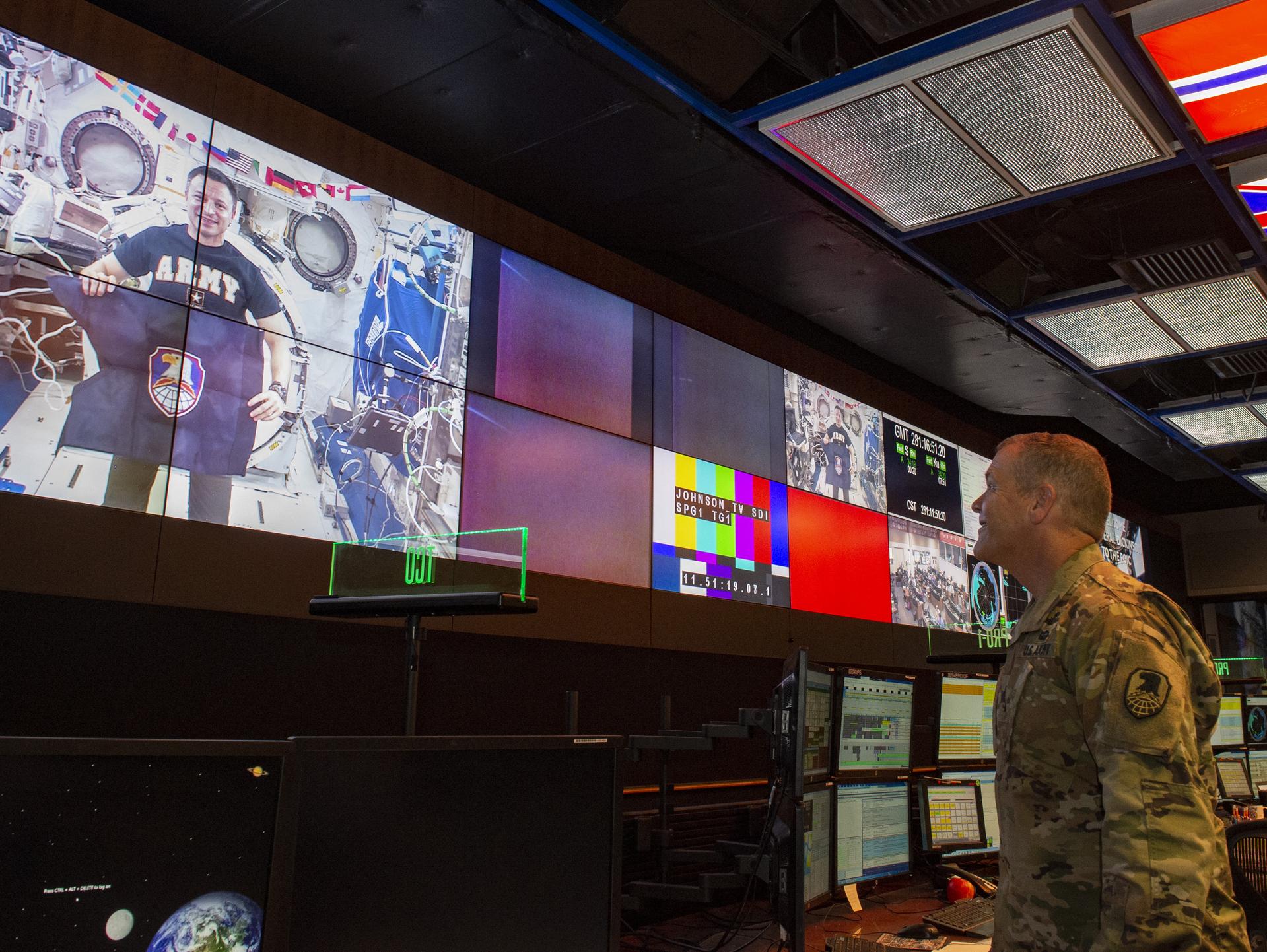
The U.S. Space Force got a new top officer this week. Gen. Douglas A. Schiess was sworn in as the service's Chief of Space Operations on September 3 during a change-of-responsibility ceremony at Joint Base Andrews, Maryland, taking over from the retiring Gen. Chance Saltzman. Schiess was promoted to four-star general the same day.
Schiess is only the third person to hold the Chief of Space Operations post since the Space Force stood up as an independent branch in December 2019, following Gen. John "Jay" Raymond and Gen. Chance Saltzman. The post carries four-star rank, putting the Space Force's top uniformed officer on the same footing as the service chiefs of the Army, Navy, Air Force, and Marine Corps — the standing both of his predecessors held before him.
Who Is Douglas Schiess?
Schiess arrives at the job after a career built around the operational guts of military space — missile warning, GPS, command and control, and launch operations — according to Air & Space Forces Magazine's account of his background. He entered the Air Force in 1992 and transferred to the Space Force in 2022, per Stars and Stripes' coverage of the installation, putting him at roughly 34 years in uniform. He most recently served as Deputy Chief of Space Operations and, before that, as the first commander of U.S. Space Forces–Space, a post he took up in 2023.
That background matters for what comes next. The Chief of Space Operations doesn't command troops in the field so much as run the institution — recruiting, training, equipping, and organizing the force that other combatant commands draw on. Schiess now sits atop a service that grew from roughly 8,000 to about 10,000 uniformed Guardians over the past four years under Saltzman, with a stated plan to roughly double that number to 20,000 over the next five years, according to Air & Space Forces Magazine.
What Was Said at the Ceremony
The handoff came with the kind of institutional praise typical of a change-of-responsibility ceremony, but the specifics point to a service still finding its footing in real-world operations. Saltzman, in his remarks, credited Schiess with an ability to "build teams, drive performance, and coax bureaucracies into mission success" — a notably managerial compliment for a job that is as much about running an organization as fighting a war. Saltzman also used the occasion to claim that the Space Force, under his tenure, "delivered critical effects on time and on target under fire, and we sustained that effort," per Air & Space Forces Magazine's account of the ceremony.
Schiess, for his part, struck a more pointed tone about the threat environment he's inheriting. In his remarks at the ceremony, as reported by Air & Space Forces Magazine, he described adversaries actively working to "disrupt, degrade, and destroy" U.S. space capabilities — language that tracks with the service's broader public messaging in recent years about counterspace threats from Russia and China. He also spoke of growing the force "with intention," leveraging industry partnerships to advance the service's weapon systems — a phrase that suggests the doubling to 20,000 Guardians won't be a simple headcount exercise but a deliberate build-out tied to specific mission needs.
Why the Promotion Matters
Rank might seem like a bureaucratic footnote, but for a service as young as the Space Force — founded in December 2019 — four-star leadership at the top signals that the institution's senior job carries the same institutional weight as its counterparts elsewhere in the Pentagon. Schiess's promotion to four-star general puts him in the same company as Raymond and Saltzman, both of whom held that rank as Chief of Space Operations before him, keeping the position aligned with the service chiefs of the Army, Navy, Air Force, and Marine Corps.
Practically, four-star rank carries weight in the rooms where budget and force-structure decisions get made — the Pentagon's tank, congressional testimony, joint planning with combatant commanders. A Space Force chief holding the same rank as the Chief of Staff of the Army or the Chief of Naval Operations removes any ambiguity about whether the newest branch's voice carries equal standing at the table.
Why It Matters
The Space Force has spent nearly seven years justifying its own existence — proving that space deserves a dedicated military branch rather than remaining an Air Force sideline. A four-star officer taking the reins as Chief of Space Operations, following two predecessors who held the same rank, is a sign that the question of the branch's standing is, at least inside the Pentagon, settled. But rank doesn't solve the harder problem Schiess now owns: growing a roughly 10,000-person uniformed force to 20,000 while adversaries are, in his own words, actively trying to disrupt and destroy the satellites and ground systems that force operates.
That expansion plan will be worth watching closely. Doubling personnel in five years is an aggressive target for any military branch, and how the Space Force fills those ranks — recruiting, retraining transfers from other services, or building new career pipelines — will shape whether the growth translates into real capability or just a bigger org chart. Schiess's background running actual space operations, rather than a purely staff or policy career, suggests the institution picked someone who has felt the operational pressure he's now describing publicly. Whether that experience translates into faster fielding of resilient satellite architecture and better space-domain awareness is the real test of his tenure — one that won't be measured by his rank insignia, but by what the Space Force can put on orbit and keep working when someone else is trying to knock it out.
Sources
- Schiess sworn in as the Space Force's highest-ranking uniformed leader — Space Force official release
- Schiess Swears in as New Space Force Chief — Air & Space Forces Magazine
- Schiess installed as Space Force's highest-ranking officer — Stars and Stripes
