
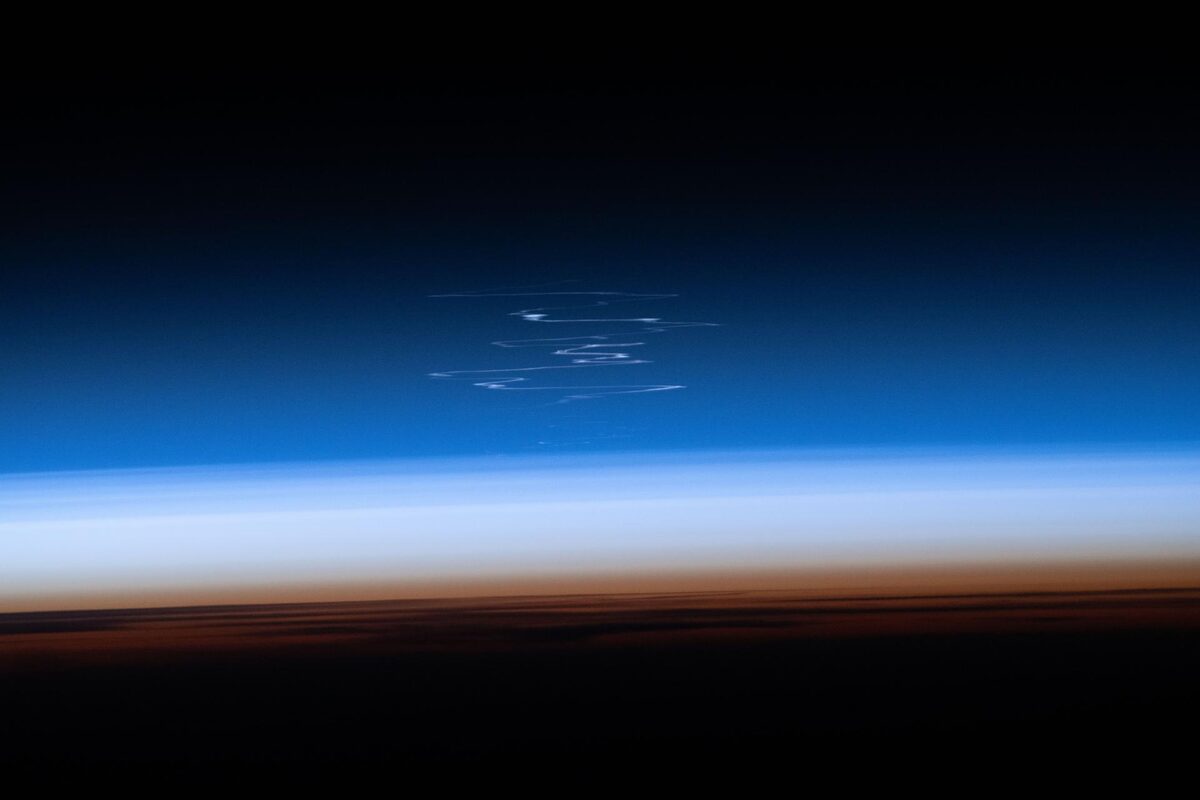
A Soyuz rocket lifted off from the Baikonur Cosmodrome in Kazakhstan at 5:17 a.m. EST on Tuesday, Nov. 24 (3:17 p.m. local time). It carried the Progress 97 cargo spacecraft toward the International Space Station with roughly three tons of food, fuel and supplies for the Expedition 75 crew. NASA confirmed the launch in a station blog post shortly afterward. The flight itself was routine. The publicity before it was not.
On the day before launch, reporters asked NASA about the mission, and the agency mostly sent them elsewhere. Ars Technica reports that NASA's Gaurang Patel told reporters on Nov. 23 to put their questions about the Progress launch to Roscosmos. NASA has historically televised these launches, so the response stood out. Ars also quoted Anatoly Zak, a longtime observer of the Russian space program, who said Roscosmos has dramatically curtailed its launch coverage.
The result was a supply run to a shared international outpost that drew less public notice than usual. According to Ars, it also carries one of the more unusual payloads to fly on a Progress in recent memory: a humanoid robot called Teledroid.
The flight plan
NASA's post-launch update says Progress 97 will dock autonomously to the Earth-facing port of the Rassvet module at about 7:11 a.m. EST on Thursday, Nov. 26. That makes the delivery a Thanksgiving Day arrival for the seven crew members aboard the station. NASA said its coverage of the rendezvous and docking would begin at 6:30 a.m.
Ars Technica's pre-launch report described a more involved arrangement. It said this is the first Progress to fly since the leaky PrK module was slated for decommissioning, which changes how the station uses its Russian docking ports. In that account, which Ars attributed to Zak, the cargo ship would first dock at the Poisk module and later move to the PrK port, where it would provide propulsion. NASA's update names Rassvet as the first docking target. The two published descriptions don't match, and neither source addresses the difference. Readers should treat the exact port sequence as something the agencies have not fully spelled out.
The disagreement matters because Progress vehicles do more than deliver groceries. A Progress parked at the right port can supply propulsion, and the ship's eventual location says something about how Russia plans to work around the troubled PrK module.
A robot on the manifest
The most interesting cargo is the one that got the least advance publicity. Ars Technica reports that Progress 97 carries Teledroid, a humanoid robot that Ars says was created to assist spacewalkers during extravehicular activities. Russian state media described the groundwork in September. TASS reported on Sept. 16 that the previous cargo ship, Progress MS-35, had reached orbit with equipment for the Teledroid experiment, including an exoskeleton. TASS said at the time that the robot itself would follow on the next cargo ship, which is this flight.
TASS reported that the exoskeleton is a cosmonaut workstation used to control the robot remotely, and that cosmonaut Anna Kikina trained on Earth as the operator. The tests TASS described are basic tasks: retrieving objects from storage, simulating the transfer of a tool to a cosmonaut without physical interaction, simulating work with the tool and returning objects to storage. That is the right scope for a first test in orbit. Before a robot can do anything ambitious on a station, it has to show it can grab things, move them and pass them to a person without drifting off, breaking hardware or getting in the crew's way.
Because Roscosmos said so little in advance, we don't yet have details on when the robot will be unpacked, when tests will begin or how results will be reported. The sources establish that the hardware is split across two ships, that an operator has trained for it and that the planned tests center on handling objects and tools. They don't go further.
A busy week for station logistics
Progress 97 is one of two cargo vehicles headed to the station within days of each other. NASA says Northrop Grumman's Cygnus XL is targeted to launch on a SpaceX Falcon 9 no earlier than 10:47 a.m. EST on Sunday, Nov. 29, carrying about 11,000 pounds of cargo. NASA astronauts Watkins and Delaney are scheduled to capture the spacecraft with the station's robotic arm on Dec. 1.
Looking further ahead, Ars Technica reports that the next crewed Russian flight, Soyuz MS-30, is expected in March 2027.
Why It Matters
The ISS depends on partners sharing information about each other's vehicles. A Russian cargo ship docks to the same structure that houses American, European, Japanese and Russian crew and hardware. In the past, NASA's live broadcasts of Progress launches gave the public a regular view of that partnership. If Roscosmos is pulling back on launch publicity, as Zak told Ars, then less of the station's operations will be visible to the public, even though the hardware keeps flying on schedule.
Ars called the secrecy hard to justify for a routine flight, and suggested the likelier motive is Russia's war with Ukraine and a tighter lid on launch information. The mission itself is a resupply flight carrying food, fuel and a robot meant to practice simulated tool handovers. The more consequential details, such as how Russia plans to handle propulsion as the PrK module winds down, are the ones public reporting has described least clearly. The mismatch between NASA's docking description and the plan Ars reported shows what happens when official communication thins out. Outside observers end up piecing the picture together from fragments.
Teledroid is a modest experiment, but it fits a direction many space programs are exploring: machines that can take over routine physical chores from crews whose time is limited and expensive. Whether that robot gets a public debut in orbit, or appears only in a brief state-media item, may say as much about Roscosmos's new communications approach as about the robot.
Sources
- Progress Cargo Craft Lifts Off to Resupply Expedition 75 Crew (NASA)
- Crew Awaits Thanksgiving Day Delivery as Another Cargo Craft Nears Launch (NASA)
- Russia will launch a routine ISS supply mission tomorrow, apparently it's a big secret (Ars Technica)
- Progress MS-35 cargo spacecraft with equipment for Teledroid placed into orbit (TASS)
