
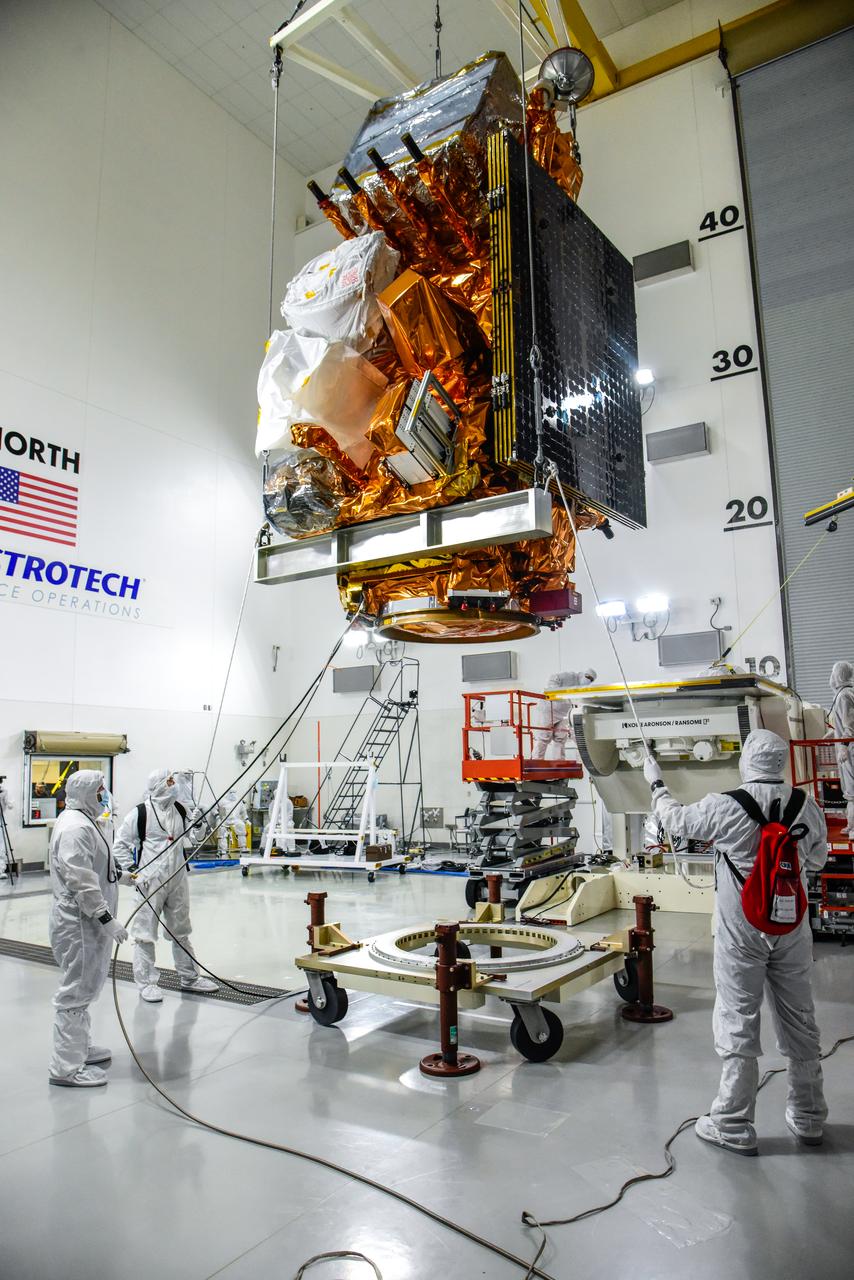
Most weather forecasts depend on satellites that the public never hears about. On Nov. 23, NASA, acting on behalf of the National Oceanic and Atmospheric Administration, awarded a contract in that part of the satellite business. Northrop Grumman Systems Corp. will design, develop, produce and test three new microwave sounding instruments for NOAA's Near Earth Orbit Network satellites, and will provide mission support for them.
The contract is worth $290.6 million and runs from Nov. 23, 2026 through April 1, 2042, according to NASA's announcement. Work will take place at Northrop Grumman's own facility. The instruments are called Sounder for Microwave-Based Applications, or SMBA. NASA describes them as the next generation of low Earth orbit microwave sounders, built for NOAA's Near Earth Orbit Network, known as NEON.
What's actually being bought
The SMBA award covers instruments, not satellites. NASA's release lists the full scope as design, development, production, testing and mission support for three SMBA instruments. Mission support is likely the part that explains the long timeline. The period of performance runs about 15 years, from late 2026 to April 2042. NASA's release does not break that span down, but it plausibly covers building the hardware and supporting it through the mission.
The contract structure is worth noting. NASA calls it a hybrid of three contract types: cost-plus-fixed-fee, firm-fixed-price, and time-and-materials. In general, hybrids like this let an agency match the payment model to the kind of work. Cost-plus terms usually cover development, where the engineering risk is hardest to price. Fixed-price terms suit work whose cost can be estimated more reliably. Time-and-materials terms handle open-ended support. NASA's release does not say which parts of the SMBA work fall under which type.
Who does what
NEON is a joint program, and the release spells out how responsibility is split:
- NOAA leads the NEON mission, providing funding, technical requirements and postlaunch operations. It will own and operate the SMBA instruments and deliver the data to users worldwide.
- NASA will manage development of the NEON satellites and launch them for NOAA. Its Goddard Space Flight Center in Greenbelt, Maryland, is managing the acquisition of the SMBA instruments.
- Northrop Grumman provides the design, development, production, testing and mission support for the three instruments, with the period of performance running through April 1, 2042.
The release adds that NASA and NOAA will work with commercial partners to design and build the NEON spacecraft and instruments. A repost of NASA's release (via mirror) carries the same terms: three SMBA instruments, Goddard managing the acquisition, NOAA operating.
QuickSounder came first
The SMBA award is not NEON's first hardware contract. In January 2024, the Southwest Research Institute announced a $54 million contract to develop QuickSounder, which it said would kick off NOAA's NEON program. SwRI called it the first in a new generation of NOAA low-Earth orbit environmental satellites, NOAA's first environmental smallsat, and a pathfinder and prototype for the next generation. Under that deal, SwRI designs and builds the satellite and operates it for three years.
QuickSounder does not carry a new instrument. It will carry NOAA's Advanced Technology Microwave Sounder, or ATMS, which measures properties of Earth's atmosphere such as temperature and moisture. SwRI's release says environmental satellites usually take 10 years or longer to develop and launch, and that QuickSounder was expected to launch in mid-2026, less than 27 months after the award. It also said the satellite would deliver 95% of collected data within 30 minutes. Cosmic Herald has not been able to confirm whether QuickSounder has launched, so readers should treat mid-2026 as the original target, not a confirmed milestone.
The sequence makes sense on its face. QuickSounder is meant to show how quickly a small satellite can be developed and launched, and SwRI said faster timelines would let NOAA fly newer, more advanced instruments in the future. SMBA is an investment in the next generation of the microwave sounder instrument itself.
Why It Matters
NASA's release explains that microwave sounders provide critical measurements of temperature and moisture in the atmosphere, which significantly influence weather patterns. It ties the SMBA instruments to a specific benefit: they could improve the medium-range forecasts for NOAA's National Weather Service.
The word "could" matters. Better forecasts depend on the instruments performing to specification, the satellites launching on schedule, and NOAA working the new data into its forecast systems. None of that is guaranteed by a contract award. Still, the award shows that NOAA and NASA are committing money and a schedule stretching to 2042 to a next generation of low-Earth-orbit microwave sounders.
The contract also hints at how NEON's approach is developing. A small pathfinder satellite carrying NOAA's ATMS instrument went to one vendor, SwRI. A separate, much larger instrument contract went to another, Northrop Grumman. The program appears to be buying its components separately, which fits NASA's statement that it will work with commercial partners on the spacecraft and instruments. Whether that approach delivers data sooner or more cheaply will only become clear when SMBA-equipped satellites start flying, which will take years.
What to watch
The release names no launch dates for SMBA-equipped satellites and does not say which NEON spacecraft will carry the three instruments. The next useful signals will be NEON's satellite procurement announcements and confirmation of QuickSounder's status. Those will show how quickly NOAA's plan for low-Earth-orbit weather observation goes from contracts to hardware in orbit.
