
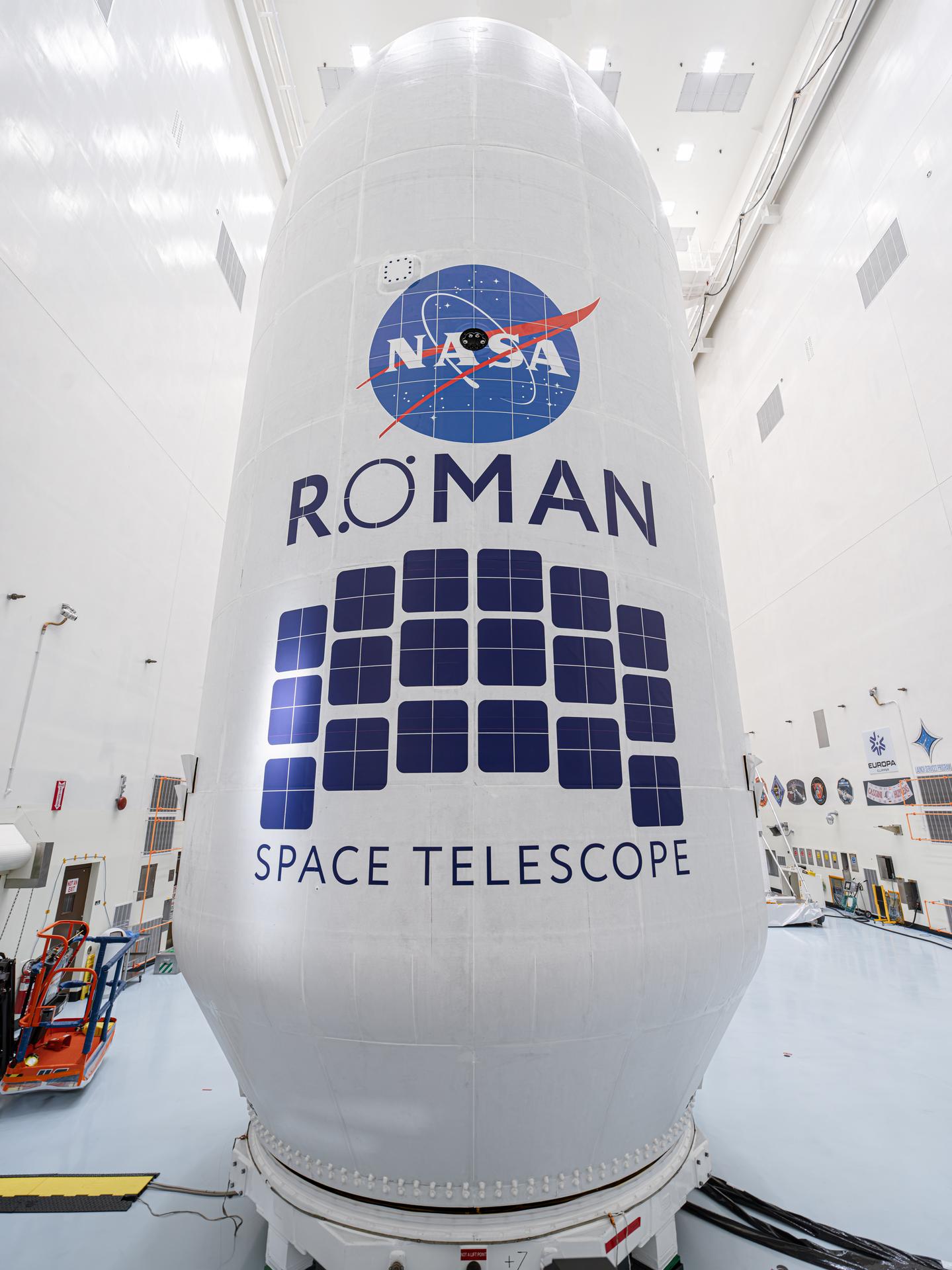
Somewhere between Earth and the Sun, at a gravitationally quiet spot called Lagrange Point 2, NASA's Nancy Grace Roman Space Telescope is still about a million miles from where it needs to be. But this week, the observatory reached a milestone that matters more than mileage: it opened its eyes.
NASA confirmed on September 15 that Roman's primary instrument, the Wide Field Instrument, completed its activation sequence over three days, from September 11 through 13. The instrument is, in effect, the telescope's main camera — an infrared imager built around 18 individual detectors arranged in a mosaic, each one packing more than 16 million pixels. Add them up and you get roughly 300 megapixels, cooled to a frigid -300°F (-183°C) to keep detector noise low enough to catch faint, distant light.
"After years of effort to build and test the instrument on the ground, we now have confirmation that it is operational in space," said Josh Schlieder, the Wide Field Instrument scientist at NASA's Goddard Space Flight Center, in the agency's announcement.
That sentence covers a lot of ground. Getting a camera to merely turn on in orbit is one thing; getting it to survive launch, thermal cycling, and the vacuum of space with 18 detectors intact and functioning is another. Instrument teams have watched missions lose individual detectors or channels during commissioning before, so a clean activation across the full mosaic is the kind of quiet good news that mission scientists actually celebrate.
What Roman's Instruments Actually Do
Roman carries two main instruments, and this week's update touched both.
The Wide Field Instrument is the workhorse. Its defining feature isn't resolution so much as coverage — according to Space.com's mission overview, its field of view will be at least 100 times larger than Hubble's. Hubble produces exquisitely detailed images of small patches of sky; Roman is built to survey enormous swaths of it at similar depth and sharpness, cataloging light from an estimated one billion galaxies over the course of the mission. That scale is the entire point of Roman: it's designed to do statistical astrophysics — mapping dark matter, tracking dark energy's effect on cosmic expansion, and finding exoplanets via gravitational microlensing — at a volume no previous NASA flagship could manage.
The second instrument, the Coronagraph, is a more experimental piece of hardware. Its job is to block out the overwhelming glare of a host star so that a much fainter orbiting planet can be seen directly — a task accomplished with quarter-sized shaped pupil masks that shape and suppress starlight before it reaches the detector. Unlike the cryogenically cooled Wide Field Instrument, the Coronagraph operates at a comparatively balmy 72°F. According to NASASpaceflight's commissioning report, the Coronagraph's activation followed the deployment of Roman's solar array and communications systems, and consisted of powering on and testing its digital, electronic, and mechanical systems. NASA's own update adds that the instrument is now partway through a 30-day detector decontamination process — a standard step to bake off residual contaminants that could otherwise degrade sensitive detectors over the mission's lifetime.
A Technology Demonstration Riding Along
It's worth being precise about what the Coronagraph is and isn't. NASA has described it in the past as a technology demonstration rather than a primary science instrument — a test of direct-imaging techniques that could inform future planet-hunting missions. This week's milestone was a checkout of its systems, not a scientific observation. The 30-day decontamination period now underway is itself a preparatory step, not a result. In other words: the hardware works, but the Coronagraph's actual planet-imaging capabilities remain to be demonstrated.
Why It Matters
Commissioning is the unglamorous middle act of any space telescope's story — after the drama of launch, before the payoff of first images — and it's also where missions are most exposed. A telescope can survive a picture-perfect launch and still be crippled by a jammed sunshield, a stuck mirror segment, or a detector that won't cool properly. Every instrument that activates cleanly during commissioning is one fewer thing that can go permanently wrong. For Roman specifically, the Wide Field Instrument's activation is close to existential: it's the instrument that will deliver essentially all of the mission's headline science, from dark energy measurements to the galaxy census to microlensing planet detections. A functioning 300-megapixel detector array in space is the precondition for all of it. The Coronagraph's successful power-on, meanwhile, keeps alive NASA's longer-term ambition of direct imaging Earth-like exoplanets — a capability that agencies are still learning to build, one demonstration mission at a time. None of this is science yet. Roman is still in transit to L2, still months away from being parked in its final orbit, and NASA has set expectations for first science images in early 2027. But an instrument that works on the ground and then works again after the trauma of launch and the isolation of deep space is not a guarantee — it's a result. This week, Roman earned it.
What Comes Next
Roman's commissioning campaign continues over the coming months as it completes its journey to L2. The Coronagraph's 30-day decontamination process will need to finish before more meaningful instrument testing can proceed, and the Wide Field Instrument will undergo further calibration ahead of the telescope's operational science phase. NASA has not detailed every remaining milestone, but the stated target remains first science images in early 2027 — the moment Roman's 300-megapixel eye actually opens on the universe it was built to survey.