
For the better part of two decades, the commercial space industry has been defined by a single gravitational boundary: low Earth orbit. Companies like SpaceX, Rocket Lab, and Blue Origin built empires ferrying satellites, cargo, and eventually astronauts to destinations no higher than a few hundred kilometers above the surface. The business case was proven, the risks were manageable, and the customers — government and commercial alike — were plentiful.
Now Relativity Space wants to redraw the map entirely. The company has announced plans to privately develop a Mars orbiter mission, a statement of intent that, if executed, would represent one of the most ambitious commercial deep-space ventures ever attempted by a private firm operating outside a traditional NASA contract structure.
It is a bold bet. And it arrives at a moment when the economics and politics of deep-space exploration are shifting in ways that make such a bet at least plausible, if not yet proven.
Beyond the LEO Comfort Zone
To appreciate the significance of what Relativity Space is proposing, it helps to understand just how thoroughly the commercial space sector has been tethered to low Earth orbit. The vast majority of private-sector revenue in space — satellite broadband, Earth observation, in-space manufacturing experiments, crew transportation to the International Space Station — occurs within roughly 2,000 kilometers of the planet's surface. This is not an accident. LEO is where the customers are, where the regulatory frameworks exist, and where the engineering challenges, while formidable, are at least well-characterized.
Mars is a fundamentally different proposition. A spacecraft bound for the Red Planet must survive a transit measured in months, not hours. It must navigate with precision across tens of millions of kilometers, execute an orbital insertion burn with no margin for error, and then operate autonomously for extended periods with communication delays that can stretch beyond 20 minutes each way. The thermal environment, radiation exposure, and power constraints are all orders of magnitude more demanding than anything encountered in LEO.
Historically, these challenges have meant that Mars missions were the exclusive province of national space agencies — NASA, ESA, ISRO, CNSA — organizations with decades of institutional knowledge, deep engineering benches, and budgets backed by sovereign governments. Private companies contributed as contractors, building components and subsystems under agency direction. But the missions themselves were government-conceived, government-funded, and government-managed.
Relativity Space's announcement represents a deliberate departure from that model. The company is not responding to a NASA request for proposals or competing for a government contract. It is proposing to develop a Mars orbiter on its own initiative, using private capital and its own engineering capabilities.
The NASA Factor
Relativity Space is not operating in a vacuum — figuratively speaking. NASA has been actively cultivating the conditions for exactly this kind of private-sector ambition. The agency has announced public-private partnerships aimed at advancing Mars science, creating structured opportunities for commercial companies to participate in deep-space exploration in ways that go beyond traditional contracting.
This approach mirrors the strategy NASA employed so successfully in LEO. The Commercial Orbital Transportation Services (COTS) program and its successors demonstrated that NASA could serve as an anchor customer and technical partner while allowing private companies to own and operate the hardware. SpaceX's Falcon 9 and Dragon capsule, Boeing's Starliner, and Northrop Grumman's Cygnus all emerged from this model. The result was a dramatic reduction in launch costs and a flourishing commercial ecosystem that now sustains itself largely independent of NASA funding.
Extending that model to Mars is NASA's explicit goal. By signaling a willingness to purchase data, services, and mission participation from private providers, the agency is attempting to catalyze a commercial deep-space sector in the same way it catalyzed commercial LEO. The logic is straightforward: if NASA can buy Mars orbital data from a private provider at a fraction of the cost of building and operating its own orbiter, both the agency and the taxpayer benefit.
For Relativity Space, NASA's posture creates a potential revenue stream — not a guaranteed one, but a credible one. A privately developed Mars orbiter could sell communications relay services, orbital imaging data, or scientific instrument hosting to NASA, other agencies, and eventually other commercial customers. The business case does not require NASA to fund the mission. It requires NASA to be willing to buy what the mission produces.
The Technical Question
Ambition and capability are different things, and the gap between announcing a Mars orbiter and actually placing one in Martian orbit is vast. Relativity Space has built its reputation on advanced manufacturing techniques, particularly metal 3D printing applied to rocket production. The company's Terran R vehicle is designed to be a medium-to-heavy-lift launcher, and its manufacturing approach promises faster iteration cycles and lower production costs than traditional aerospace fabrication.
But building a rocket and building an interplanetary spacecraft are distinct engineering disciplines. A Mars orbiter requires expertise in deep-space navigation, long-duration power systems, thermal management across extreme temperature ranges, autonomous operations software, and telecommunications systems capable of maintaining contact across interplanetary distances. These are capabilities that take years to develop and validate, and they have traditionally resided within organizations like NASA's Jet Propulsion Laboratory, not commercial launch companies.
None of this makes the goal impossible. It does, however, make the timeline and execution risk significant variables. The history of commercial space is littered with ambitious announcements that failed to materialize — not because the physics was wrong, but because the engineering, funding, or market conditions proved more challenging than anticipated.
A Crowded Frontier
Relativity Space is not the only company eyeing destinations beyond LEO. The broader trend in commercial space is unmistakably outward. Deep-space ventures are expanding in scope and seriousness, driven by a combination of reduced launch costs, maturing spacecraft technology, and growing government appetite for commercial partnerships.
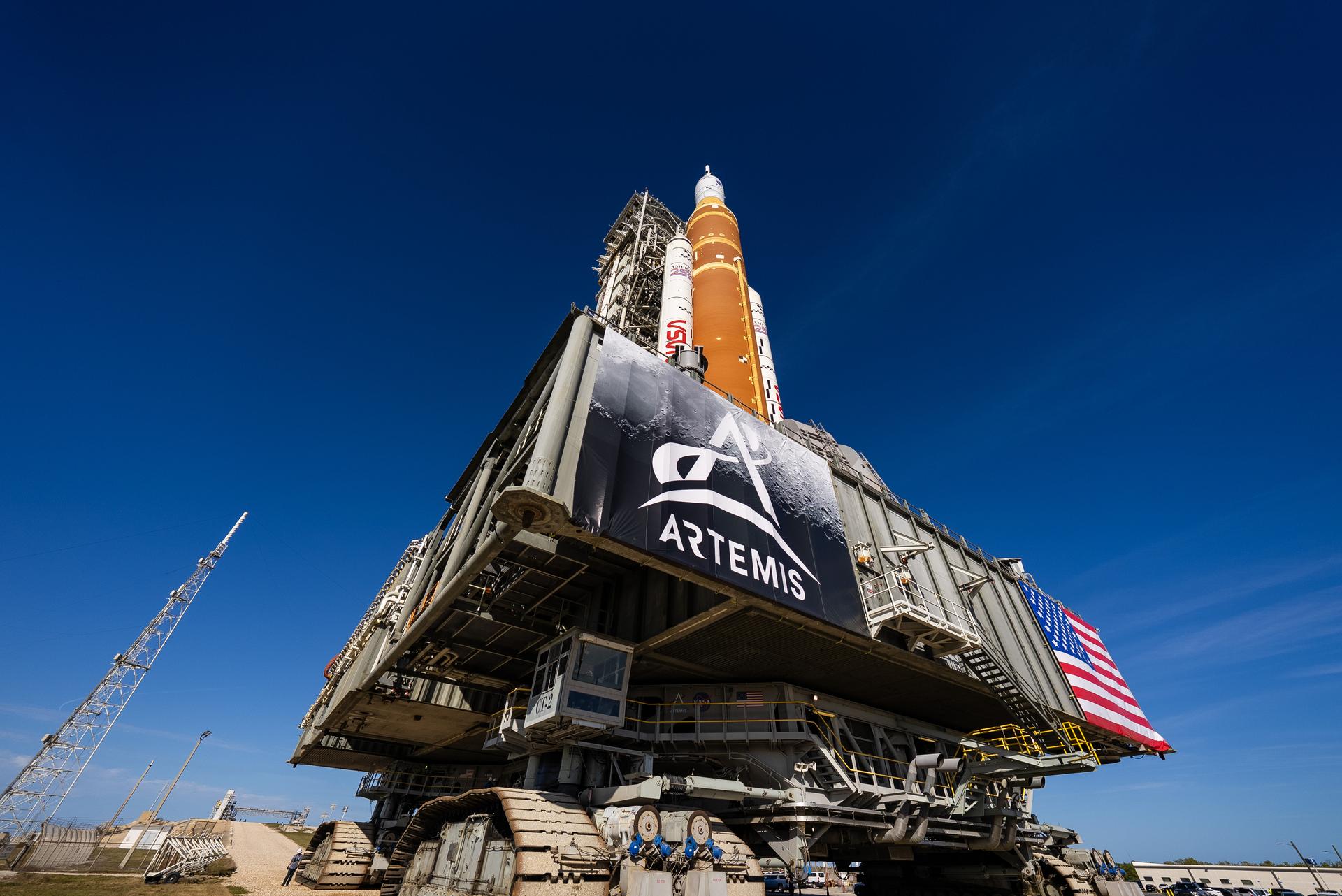
Lunar missions from companies like Intuitive Machines and Astrobotic have already demonstrated that private firms can deliver payloads to another celestial body — with varying degrees of success. Asteroid mining, once dismissed as science fiction, has attracted serious venture capital. And the Artemis program, while government-led, is fundamentally dependent on commercial providers like SpaceX and Blue Origin for its transportation architecture.
Mars, though, remains the most demanding destination on the commercial roadmap. The distance, the transit time, the communication delays, and the sheer complexity of orbital operations around another planet all represent step-function increases in difficulty compared to lunar missions. A company that can master these challenges will have demonstrated a capability set with enormous long-term value — not just for Mars, but for any deep-space destination.
Why It Matters
The significance of Relativity Space's Mars orbiter announcement extends well beyond the company itself. If a private firm can credibly develop and operate an interplanetary spacecraft without being a prime contractor on a government mission, it fundamentally changes the economics and politics of planetary exploration.
For decades, the cadence of Mars exploration has been set by government budget cycles, political priorities, and the institutional timelines of national space agencies. Missions take a decade or more to move from concept to launch, and they compete for funding against every other priority in a federal budget. The result is that humanity's exploration of Mars proceeds in fits and starts, with long gaps between missions and a pace dictated by factors that have little to do with scientific opportunity or technical readiness.
A commercially operated Mars orbiter would introduce a different dynamic. Private companies operate on investment timelines, not appropriations cycles. They can move faster when the business case supports it, and they can sustain operations as long as the economics work. A commercial Mars orbiter that generates revenue from data sales, relay services, or instrument hosting could operate continuously, providing a persistent infrastructure asset that government missions could leverage rather than duplicate.
This is the vision that NASA's public-private partnership strategy is designed to enable. And it is the vision that Relativity Space is now, at least in principle, pursuing. Whether the company can execute on that vision — whether the technology, the funding, and the market all align — remains an open question. But the fact that a private company is asking the question at all marks a genuine inflection point in how humanity approaches the exploration of Mars.
The LEO revolution took roughly fifteen years to move from concept to commercial maturity. The deep-space revolution, if it happens, will likely take longer and prove harder. But it has to start somewhere. Relativity Space appears determined to be one of the places it starts.
