
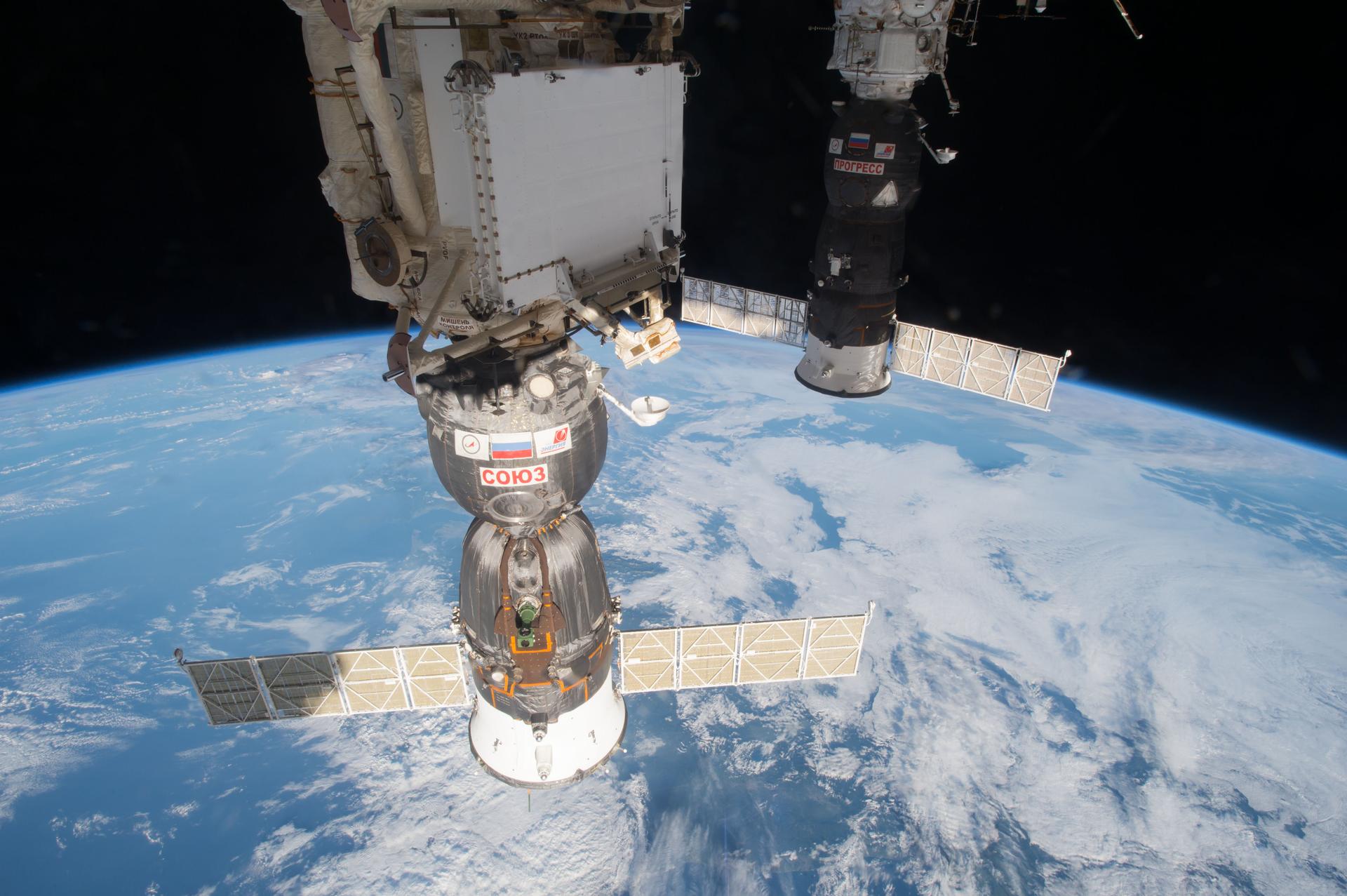
A Russian cargo ship carrying nearly three tons of food, fuel, and supplies finally reached the International Space Station on September 19, closing out a launch campaign that started with an unscheduled trip back to the hangar. The delay was never fully explained, and Roscosmos still hasn't said exactly what went wrong.
Progress 96 — known domestically as Progress M-25 — launched from the Baikonur Cosmodrome in Kazakhstan on September 16, 2026, at 9:33 a.m. EDT, according to NASA, aboard a Soyuz-2.1b rocket, per Spaceflight Now. That launch date was itself a week later than originally planned. Spaceflight Now reported that the slip traced back to an undisclosed problem with the rocket's third stage, serious enough that ground teams rolled the vehicle back into its integration hangar for troubleshooting before clearing it to fly.
Once it did fly, the spacecraft took an unusually roundabout path to get there.
A Three-Day Detour, Not the Usual Two
Progress vehicles bound for the ISS more typically fly a two-day rendezvous sequence, Spaceflight Now reported. Progress 96 instead took three days and 49 orbits to reach the station — noticeably longer than usual. Neither NASA nor Spaceflight Now's reporting tied the longer rendezvous directly to the third-stage fault. Rob Navias, NASA's commentator in mission control, told Spaceflight Now the extended profile came down to orbital mechanics rather than extra caution: "The orbital mechanics for this particular launch date of September 16th drove the Progress to a three-day, 49-orbit rendezvous profile."
The wait ended at 9:44 a.m. EDT (1344 UTC) on September 19, when Progress 96 docked autonomously to the space-facing port of the ISS's Poisk module, matching the timeline NASA had broadcast live just ahead of the event. NASA's blog had put the target docking time at approximately 9:46 a.m. EDT, putting the actual docking within two minutes of the published plan despite everything that preceded it.
Kurs Flew It, But Humans Were Watching
Docking was handled by the Kurs automated rendezvous and docking system, the radar-based guidance system Russian spacecraft use for approach and capture. Kurs completed the approach and capture without any intervention, according to KeepTrack Space Brief.
That doesn't mean no one was paying attention. Cosmonauts Pyotr Dubrov and Anna Kikina monitored the final approach from inside the station with manual backup controls staged and ready, per KeepTrack — standard procedure for Russian dockings, but worth noting given that this mission had already shown it could go sideways once. If Kurs had lost lock or flagged an anomaly, Dubrov and Kikina were positioned to fly the final meters themselves. There was one more first packed into the mission: KeepTrack Space Brief noted this was the first Progress flight to launch on the Soyuz-2.1b variant of the rocket, a modernized version of the venerable Soyuz booster family that has been gradually phasing in across Russia's crewed and cargo launches.
What's Aboard
Progress 96 delivered 2.8 tons of food, fuel and supplies to the station, Spaceflight Now reported — the standard resupply mix that keeps a crewed outpost running. NASA did not break down the cargo manifest item by item in its blog post, but the tonnage places this delivery in line with a typical Progress resupply run. The spacecraft is expected to remain docked to Poisk for roughly five months, per Spaceflight Now, before eventually being deorbited — the standard fate of every Progress vehicle before it.
Who's Up There
The cargo arrives for a full house. Spaceflight Now named the seven-member Expedition 75 crew as Dubrov, Kikina, Meir, Menon, Hathaway, Fedyaev, and Adenot — a crew complement that reflects the station's now-routine mix of Roscosmos cosmonauts and international partner astronauts sharing the outpost.
Why It Matters
Progress resupply missions rarely make headlines when they go according to plan, and that's the point — they're the unglamorous logistics backbone that keeps a permanently crewed space station fed, fueled, and stocked with spare parts, mission after mission, without much public drama. A week-long rollback over an undisclosed third-stage fault, followed by a three-day rendezvous instead of the routine two-day trip, is a reminder that even routine cargo runs sit on top of hardware that can still surprise the people flying it. Roscosmos's decision not to detail the nature of the fault is itself unremarkable — Russian space officials have long been more tight-lipped about technical anomalies than NASA or commercial providers like SpaceX — but it leaves outside observers unable to say whether this was a one-off manufacturing defect or a symptom that could recur on the next Soyuz-2.1b flight, crewed or uncrewed. For a station that depends on a small number of vehicle types for essentially all of its resupply and crew rotation, that's a detail worth tracking rather than shrugging off. The successful, near-exact-on-schedule docking suggests whatever was fixed, held. Whether it stays fixed is a question the next Soyuz-2.1b launch will answer.
