
This weekend, two small spacecraft that have spent the past year near Earth will dive back toward the planet, fire their engines at the lowest point of the pass, and head off for Mars. If it works, NASA's twin ESCAPADE probes, named Blue and Gold, will have done something that, according to NASA, no Mars-bound spacecraft has successfully done before: a powered flyby of Earth, also known as an Oberth maneuver.
The schedule is tight. According to a NASA Science blog post published Nov 2, the first spacecraft's flyby and burn are set for around 5 a.m. EST on Saturday, Nov 7. The second follows around 6 a.m. EST on Monday, Nov 9. Each trans-Mars injection burn lasts about nine minutes and is timed for closest approach.
A launch that came early
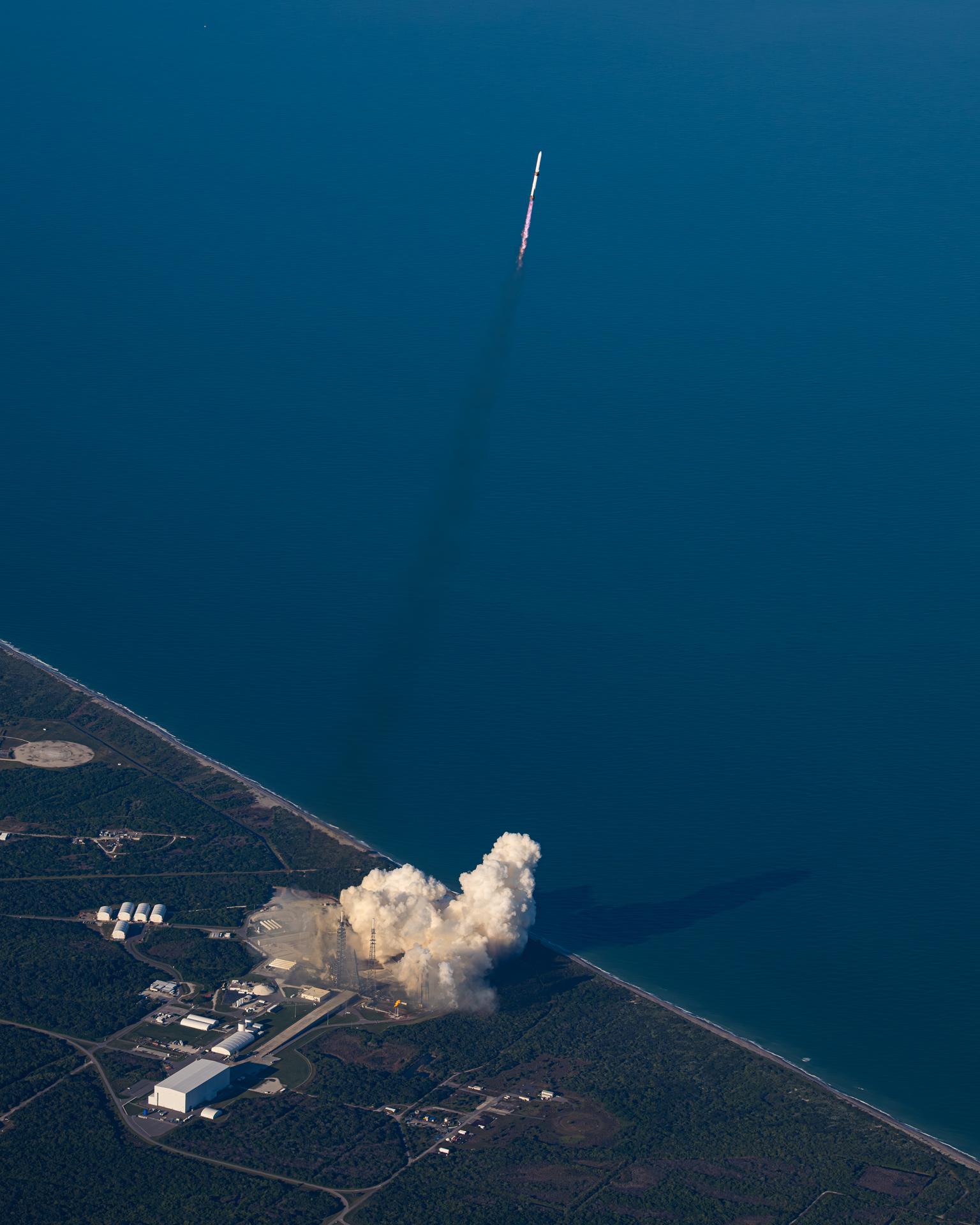
ESCAPADE did not take the usual route to Mars. Most Mars missions launch when Earth and Mars are aligned, which only happens every 26 months, to shorten the trip and use the least fuel. ESCAPADE launched on Blue Origin's New Glenn-2 on Nov. 13, 2025, when NASA says Earth and Mars were on opposite sides of the Sun. Instead of heading straight to Mars, the pair went into what UC Berkeley's Space Sciences Laboratory calls an Earth-proximity phase: roughly a year spent on a kidney-bean-shaped path near Earth.
As Space.com explained in January 2026, the probes were sent into a loiter orbit around the Sun-Earth L2 point, roughly a million miles from Earth. NASA says that path let them head back toward Earth in November 2026 and use its gravity to reach Mars once the planets returned to alignment. That plan put the launch and the departure in different years. The rocket could fly when it was ready, and the spacecraft would wait in space for the planets to line up.
That flexibility costs something. Rob Lillis, the mission's principal investigator at UC Berkeley's Space Sciences Laboratory, told Space.com that the extra 12 months adds wear and tear on the spacecraft. He also said he was confident Blue and Gold would keep operating through the end of the nominal science mission in May 2029, and he hoped they would last for many years beyond it.
Why burn so close to Earth?
The Oberth effect is a rocketry rule of thumb: an engine burn changes a spacecraft's energy most when the spacecraft is already moving fastest. For a probe falling toward Earth, the fastest point is perigee, the lowest point of the pass. That is why Berkeley's mission design has both spacecraft returning to a low-altitude perigee for their trans-Mars injection burns this month. NASA says the spacecraft, each about the size of a standard refrigerator, will pass between 600 and 1,100 miles above the surface, and will fire their engines over southern Australia.
NASA's numbers give a sense of scale. The burn adds more than 1,000 mph, taking each spacecraft from about 6.3 to about 6.7 miles per second, or roughly Mach 30 to Mach 31.
The difficulty is that the timing leaves little slack. Lillis told Space.com that the spacecraft must burn their engines for just the right duration, at the right time, at low Earth altitude, and that the loiter adds some risk to this critical maneuver. If a burn fails, he said, the mission would have to wait two more years for another chance to reach Mars. This is the kind of step NASA says no Mars-bound mission has completed before, and ESCAPADE has to do it twice, two days apart.
The trajectory was not off the shelf. Space.com reported that Jeffrey Parker, Chief Technology Officer at Advanced Space, was the chief architect of the roundabout route. NASA credits Advanced Space for the animations it uses to show the maneuver.
After the burn: a long, mostly quiet cruise
If the burns go as planned, the hard part of leaving Earth is done. Berkeley describes the next phase as a ballistic Hohmann Type 2 trajectory, meaning a mostly coasting path, with several trajectory correction maneuvers along the way. NASA expects a cruise of about 10 months, with arrival at Mars on Sept. 7 and Sept. 9, 2027, two days apart, the same spacing as the Earth departures.
Arrival is not the finish line. Berkeley's mission design says the team spends late 2027 and early 2028 reducing and synchronizing the orbits of Blue and Gold, and that science campaigns begin in late spring 2028. That leaves about a year of nominal science before the May 2029 end date Lillis mentioned, with the hope, in his words, that the hardware lasts well beyond it.
Why It Matters
ESCAPADE's science goal is simple to state: understand how the solar wind interacts with the Martian environment and how that drives the loss of its atmosphere. According to NASA, this will be the first multi-spacecraft mission to fly in formation around Mars. Two spacecraft can measure at two places at once, which one orbiter cannot.
The flight plan may matter as much as the science. Launching when the planets are not aligned, waiting near Earth, and then using a powered flyby to depart offers future missions another option. Parker told Space.com he sees ESCAPADE as a template for tomorrow, one that could allow launches to Mars outside the usual windows and avoid logjams caused by narrow launch opportunities. The trade-offs are the ones Lillis named: a year of extra time in space, and a critical maneuver that has to go right.
This weekend's burns will show whether that trade works in practice. If Blue and Gold both leave on schedule, ESCAPADE will have shown that a Mars mission does not need to launch inside the usual window.
