
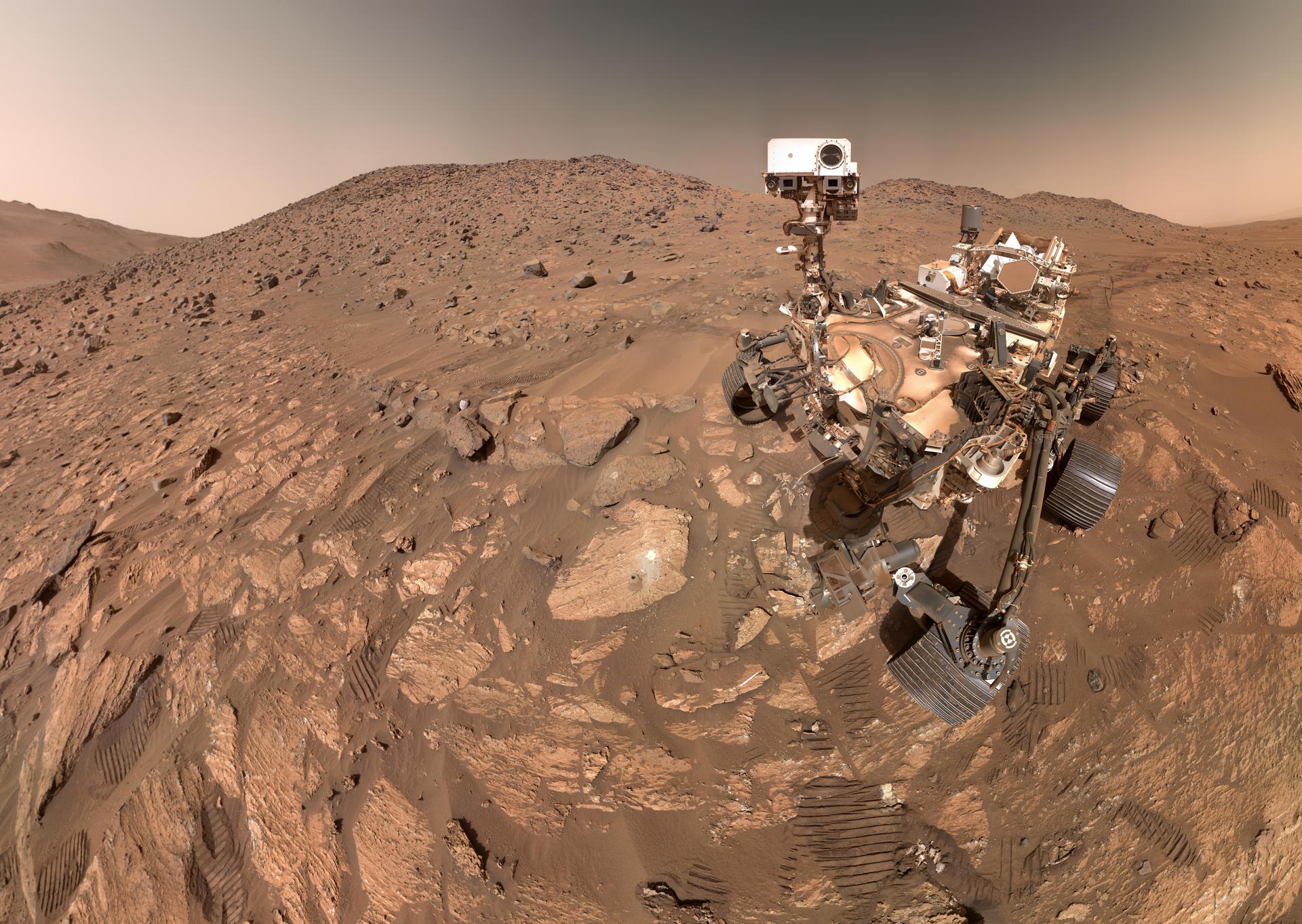
The record that fell on Oct. 11 had stood since Opportunity stopped driving. That day, the mission's 2,006th sol on Mars, NASA's Perseverance rover finished a 299.6-foot (91.31-meter) drive, according to NASA's mission blog. That drive took its odometer to 28.10 miles (45.22 kilometers), just past the 28.06 miles (45.16 km) Opportunity covered between 2004 and 2018. No vehicle has driven farther on another world.
The margin is small. The difference in pace is not. Opportunity needed almost 15 years to reach its total. Perseverance, which landed in Jezero Crater in February 2021, did it in about 5.5.
A rover that mostly drives itself
Most of that speed comes from software. NASA says more than 90% of Perseverance's driving has been done with AutoNav, its autonomous navigation system. Spirit and Opportunity drove only about 5% of their distance autonomously. With AutoNav, the rover maps the terrain ahead, picks a path and keeps moving, without waiting for drivers on Earth to plan each stretch.
The rover's sensing has also improved a great deal. NASA says Perseverance collects about 600,000 measurement points each time it looks at the terrain ahead. Sojourner, the small rover that first drove on Mars in 1997, collected 20. In practice, Perseverance has driven up to 1,351 feet (412 meters) in a single sol.
For comparison, EarthSky notes that Sojourner covered about 330 feet (100 meters) during its 1997 mission. Spirit logged 4.8 miles (7.7 km). The progress from Sojourner's 100 meters to Perseverance's 45 kilometers is largely a story of how much driving decision-making moved from Earth onto the rover.
Driving well past the design limit
Perseverance was never expected to drive this far. "The original mission called for no more than 12.4 miles of driving," Steven Lee of NASA's Jet Propulsion Laboratory said in NASA's announcement. (EarthSky's version of the quote mistakenly converted that figure to 20 meters. NASA's wording is the correct one.)
Mark Maimone, also at JPL, put it in metric terms to Space.com. The original design allowed for about 20 km of driving, and "we've more than doubled that already," he said. He was also optimistic about what is left. "We're looking really good to go for up to 100 kilometers total," Maimone said.
Vivian Sun told Space.com that the rover's original capabilities remain "more or less intact," especially its science instruments. That point matters more than the odometer. A rover that can still drive but can no longer do science is not worth much. One that has used more than double its designed driving distance and still has working instruments is a different matter.
Where it's going next
The record came on the way somewhere. Perseverance is heading for a site called "Idubi" in the "Lac de Charmes" region, west of the Jezero Crater rim. NASA says the area may hold some of the oldest terrain the rover has explored. The team will look for traces of ancient hydrothermal activity there: places where heated water once moved through the rock.
The rover has time for the trip. NASA says Perseverance's first mission extension began in October and runs through roughly the end of 2028.
Why It Matters
Distance records sound like trivia, but on Mars, distance limits the science. A rover can only study the rocks it can reach. Opportunity's long drive was a remarkable feat of endurance, but it took almost 15 years. Perseverance covered the same ground in about 5.5, and NASA credits much of that to its self-driving capability: more than 90% of its distance has been driven with AutoNav.
That changes how missions can be planned. If a rover can reliably drive hundreds of meters in one sol and keep going for tens of kilometers, mission planners can choose targets that are geologically far apart. They can study a crater floor, its rim and the older terrain beyond it in one mission, instead of picking a single landing site and staying close to it. Perseverance's trip toward Lac de Charmes, where NASA says the rover is investigating what may be some of the oldest terrain ever explored in the solar system, is that kind of target.
Engineers' confidence in the hardware matters too. The rover is past double its designed driving distance. JPL's Maimone talks about up to 100 kilometers, and Vivian Sun says the rover's original capabilities are more or less intact. That makes the extension through roughly the end of 2028 look less like a final lap and more like a second mission. The record is a milestone, but what the rover finds at Idubi will be the bigger test.
